
ASTM A106
- Home
- Products
- Carbon Steel Stocks
- ASTM A106
Basic Info
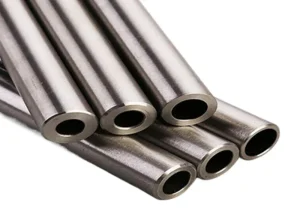
The ASTM A106 standard specifies the manufacturing standards for seamless carbon steel pipes for high-temperature and pressure services. These pipes are widely used in transportation pipeline systems in the oil, natural gas, chemical, and power industries. A106 pipes have excellent heat resistance and mechanical properties, and perform excellently under high temperature and high pressure conditions.
Characteristics
High-Temperature Resistance: ASTM A106 steel exhibits excellent resistance to high temperatures, making it suitable for use in applications where elevated temperatures are encountered, such as in boilers and heat exchangers.
Pressure Resistance: This steel grade is designed to withstand high pressure, making it well-suited for use in pipelines and other applications where pressure containment is critical.
Seamless Construction: ASTM A106 steel is typically produced using a seamless manufacturing process, ensuring uniformity in composition and superior structural integrity, which contributes to its reliability in demanding environments.
Superior Weldability: ASTM A106 steel offers excellent weldability, allowing for easy fabrication and assembly of components in various applications, thereby facilitating efficient project completion.
Conformance to Standards: ASTM A106 steel conforms to stringent ASTM standards, ensuring consistent quality and reliability. This adherence to standards provides assurance of the material’s performance and suitability for critical applications.
ASTM A106 Data Sheet
Dimensions and Tolerances
Equivalent Steel Grades
Chemical Composition
Mechanical Properties
Material Properties: Strengths, Limitations, and Considerations
Fabrication and Welding
Dimensions and Tolerances
Round
- Outer Diameter (OD): ±1% from specified OD
- Wall Thickness (WT) for NPS 1/8 to 1 1/2: ±12.5%
- Wall Thickness (WT) for NPS 2 and larger: ±10%
- Length: +/- 0.5 ft (0.15 m)
Square
- Outside Dimensions: ±0.030 in. (0.76mm)
- Wall Thickness: ±10%
- Length: +/- 0.5 ft (0.15 m)
Rectangular
- Outside Dimensions: ±0.030 in. (0.76mm)
- Wall Thickness: ±10%
- Length: +/- 0.5 ft (0.15 m)
Other
- Custom shapes may have tolerances specified by manufacturer
Equivalent Steel Grades
United States
- Equivalent Grade(s): API 5L Grade B, ASTM A53 Grade B
- Standard: API 5L, ASTM A53
China
- Equivalent Grade(s): GB/T 8163: 10#, 20#, Q345B
- Standard: GB/T 8163
Japan
- Equivalent Grade(s): JIS G3454: STPG370, STPG410
- Standard: JIS G3454
Germany
- Equivalent Grade(s): DIN 1629: St37.0, St44.0, St52.0
- Standard: DIN 1629
Chemical Composition
Carbon (C):
- Grade A: 0.25
- Grade B: 0.3
- Grade C: 0.35
Manganese (Mn):
- Grade A: 0.27-0.93
- Grade B: 0.29-1.06
- Grade C: 0.29-1.06
Phosphorus (P):
- Grade A: 0.035
- Grade B: 0.035
- Grade C: 0.035
Sulfur (S):
- Grade A: 0.035
- Grade B: 0.035
- Grade C: 0.035
Mechanical Properties
Tensile Strength (min):
- Grade A: 48,000 psi (330 MPa)
- Grade B: 60,000 psi (415 MPa)
- Grade C: 70,000 psi (485 MPa)
Yield Strength (min):
- Grade A: 30,000 psi (205 MPa)
- Grade B: 35,000 psi (240 MPa)
- Grade C: 40,000 psi (275 MPa)
Elongation in 2 in. (min):
- Grade A: 30%
- Grade B: 28%
- Grade C: 25%
Elongation in 50 mm (min):
- Grade A: 28%
- Grade B: 24%
- Grade C: 22%
Material Properties: Strengths, Limitations, and Considerations
Composition:
- Carbon steel alloy with specified chemical composition, typically containing carbon, manganese, phosphorus, and sulfur.
Strengths:
- High tensile strength
- Good weldability and machinability
- Suitable for high-temperature service
Limitations:
- Not suitable for corrosive environments without proper protection
- Limited impact resistance
Considerations:
- Temperature limitations: suitable for temperatures up to 750°F (400°C)
- Proper welding and heat treatment required
Fabrication and Welding
Fabrication Methods:
- ASTM A106 steel can be fabricated using various methods including hot forming, cold forming, machining, and welding.
Machinability:
- ASTM A106 steel exhibits good machinability, allowing for easy cutting, drilling, and milling operations.
Forming:
- ASTM A106 steel can be formed into various shapes using conventional methods such as bending, rolling, and forming.
Heat Treatment:
- ASTM A106 steel is not typically subjected to heat treatment as it is a seamless carbon steel pipe. However, stress relieving may be performed after welding if necessary.
Weldability:
- ASTM A106 steel offers excellent weldability. It can be welded using various welding methods including arc welding, gas welding, and resistance welding.
Preheating and Post-Weld Heat Treatment:
- Preheating and post-weld heat treatment are generally not required for ASTM A106 steel. However, certain applications or specific welding procedures may necessitate preheating or post-weld heat treatment to reduce the risk of cracking and improve weld quality.
