
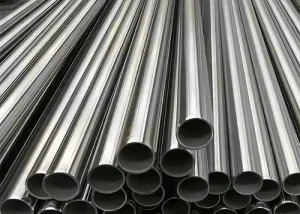
ASTM A891
- Home
- Products
- Carbon Steel Stocks
- ASTM A891
Basic Info
The ASTM A891 standard specifies the standard specifications for zinc aluminum alloy hot-dip coatings used for casting coatings. These coatings provide excellent corrosion resistance and adhesion, and are commonly used in automotive, construction, and other industrial applications. The A891 standard covers the chemical composition, coating thickness, and appearance requirements of coatings to ensure their quality meets the standards.
Characteristics
Enhanced Toughness: ASTM A836/A836M steel is known for its exceptional toughness, which is achieved through careful alloying and heat treatment processes. This makes it particularly suitable for applications requiring resistance to brittle fracture, especially at low temperatures.
Low Carbon Content: The low carbon content of ASTM A836/A836M steel helps improve weldability and reduces the risk of hydrogen-induced cracking during welding, contributing to the overall integrity of welded pressure vessels.
Improved Impact Resistance: The alloying elements in ASTM A836/A836M steel contribute to its enhanced impact resistance, ensuring reliable performance in demanding service conditions where sudden loads or impacts may occur.
Suitable for Low-Temperature Service: ASTM A836/A836M steel is specifically designed to withstand low-temperature environments, making it suitable for applications in industries such as oil and gas, petrochemical, and energy, where operating temperatures can be sub-zero.
Excellent Weldability: ASTM A836/A836M steel exhibits good weldability, allowing for ease of fabrication and assembly of welded pressure vessels. This facilitates efficient manufacturing processes and ensures high-quality welds with minimal risk of defects.
ASTM A891 Data Sheet
Steel Grade
Dimensions and Tolerances
Equivalent Steel Grades
Chemical Composition
Mechanical Properties
Fabrication and Welding
Steel Grade
Grade 30, Grade 33, Grade 36, Grade 40, Grade 45, Grade 50
Dimensions and Tolerances
Thickness:
- Dimension: 0.018” to 0.128” (0.46 mm to 3.25 mm)
- Tolerance: ±0.0015” (±0.04 mm)
Width:
- Dimension: Up to 48” (1219 mm)
- Tolerance: ±0.005” (±0.13 mm)
Length:
- Dimension: Up to 240” (6096 mm)
Shape:
- Coil, sheet, or cut length
Flatness:
- Flat with a commercial tolerance
Edge:
- Mill edge or trimmed edge
Equivalent Steel Grades
USA
- Equivalent Grade(s): ASTM A516 Grade 70
- Standard: ASTM
Germany
- Equivalent Grade(s): DIN 17155 17 Mn 4
- Standard: DIN
Japan
- Equivalent Grade(s): JIS G3118 SGV480
- Standard: JIS
China
- Equivalent Grade(s): GB 713 Q370R
- Standard: GB
Chemical Composition
Carbon (C), max (%):
- Grade 30: 0.25
- Grade 33: 0.2
- Grade 36: 0.2
- Grade 40: 0.2
- Grade 45: 0.18
- Grade 50: 0.18
Manganese (Mn), %:
- All grades (30, 33, 36, 40, 45, 50): 0.9
Phosphorus (P), max (%):
- All grades (30, 33, 36, 40, 45, 50): 0.03
Sulfur (S), max (%):
- All grades (30, 33, 36, 40, 45, 50): 0.035
Silicon (Si), max (%):
- All grades (30, 33, 36, 40, 45, 50): 0.03
Mechanical Properties
Tensile Strength (MPa):
- Grade 30: 310 min
- Grade 33: 310 min
- Grade 36: 345 min
- Grade 40: 380 min
- Grade 45: 380 min
- Grade 50: 410 min
Yield Strength (MPa):
- Grade 30: 205 min
- Grade 33: 230 min
- Grade 36: 250 min
- Grade 40: 275 min
- Grade 45: 310 min
- Grade 50: 345 min
Elongation (%):
- All grades (30, 33, 36, 40, 45, 50): 20%
Fabrication and Welding
Cutting
- Procedure: Shearing, sawing, or flame cutting
- Considerations: Use sharp tools to minimize heat input.
Forming
- Procedure: Hot or cold forming, bending
- Considerations: Bend along the grain direction to prevent cracking.
Preheating
- Procedure: Not specified
- Considerations: Preheat when necessary to minimize hydrogen cracking.
Welding
- Procedure: SMAW (Shielded Metal Arc Welding), SAW (Submerged Arc Welding), GMAW (Gas Metal Arc Welding), FCAW (Flux-Cored Arc Welding)
- Considerations: Follow proper welding procedures to ensure sound welds.
Preheat and Interpass Control
- Procedure: 100-150°F (38-66°C)
- Considerations: Maintain proper preheat and interpass temperatures to prevent cracking and achieve adequate fusion.
Post-Weld Heat Treatment
- Procedure: Not required
- Considerations: Post-weld heat treatment is typically not necessary for ASTM A836/A836M steel.
Welding Electrode
- Procedure: Low-hydrogen electrodes (e.g., AWS E7018)
- Considerations: Use electrodes with low hydrogen content to minimize the risk of hydrogen-induced cracking.
Welding Flux
- Procedure: Low-hydrogen flux
- Considerations: Select fluxes compatible with the welding process and base material.
Backing
- Procedure: Not specified
- Considerations: Backing may be used for certain welding processes and joint configurations.

