
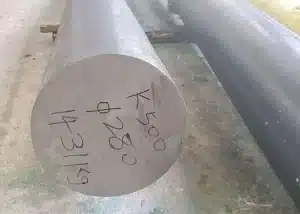
ASTM A108
- Home
- Products
- Carbon Steel Stocks
- ASTM A108
Basic Info
ASTM A108 specifies the requirements for carbon and alloy steel bars, providing standards for their chemical composition, mechanical properties, and machining characteristics.
Characteristics
Machinability: A108 steel bars exhibit good machinability, making them suitable for various machining operations.
Weldability: This steel has good weldability, allowing for ease of fabrication and joining with other components.
Strength: A108 specifies minimum tensile and yield strengths, ensuring the steel meets the required mechanical properties.
Ductility: It offers adequate ductility, allowing for deformation without fracturing under stress.
ASTM A108 Data Sheet
Equivalent Steel Grades
Specification
Chemical Composition
Mechanical Properties
Fabrication and Welding
Equivalent Steel Grades
1018
- United States (ASTM): ASTM A108 Grade 1018
- Germany (DIN): C22E (1.1151)
- Japan (JIS): S20C
- China (GB): 20
1020
- United States (ASTM): ASTM A108 Grade 1020
- Germany (DIN): C22 (1.0402)
- Japan (JIS): S20C
- China (GB): 20
1045
- United States (ASTM): ASTM A108 Grade 1045
- Germany (DIN): C45E (1.1191)
- Japan (JIS): S45C
- China (GB): 45
- Steel Grade: 1117
- United States (ASTM): ASTM A108 Grade 1117
- Germany (DIN): –
- Japan (JIS): –
- China (GB): –
1215
- United States (ASTM): ASTM A108 Grade 1215
- Germany (DIN): 9SMn28 (1.0736)
- Japan (JIS): SUM21L
- China (GB): Y15Pb
4140
- United States (ASTM): ASTM A108 Grade 4140
- Germany (DIN): 42CrMo4 (1.7225)
- Japan (JIS): SCM440
- China (GB): 42CrMo
8620
- United States (ASTM): ASTM A108 Grade 8620
- Germany (DIN): 21NiCrMo2 (1.6523)
- Japan (JIS): SNC220
- China (GB): 20NiCrMo2
Specification
1018
- Shape: Round Bar
- Width (inches): 0.125 to 12.000
- Tolerances: Diameter: -0.010″ to +0.000″
1020
- Shape: Round Bar
- Width (inches): 0.125 to 12.000
- Tolerances: Diameter: -0.010″ to +0.000″
1045
- Shape: Round Bar
- Width (inches): 0.125 to 12.000
- Tolerances: Diameter: -0.010″ to +0.000″
1117
- Shape: Round Bar
- Width (inches): 0.125 to 6.000
- Tolerances: Diameter: -0.010″ to +0.000″
11L17
- Shape: Round Bar
- Width (inches): 0.125 to 6.000
- Tolerances: Diameter: -0.010″ to +0.000″
1215
- Shape: Round Bar
- Width (inches): 0.125 to 6.000
- Tolerances: Diameter: -0.010″ to +0.000″
- Steel Grade: 4140
- Shape: Round Bar
- Width (inches): 0.250 to 14.000
- Tolerances: Diameter: -0.010″ to +0.000″
8620
- Shape: Round Bar
- Width (inches): 0.375 to 8.000
- Tolerances: Diameter: -0.010″ to +0.000″
Chemical Composition
1018
- Carbon (C): 0.15–0.20%
- Manganese (Mn): 0.60–0.90%
- Phosphorus (P): 0.040% max
- Sulfur (S): 0.050% max
- Silicon (Si): 0.15–0.35%
- Iron (Fe): Balance
- Other Elements: –
1020
- Carbon (C): 0.18–0.23%
- Manganese (Mn): 0.30–0.60%
- Phosphorus (P): 0.040% max
- Sulfur (S): 0.050% max
- Silicon (Si): 0.15–0.35%
- Iron (Fe): Balance
- Other Elements: –
1045
- Carbon (C): 0.43–0.50%
- Manganese (Mn): 0.60–0.90%
- Phosphorus (P): 0.040% max
- Sulfur (S): 0.050% max
- Silicon (Si): 0.15–0.35%
- Iron (Fe): Balance
- Other Elements: –
1117
- Carbon (C): 0.15–0.20%
- Manganese (Mn): 1.00–1.30%
- Phosphorus (P): 0.040% max
- Sulfur (S): 0.080–0.130%
- Silicon (Si): 0.15–0.35%
- Iron (Fe): Balance
- Other Elements: –
11L17
- Carbon (C): 0.14–0.20%
- Manganese (Mn): 0.70–1.10%
- Phosphorus (P): 0.070% max
- Sulfur (S): 0.250–0.350%
- Silicon (Si): 0.15–0.35%
- Iron (Fe): Balance
- Other Elements: Sulfur (0.23–0.35%), Lead (0.15–0.35%)
1215
- Carbon (C): 0.09% max
- Manganese (Mn): 0.75–1.05%
- Phosphorus (P): 0.040% max
- Sulfur (S): 0.260–0.350%
- Silicon (Si): 0.15–0.35%
- Iron (Fe): Balance
- Other Elements: Sulfur (0.15–0.35%)
4140
- Carbon (C): 0.38–0.43%
- Manganese (Mn): 0.75–1.00%
- Phosphorus (P): 0.035% max
- Sulfur (S): 0.040% max
- Silicon (Si): 0.15–0.35%
- Iron (Fe): Balance
- Other Elements: Chromium (0.80–1.10%), Molybdenum (0.15–0.25%)
8620
- Carbon (C): 0.18–0.23%
- Manganese (Mn): 0.70–0.90%
- Phosphorus (P): 0.040% max
- Sulfur (S): 0.040% max
- Silicon (Si): 0.15–0.35%
- Iron (Fe): Balance
- Other Elements: Nickel (0.40–0.70%), Chromium (0.40–0.60%), Molybdenum (0.15–0.25%)
Mechanical Properties
1018
- Tensile Strength (MPa): 440–790
- Yield Strength (MPa): 370
- Elongation (%): 15
- Hardness (HB): 126
1020
- Tensile Strength (MPa): 420–720
- Yield Strength (MPa): 350
- Elongation (%): 15
- Hardness (HB): 119
1045
- Tensile Strength (MPa): 565–710
- Yield Strength (MPa): 410
- Elongation (%): 15
- Hardness (HB): 163
1117
- Tensile Strength (MPa): 525–620
- Yield Strength (MPa): 480
- Elongation (%): 10
- Hardness (HB): 150–180
11L17
- Tensile Strength (MPa): 480–620
- Yield Strength (MPa): 425
- Elongation (%): 10
- Hardness (HB): 135–155
1215
- Tensile Strength (MPa): 540–640
- Yield Strength (MPa): 415
- Elongation (%): 10
- Hardness (HB): 135–165
4140
- Tensile Strength (MPa): 655–850
- Yield Strength (MPa): 415
- Elongation (%): 20
- Hardness (HB): 197–241
8620
- Tensile Strength (MPa): 570–625
- Yield Strength (MPa): 530
- Elongation (%): 20
- Hardness (HB): 201–255
Fabrication and Welding
1018
- Fabrication: Cold working; Excellent for cold forming, bending, and machining.
- Welding: Generally not recommended for welding due to its low carbon content. Welding may cause cracking. Preheating and post-weld heat treatment may be necessary for thicker sections.
1020
- Fabrication: Cold working; Excellent for cold forming, bending, and machining.
- Welding: Generally not recommended for welding due to its low carbon content. Welding may cause cracking. Preheating and post-weld heat treatment may be necessary for thicker sections.
1045
- Fabrication: Suitable for induction hardening, flame hardening, and other heat treatments. Good for machining and forging.
- Welding: Weldable with proper preheat and post-weld heat treatment. Typically welded using gas tungsten arc welding (GTAW) or shielded metal arc welding (SMAW).
1117
- Fabrication: Good machinability. Suitable for cold forming, machining, and induction hardening.
- Welding: Fairly easy to weld with appropriate techniques. Preheating is generally not required. Welding methods include gas tungsten arc welding (GTAW) and shielded metal arc welding (SMAW).
11L17
- Fabrication: Excellent machinability. Suitable for cold forming, machining, and induction hardening.
- Welding: Weldable with proper preheat and post-weld heat treatment. Welding methods include gas tungsten arc welding (GTAW) and shielded metal arc welding (SMAW).
1215
- Fabrication: Excellent machinability, especially for screw machine applications. Not suitable for hardening applications.
- Welding: Generally not recommended for welding due to its presence of sulfur. Welding may cause cracking. Preheating and post-weld heat treatment may be required. Weldable by gas tungsten arc welding (GTAW) and shielded metal arc welding (SMAW).
4140
- Fabrication: Suitable for heat treating, flame hardening, and induction hardening. Good for machining and forging.
- Welding: Weldable with proper preheat and post-weld heat treatment. Welding methods include gas tungsten arc welding (GTAW) and shielded metal arc welding (SMAW). Preheating and post-weld heat treatment are required to prevent cracking.
8620
- Fabrication: Suitable for case hardening, carburizing, and forging. Good for machining and forging.
- Welding: Weldable with proper preheat and post-weld heat treatment. Welding methods include gas tungsten arc welding (GTAW) and shielded metal arc welding (SMAW). Preheating and post-weld heat treatment are often required to prevent cracking.
Mastering Precision: The Superior Machinability of ASTM A108 Steel Grades
Machinability is a crucial factor for engineers and manufacturers using ASTM A108 steel grades, such as 1018, 1020, and 1045. Known for their excellent machinability, these materials can be efficiently shaped, drilled, turned, and milled to meet intricate design requirements. This makes them ideal for automotive parts and precision machinery components.
The balanced carbon content and alloying elements in ASTM A108 ensure minimal tool wear and maximum tool life, reducing production costs and downtime. With a smooth surface finish and dimensional accuracy, manufacturers can increase productivity and efficiency. Engineers can confidently choose ASTM A108 materials for their strength and reliability, making them a preferred option in a competitive market where precision is essential.

