
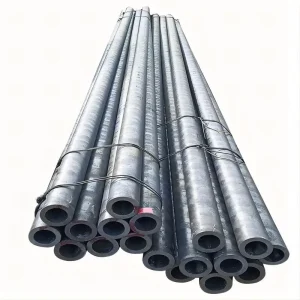
ASTM B574
- Home
- Products
- Alloy Steel Stocks
- ASTM B574
ASTM B574 Basic Info
ASTM B574 outlines the characteristics of nickel-molybdenum-chromium-iron alloys in the form of rod, bar, wire, and forging stock. These alloys, such as UNS N10276 and N06022, offer exceptional resistance to corrosion, high temperatures, and oxidation. Widely utilized in chemical processing, pharmaceutical, and petrochemical industries, ASTM B574 ensures the reliability and performance of these materials in demanding applications where harsh environments are prevalent.
Characteristics of ASTM B574
- Corrosion Resistance: ASTM B574 materials exhibit excellent resistance to corrosion, making them suitable for use in aggressive environments such as chemical processing, petrochemical, and marine applications. These alloys offer exceptional resistance to various corrosive agents, including acids, alkalis, and seawater.
- High Temperature Performance: ASTM B574 materials are designed to withstand high temperatures and maintain their mechanical properties at elevated temperatures. This makes them suitable for use in applications where exposure to high temperatures is common, such as in furnace components, heat exchangers, and exhaust systems.
- Mechanical Strength: ASTM B574 materials possess high mechanical strength, allowing them to withstand heavy loads and stress conditions without compromising performance. This makes them suitable for use in demanding applications where strength and reliability are critical, such as in pressure vessels, valves, and piping systems.
ASTM B574 Data Sheet
Steel Grades
Dimensions and Tol.
Equivalent Steel grades
Chemical Composition
Mechanical Properties
Fabrication and Welding
Steel Grades
Hastelloy B-2
Hastelloy B-3
Hastelloy C-4
Hastelloy C-22
Hastelloy C-276
Hastelloy G-30
Hastelloy N
Dimensions and Tol.
Rods
- Size Range: Diameter: 0.250″ – 2.5″
- Tolerances: Diameter: +/- 0.010″ to +/- 0.030″
Bars
- Size Range: Diameter: 0.250″ – 10″
- Tolerances: Diameter: +/- 0.010″ to +/- 0.030″
Wire
- Size Range: Diameter: 0.010″ – 0.250″
- Tolerances: Diameter: +/- 0.001″ to +/- 0.005″
Equivalent Steel grades
United States (USA)
Equivalent Grade(s): Hastelloy B-2, B-3, C-4, C-22, C-276, G-30, N
Standard: ASTM B574
European Union (EU)
Equivalent Grade(s): 2.4617, 2.4600, 2.4610, 2.4602, 2.4919, 2.4603, 2.4630
Standard: EN 10088, EN 10204
Japan
Equivalent Grade(s): –
Standard: –
China
Equivalent Grade(s): NS3201, NS3202, NS3321, NS3334, NS5334, NS5335, NS5336
Standard: GB/T 1234, GB/T 14976
Chemical Composition
Hastelloy B-2
- Nickel (Ni): 68.0 min
- Chromium (Cr): 1.0 max
- Molybdenum (Mo): 26.0-30.0
- Iron (Fe): 2.0 max
- Cobalt (Co): 1.0 max
- Silicon (Si): 0.10 max
- Manganese (Mn): 1.0 max
- Carbon (C): 0.02 max
- Phosphorus (P): 0.04 max
- Sulfur (S): 0.03 max
- Titanium (Ti): 0.02 max
- Aluminum (Al): 0.02 max
- Copper (Cu): 0.2 max
Hastelloy B-3
- Nickel (Ni): 65.0 min
- Chromium (Cr): 1.0 max
- Molybdenum (Mo): 27.0-32.0
- Iron (Fe): 1.0 max
- Cobalt (Co): 1.0 max
- Silicon (Si): 0.10 max
- Manganese (Mn): 1.0 max
- Carbon (C): 0.01 max
- Phosphorus (P): 0.04 max
- Sulfur (S): 0.03 max
- Titanium (Ti): 0.01 max
- Aluminum (Al): 0.02 max
- Copper (Cu): 0.2 max
Hastelloy C-4
- Nickel (Ni): 65.0 min
- Chromium (Cr): 14.0-18.0
- Molybdenum (Mo): 14.0-18.0
- Iron (Fe): 4.0-7.0
- Silicon (Si): 0.08 max
- Manganese (Mn): 1.0 max
- Carbon (C): 0.01 max
- Phosphorus (P): 0.04 max
- Sulfur (S): 0.03 max
- Titanium (Ti): 0.7-1.1 max
Hastelloy C-22
- Nickel (Ni): 56.0 min
- Chromium (Cr): 20.0-22.5
- Molybdenum (Mo): 12.5-14.5
- Iron (Fe): 4.0-7.0
- Silicon (Si): 0.08 max
- Manganese (Mn): 1.0 max
- Carbon (C): 0.015 max
- Phosphorus (P): 0.025 max
- Sulfur (S): 0.010 max
- Copper (Cu): 0.50 max
Hastelloy C-276
- Nickel (Ni): 55.0 min
- Chromium (Cr): 15.0-17.0
- Molybdenum (Mo): 15.0-17.0
- Iron (Fe): 4.0-7.0
- Silicon (Si): 0.08 max
- Manganese (Mn): 1.0 max
- Carbon (C): 0.01 max
- Phosphorus (P): 0.025 max
- Sulfur (S): 0.010 max
- Copper (Cu): 0.50 max
Hastelloy G-30
- Nickel (Ni): 59.0 min
- Chromium (Cr): 28.0-32.0
- Molybdenum (Mo): 4.0-6.0
- Iron (Fe): 5.0-9.0
- Silicon (Si): 1.0 max
- Manganese (Mn): 1.0 max
- Carbon (C): 0.015 max
- Phosphorus (P): 0.04 max
- Sulfur (S): 0.03 max
- Copper (Cu): 0.20 max
Hastelloy N
- Nickel (Ni): 65.0 min
- Chromium (Cr): 2.0-4.0
- Molybdenum (Mo): 15.0-17.0
- Iron (Fe): 2.0 max
- Silicon (Si): 0.08 max
- Manganese (Mn): 1.0 max
- Carbon (C): 0.01 max
- Phosphorus (P): 0.04 max
- Sulfur (S): 0.03 max
- Vanadium (V): 0.20 max
- Nitrogen (N): 0.15-0.25
Mechanical Properties
Hastelloy B-2
- Tensile Strength: 110 ksi min (760 MPa min)
- Yield Strength: 51 ksi min (350 MPa min)
- Elongation: 40% min
Hastelloy B-3
- Tensile Strength: 110 ksi min (760 MPa min)
- Yield Strength: 51 ksi min (350 MPa min)
- Elongation: 40% min
Hastelloy C-4
- Tensile Strength: 115 ksi min (790 MPa min)
- Yield Strength: 62 ksi min (430 MPa min)
- Elongation: 40% min
Hastelloy C-22
- Tensile Strength: 115 ksi min (790 MPa min)
- Yield Strength: 50 ksi min (345 MPa min)
- Elongation: 45% min
Hastelloy C-276
- Tensile Strength: 100 ksi min (690 MPa min)
- Yield Strength: 41 ksi min (280 MPa min)
- Elongation: 40% min
Hastelloy G-30
- Tensile Strength: 110 ksi min (760 MPa min)
- Yield Strength: 60 ksi min (415 MPa min)
- Elongation: 40% min
Hastelloy N
- Tensile Strength: 105 ksi min (720 MPa min)
- Yield Strength: 40 ksi min (275 MPa min)
- Elongation: 45% min
Fabrication and Welding
Formability
Nickel-chromium-molybdenum-columbium (Ni-Cr-Mo-Cb) alloys specified under ASTM B446 exhibit good formability, allowing for a variety of fabrication processes such as bending, punching, and cutting.
Machinability
These alloys generally have good machinability, although tooling and machining parameters may need to be adjusted for optimal results.
Weldability
Nickel-chromium-molybdenum-columbium (Ni-Cr-Mo-Cb) alloys specified under ASTM B446 are generally weldable using common welding methods such as TIG, MIG, and SMAW.
Preheating and Interpass Temperature
Preheating and interpass temperature control may be required for thicker sections or specific alloys to minimize the risk of cracking during welding.
Post-Weld Heat Treatment (PWHT)
Some alloys may require post-weld heat treatment to restore mechanical properties and reduce residual stresses, especially for critical applications.
Welding Consumables
Matching filler metals and electrodes should be used to ensure compatibility and optimize weld quality.
Welding Procedure Qualification (WPQ)
Welding procedures should be qualified through testing to ensure compliance with applicable standards and requirements, especially for critical applications.
Weld Inspection and Quality Assurance
Welds should be inspected using appropriate non-destructive testing (NDT) methods such as visual inspection, radiography, ultrasonic testing, or dye penetrant testing.
Surface Preparation
Proper surface preparation, including cleaning and removal of surface contaminants, is essential to ensure sound welds and minimize the risk of defects.
Overview of ASTM B574: Specifications and Standards
ASTM B574 is a specification standard established by ASTM International for nickel-molybdenum-chromium-iron alloys, commonly known as Hastelloy alloys. These alloys are renowned for their exceptional corrosion resistance and high-temperature performance, making them suitable for a wide range of applications in industries such as chemical processing, aerospace, and marine engineering. The ASTM B574 standard outlines the chemical composition, mechanical properties, and other requirements for the manufacturing of these alloys in various forms such as rods, bars, and wire.
Chemical Composition
Specifies the composition of nickel, molybdenum, chromium, iron, and other elements.
Mechanical Properties
Defines the tensile strength, yield strength, elongation, and hardness requirements.
Dimensional Tolerances
Specifies the allowable tolerances for dimensions such as diameter, length, and thickness.
Testing Methods
Outlines the procedures for testing chemical composition, mechanical properties, and other characteristics.

