
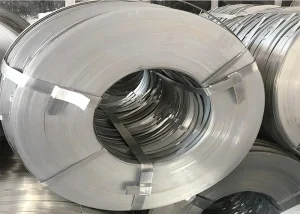
ASTM B162
- Home
- Products
- Alloy Steel Stocks
- ASTM B162
ASTM B162 BASIC INFO
ASTM B162 stands as a cornerstone standard for specifying nickel plate, sheet, and strip materials, ensuring their suitability for a wide array of industrial applications. By delineating essential parameters like chemical composition, mechanical properties, and dimensional tolerances, this standard fosters uniformity and reliability in the manufacturing process. Industries such as chemical processing, power generation, and aerospace benefit from the consistent quality and performance assured by ASTM B162, streamlining operations and bolstering product integrity.
Characteristics of ASTM B162
- Mechanical Properties: ASTM B162 provides guidelines for the mechanical properties of the materials, including tensile strength, yield strength, and elongation. This helps in assessing the suitability of the material for specific applications.
- Dimensions and Tolerances: It includes requirements for dimensions, thickness, width, length, flatness, and straightness of the nickel plates, sheets, and strips, ensuring they meet the intended specifications.
- Surface Finish: The standard specifies the acceptable surface finish of the materials, such as the appearance, roughness, and cleanliness, which is crucial for certain applications where surface quality is critical.
- Applications: ASTM B162 materials are commonly used in industries such as aerospace, chemical processing, and marine engineering due to their corrosion resistance, high strength, and thermal stability.
ASTM B162 Data Sheet
Steel Grade
Dimensions and Tol.
Equivalent Steel Grades
Chemical composition
Mechanical Properties
Fabrication and Welding
Steel Grade
Nickel:
- Nickel 200
- Nickel 201
Monel:
- Monel 400
Inconel:
- Inconel 600
- Inconel 601
- Inconel 625
Incoloy:
- Incoloy 800
- Incoloy 825
Hastelloy:
- Hastelloy B2
- Hastelloy C22
- Hastelloy C276
Dimensions and Tol.
Plate:
- Width: Up to 72 inches
- Thickness: 0.1875 to 3.000 inches
- Tolerance on Thickness: ±0.0015 inches
- Tolerance on Width: ±0.062 inches
- Tolerance on Length: ±1/8 inch or ±1/16 inch over 10 feet length, whichever is greater
Sheet:
- Width: Up to 48 inches
- Thickness: 0.015 to 0.1875 inches
- Tolerance on Thickness: ±0.0012 inches
- Tolerance on Width: ±0.062 inches
- Tolerance on Length: ±1/8 inch or ±1/16 inch over 10 feet length, whichever is greater
Strip:
- Width: 0.025 to 12 inches
- Thickness: 0.015 to 0.1875 inches
- Tolerance on Thickness: ±0.0012 inches
- Tolerance on Length: ±1/8 inch or ±1/16 inch over 10 feet length, whichever is greater
Equivalent Steel Grades
Nickel 200:
- Germany (DIN): DIN 17750 Ni 99.2
- Japan (JIS): JIS NW2200
- China (GB): GB/T 2054-06Ni99.2
- United Kingdom (BS): BS 3072-NA11
Nickel 201:
- Germany (DIN): DIN 17750 Ni 99.2
- Japan (JIS): JIS NW2201
- China (GB): GB/T 2054-06Ni99.2
- United Kingdom (BS): BS 3072-NA12
Monel 400:
- Germany (DIN): DIN 17750 NiCu30Fe
- Japan (JIS): JIS NW4400
- China (GB): GB/T 2054-Monel 400
- United Kingdom (BS): BS 3072-NA13
Inconel 600:
- Germany (DIN): DIN 17750 NiCr15Fe
- Japan (JIS): JIS NW600
- China (GB): GB/T 150-Inconel 600
- United Kingdom (BS): BS 3072-NA14
Inconel 601:
- Germany (DIN): DIN 17750 NiCr23Fe
- Japan (JIS): JIS NW601
- China (GB): GB/T 150-Inconel 601
- United Kingdom (BS): BS 3072-NA14
Inconel 625:
- Germany (DIN): DIN 17750 NiCr22Mo9Nb
- Japan (JIS): JIS NW625
- China (GB): GB/T 150-Inconel 625
- United Kingdom (BS): BS 3072-NA16
Incoloy 800:
- Germany (DIN): DIN 17750 NiCr20Ti
- Japan (JIS): JIS NW800
- China (GB): GB/T 150-Incoloy 800
- United Kingdom (BS): BS 3072-NA15
Incoloy 825:
- Germany (DIN): DIN 17750 NiCr21Mo
- Japan (JIS): JIS NW825
- China (GB): GB/T 150-Incoloy 825
- United Kingdom (BS): BS 3072-NA16
Hastelloy B2:
- Germany (DIN): DIN 17752 NiMo28
- Japan (JIS): JIS NW0275
- China (GB): GB/T 150-Hastelloy B2
- United Kingdom (BS): BS 3072-NA18
Hastelloy C22:
- Germany (DIN): DIN 17752 NiCr21Mo14W
- Japan (JIS): JIS NW6022
- China (GB): GB/T 150-Hastelloy C22
- United Kingdom (BS): BS 3072-NA14
Hastelloy C276:
- Germany (DIN): DIN 17752 NiMo16Cr15W
- Japan (JIS): JIS NW0276
- China (GB): GB/T 150-Hastelloy C276
- United Kingdom (BS): BS 3072-NA14
Chemical composition
Nickel 200:
- Nickel (Ni): 99.0 min
- Copper (Cu): –
- Iron (Fe): 0.40 max
- Manganese (Mn): 0.35 max
- Carbon (C): 0.15 max
- Silicon (Si): 0.10 max
- Sulfur (S): 0.015 max
- Chromium (Cr): –
- Molybdenum (Mo): –
- Titanium (Ti): –
- Aluminum (Al): –
- Cobalt (Co): –
- Phosphorus (P): 0.015 max
- Tungsten (W): –
- Nitrogen (N): –
- Niobium (Nb): –
- Vanadium (V): –
Nickel 201:
- Nickel (Ni): 99.0 min
- Copper (Cu): –
- Iron (Fe): 0.40 max
- Manganese (Mn): 0.35 max
- Carbon (C): 0.02 max
- Silicon (Si): 0.10 max
- Sulfur (S): 0.015 max
- Chromium (Cr): –
- Molybdenum (Mo): –
- Titanium (Ti): –
- Aluminum (Al): –
- Cobalt (Co): –
- Phosphorus (P): 0.015 max
- Tungsten (W): –
- Nitrogen (N): –
- Niobium (Nb): –
- Vanadium (V): –
Monel 400:
- Nickel (Ni): 63.0–70.0
- Copper (Cu): 28.0–34.0
- Iron (Fe): 2.5 max
- Manganese (Mn): 2.0 max
- Carbon (C): 0.3 max
- Silicon (Si): 0.5 max
- Sulfur (S): 0.024 max
- Chromium (Cr): –
- Molybdenum (Mo): –
- Titanium (Ti): –
- Aluminum (Al): –
- Cobalt (Co): –
- Phosphorus (P): 0.015 max
- Tungsten (W): –
- Nitrogen (N): –
- Niobium (Nb): –
- Vanadium (V): –
Inconel 600:
- Nickel (Ni): 72.0 min
- Copper (Cu): –
- Iron (Fe): 6.0–10.0
- Manganese (Mn): 1.0 max
- Carbon (C): 0.15 max
- Silicon (Si): 0.50 max
- Sulfur (S): 0.015 max
- Chromium (Cr): 14.0–17.0
- Molybdenum (Mo): –
- Titanium (Ti): –
- Aluminum (Al): –
- Cobalt (Co): –
- Phosphorus (P): 0.015 max
- Tungsten (W): –
- Nitrogen (N): –
- Niobium (Nb): –
- Vanadium (V): –
Inconel 601:
- Nickel (Ni): 58.0 min
- Copper (Cu): –
- Iron (Fe): Bal
- Manganese (Mn): 1.0 max
- Carbon (C): 0.10 max
- Silicon (Si): 0.50 max
- Sulfur (S): 0.015 max
- Chromium (Cr): 21.0–25.0
- Molybdenum (Mo): –
- Titanium (Ti): –
- Aluminum (Al): 1.0–1.7
- Cobalt (Co): –
- Phosphorus (P): 0.02 max
- Tungsten (W): –
- Nitrogen (N): –
- Niobium (Nb): –
- Vanadium (V): –
Inconel 625:
- Nickel (Ni): 58.0 min
- Copper (Cu): –
- Iron (Fe): 5.0 max
- Manganese (Mn): 0.50 max
- Carbon (C): 0.10 max
- Silicon (Si): 0.50 max
- Sulfur (S): 0.015 max
- Chromium (Cr): 20.0–23.0
- Molybdenum (Mo): 8.0–10.0
- Titanium (Ti): 0.40 max
- Aluminum (Al): 0.40 max
- Cobalt (Co): 1.0 max
- Phosphorus (P): 0.015 max
- Tungsten (W): 3.15–4.15
- Nitrogen (N): –
- Niobium (Nb): 3.15–4.15
- Vanadium (V): –
Incoloy 800:
- Nickel (Ni): 30.0–35.0
- Copper (Cu): –
- Iron (Fe): 39.5 min
- Manganese (Mn): 1.5 max
- Carbon (C): 0.10 max
- Silicon (Si): 1.0 max
- Sulfur (S): 0.015 max
- Chromium (Cr): 19.0–23.0
- Molybdenum (Mo): –
- Titanium (Ti): 0.15–0.60
- Aluminum (Al): 0.15–0.60
- Cobalt (Co): –
- Phosphorus (P): 0.02 max
- Tungsten (W): –
- Nitrogen (N): –
- Niobium (Nb): –
- Vanadium (V): –
Incoloy 825:
- Nickel (Ni): 38.0–46.0
- Copper (Cu): 1.5–3.0
- Iron (Fe): Bal
- Manganese (Mn): 1.0 max
- Carbon (C): 0.05 max
- Silicon (Si): 0.50 max
- Sulfur (S): 0.03 max
- Chromium (Cr): 19.5–23.5
- Molybdenum (Mo): 2.5–3.5
- Titanium (Ti): 0.6–1.2
- Aluminum (Al): –
- Cobalt (Co): –
- Phosphorus (P): 0.02 max
- Tungsten (W): –
- Nitrogen (N): –
- Niobium (Nb): –
- Vanadium (V): –
Hastelloy B2:
- Nickel (Ni): Bal
- Copper (Cu): –
- Iron (Fe): 2.0 max
- Manganese (Mn): 1.0 max
- Carbon (C): 0.02 max
- Silicon (Si): 0.10 max
- Sulfur (S): 0.02 max
- Chromium (Cr): 1.0 max
- Molybdenum (Mo): 26.0–30.0
- Titanium (Ti): –
- Aluminum (Al): –
- Cobalt (Co): 3.0 max
- Phosphorus (P): 0.02 max
- Tungsten (W): –
- Nitrogen (N): –
- Niobium (Nb): –
- Vanadium (V): –
Hastelloy C22:
- Nickel (Ni): Bal
- Copper (Cu): –
- Iron (Fe): 2.0–6.0
- Manganese (Mn): 0.50 max
- Carbon (C): 0.015 max
- Silicon (Si): 0.08 max
- Sulfur (S): 0.02 max
- Chromium (Cr): 20.0–22.5
- Molybdenum (Mo): 12.5–14.5
- Titanium (Ti): –
- Aluminum (Al): –
- Cobalt (Co): 2.5 max
- Phosphorus (P): 0.02 max
- Tungsten (W): 2.5–3.5
- Nitrogen (N): –
- Niobium (Nb): 0.35 max
- Vanadium (V): –
Hastelloy C276:
- Nickel (Ni): Bal
- Copper (Cu): –
- Iron (Fe): 4.0–7.0
- Manganese (Mn): 1.0 max
- Carbon (C): 0.01 max
- Silicon (Si): 0.08 max
- Sulfur (S): 0.03 max
- Chromium (Cr): 14.5–16.5
- Molybdenum (Mo): 15.0–17.0
- Titanium (Ti): –
- Aluminum (Al): –
- Cobalt (Co): 2.5 max
- Phosphorus (P): 0.04 max
- Tungsten (W): 3.0–4.5
- Nitrogen (N): –
- Niobium (Nb): –
- Vanadium (V): –
Mechanical Properties
Nickel 200:
- Tensile Strength: 55-75 ksi
- Yield Strength (0.2% offset): 15-30 ksi
- Elongation: 55% min
- Hardness: 35 HB max
Nickel 201:
- Tensile Strength: 55-75 ksi
- Yield Strength (0.2% offset): 15-30 ksi
- Elongation: 55% min
- Hardness: 35 HB max
Monel 400:
- Tensile Strength: 70 ksi min
- Yield Strength (0.2% offset): 28 ksi min
- Elongation: 35% min
Inconel 600:
- Tensile Strength: 80-115 ksi
- Yield Strength (0.2% offset): 30 ksi min
- Elongation: 30% min
Inconel 601:
- Tensile Strength: 80 ksi min
- Yield Strength (0.2% offset): 30 ksi min
- Elongation: 30% min
Inconel 625:
- Tensile Strength: 120 ksi min
- Yield Strength (0.2% offset): 60 ksi min
- Elongation: 30% min
Incoloy 800:
- Tensile Strength: 75 ksi min
- Yield Strength (0.2% offset): 30 ksi min
- Elongation: 30% min
Incoloy 825:
- Tensile Strength: 85 ksi min
- Yield Strength (0.2% offset): 35 ksi min
- Elongation: 30% min
Hastelloy B2:
- Tensile Strength: 110 ksi min
- Yield Strength (0.2% offset): 50 ksi min
- Elongation: 40% min
Hastelloy C22:
- Tensile Strength: 100 ksi min
- Yield Strength (0.2% offset): 45 ksi min
- Elongation: 50% min
Hastelloy C276:
- Tensile Strength: 100 ksi min
- Yield Strength (0.2% offset): 40 ksi min
- Elongation: 50% min
Fabrication and Welding
Nickel 200:
- Fabrication Characteristics: Good general corrosion resistance. Excellent resistance to caustic alkalis. Poor resistance to oxidizing acids. Should not be used in sulfuric acid environments.
- Welding Characteristics: Welding can be done using conventional methods, such as gas-tungsten arc (GTAW) or gas-metal arc (GMAW).
Nickel 201:
- Fabrication Characteristics: Similar to Nickel 200 with added low carbon content, providing enhanced resistance to intergranular corrosion. Good general corrosion resistance.
- Welding Characteristics: Welding can be done using conventional methods, such as gas-tungsten arc (GTAW) or gas-metal arc (GMAW).
Monel 400:
- Fabrication Characteristics: Excellent corrosion resistance in various environments including acids, alkalis, and saltwater. Welding should be performed with filler metal or matched composition.
- Welding Characteristics: Preheating and post-weld heat treatment may be necessary for certain applications. Welding with Monel filler metal or matched composition is recommended.
Inconel 600:
- Fabrication Characteristics: Good corrosion resistance in reducing and oxidizing environments. Resistant to high-temperature oxidation and corrosion during carburizing and nitriding.
- Welding Characteristics: Welding can be performed using conventional methods, such as gas-tungsten arc (GTAW) or gas-metal arc (GMAW).
Inconel 601:
- Fabrication Characteristics: Good resistance to high-temperature oxidation and corrosion. Excellent mechanical properties and resistance to oxidation up to 2200°F. Commonly used in furnace components.
- Welding Characteristics: Welding can be done using conventional methods, such as gas-tungsten arc (GTAW) or gas-metal arc (GMAW).
Inconel 625:
- Fabrication Characteristics: Excellent resistance to pitting and crevice corrosion. Suitable for applications requiring high strength and corrosion resistance, such as chemical and marine industries.
- Welding Characteristics: Welding can be done using conventional methods, such as gas-tungsten arc (GTAW) or gas-metal arc (GMAW).
Incoloy 800:
- Fabrication Characteristics: Good resistance to oxidation, carburization, and high-temperature corrosion. Commonly used in heat exchangers and furnace components.
- Welding Characteristics: Welding can be done using conventional methods, such as gas-tungsten arc (GTAW) or gas-metal arc (GMAW).
Incoloy 825:
- Fabrication Characteristics: Excellent resistance to a wide range of corrosive environments, including sulfuric acid, phosphoric acid, and nitric acid. Offers good mechanical properties.
- Welding Characteristics: Post-weld heat treatment may be necessary for certain applications. Welding with Incoloy filler metal or matched composition is recommended.
Hastelloy B2:
- Fabrication Characteristics: Excellent resistance to reducing environments such as hydrogen chloride gas, sulfuric acid, and acetic acid. Not suitable for oxidizing environments.
- Welding Characteristics: Preheating and post-weld heat treatment may be necessary for certain applications. Welding with Hastelloy B2 filler metal or matched composition is recommended.
Hastelloy C22:
- Fabrication Characteristics: Excellent resistance to a wide range of corrosive environments and oxidizing agents, including ferric and cupric chlorides.
- Welding Characteristics: Preheating and post-weld heat treatment may be necessary for certain applications. Welding with Hastelloy C22 filler metal or matched composition is recommended.
Hastelloy C276:
- Fabrication Characteristics: Excellent resistance to a wide range of corrosive environments, including those containing strong oxidizing agents.
- Welding Characteristics: Preheating and post-weld heat treatment may be necessary for certain applications. Welding with Hastelloy C276 filler metal or matched composition is recommended.
ASTM B162 VS. ASTM B127
ASTM B162 Nickel Alloy Plates:
Chemical Composition: Generally high nickel content with specific alloying elements for corrosion resistance and high-temperature properties.
Thickness Range: Typically available in a wide range of thicknesses, from thin foils to thick plates.
Surface Finish: Provides guidance for various surface finishes, including annealed, cold-rolled, and hot-rolled.
Mechanical Properties: Specific minimum tensile strength, yield strength, elongation, and hardness requirements.
Applications: Commonly used in chemical processing, marine environments, and heat exchanger applications due to excellent corrosion resistance.
ASTM B127 Nickel Alloy Plates:
Chemical Composition: Similar high nickel content but may vary in specific alloying elements depending on grade.
Thickness Range: Usually specified within a narrower range, often for thinner to medium thickness plates.
Surface Finish: Also includes specifications for surface finish, such as bright annealed, pickled, or mill finished.
Mechanical Properties: Similar mechanical property requirements but may have slight variations in values depending on grade.
Applications: Widely employed in industries such as aerospace, electronics, and marine due to their corrosion resistance and electrical conductivity.
Summary:
ASTM B162 and ASTM B127 both specify nickel alloy plates with high nickel content for corrosion resistance.
B162 offers a wider range of thickness options, while B127 may have more specific alloying elements depending on the grade.
Mechanical properties are similar, with both standards outlining tensile strength, yield strength, elongation, and hardness requirements.
Applications include chemical processing, marine, aerospace, and electronics industries for both standards.

