ASTM B164
- Home
- Products
- Alloy Steel Stocks
- ASTM B164
ASTM B164 Basic Info
ASTM B164 specifies the applications of nickel-copper alloys in the form of rod, bar, and wire. These alloys, such as UNS N04400 and N04405, exhibit excellent resistance to corrosion and high temperatures, making them ideal for use in marine engineering, chemical processing, and oil refining industries. Their versatility and durability ensure their widespread use in critical components like valves, pumps, and fittings in corrosive environments.
Characteristics of ASTM B164
- Excellent Corrosion Resistance: ASTM B164 Monel 400 exhibits exceptional resistance to corrosion, particularly in marine and chemical environments. This makes it a preferred choice for applications where exposure to corrosive substances is common.
- High Strength: Monel 400, as specified in ASTM B164, offers good mechanical properties, including high tensile strength and yield strength. This makes it suitable for use in structural applications where strength is crucial.
- Good Ductility and Toughness: The alloy maintains good ductility and toughness even at low temperatures, allowing for ease of fabrication and forming into various shapes.
- Thermal Stability: ASTM B164 Monel 400 retains its mechanical properties over a wide temperature range, making it suitable for applications where temperature fluctuations are present.
- Non-Magnetic: Monel 400 is non-magnetic, which can be advantageous in applications where magnetic interference needs to be minimized or avoided, such as in electronic components or certain industrial settings.
ASTM B164 Data Sheet
Dimensions and Tolerances
Equivalent Steel Grades
Chemical Composition
Mechanical Properties
Fabrication and Welding
Dimensions and Tolerances
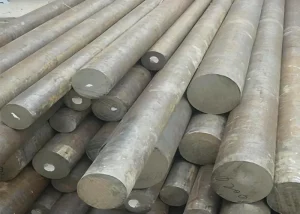
Round Rod:
- Size Range (Diameter): 0.1875″ to 6″ (4.76 mm to 152.4 mm)
- Tolerances: Diameter ±0.010″ (±0.25 mm)
Square Rod:
- Size Range (Width x Thickness): 0.1875″ to 4″ (4.76 mm to 101.6 mm)
- Tolerances: Width ±0.005″ (±0.13 mm)
Hexagonal:
- Size Range (Across Flats): 0.250″ to 2.5″ (6.35 mm to 63.5 mm)
- Tolerances: Across Flats ±0.010″ (±0.25 mm)
Rectangular:
- Size Range (Thickness): 0.125″ to 4″ (3.18 mm to 101.6 mm)
- Tolerances: Thickness ±10%
Equivalent Steel Grades
Germany:
Equivalent Steel Grade: DIN 2.4360 (NiCu30Fe)
Japan:
Equivalent Steel Grade: JIS NW4400
China:
Equivalent Steel Grade: GB/T NS321 (NiCu30Fe)
United Kingdom:
Equivalent Steel Grade: BS NA 13
Chemical Composition
Nickel (Ni):63.0 – 70.0%
Copper (Cu):28.0 – 34.0%
Iron (Fe): 2.5 max%
Manganese (Mn):2.0 max%
Carbon (C):0.3 max%
Silicon (Si):0.5 max%
Sulfur (S):0.024 max%
Phosphorus (P):0.02 max%
Mechanical Properties
Tensile Strength (Annealed): 70 ksi (483 MPa)
Yield Strength (0.2% offset, Annealed): 28 ksi (193 MPa)
Elongation (Annealed): 35% min
Hardness (Annealed): HRB 70-85
Tensile Strength (Cold-Worked): 85 ksi (586 MPa)
Yield Strength (0.2% offset, Cold-Worked): 40 ksi (276 MPa)
Elongation (Cold-Worked): 20% min
Fabrication and Welding
Hot Working:
- Hot working can be performed at temperatures between 1600°F (870°C) and 2100°F (1150°C).
- Use proper equipment to avoid contamination and maintain a clean working environment.
Cold Working:
- Cold working can be performed using standard methods, but due to Monel 400’s tendency to work-harden, frequent annealing is needed.
Annealing:
- Annealing is recommended after cold working to restore ductility and reduce hardness.
- Typical annealing temperature is 1700°F (925°C) with rapid cooling in water or air.
Machining:
- Monel 400 can be machined using conventional methods, but carbide-tipped tools are recommended for best results.
- Use proper lubricants and coolant to avoid work hardening and minimize tool wear.
Welding:
- Welding Monel 400 requires preheating and post-weld heat treatment to avoid cracking and ensure proper joint strength.
- Preheating temperature is typically 600°F (315°C) to 1200°F (650°C) depending on the thickness and section size.
- Post-weld heat treatment is usually performed at 1300°F (705°C) for 2 hours followed by air cooling or furnace cooling.
- Suitable welding methods include TIG (Tungsten Inert Gas) welding and MIG (Metal Inert Gas) welding with compatible filler metals.
ASTM B164 Material Properties and Uses
ASTM B164 outlines the specifications for nickel-copper alloy rods, bars, and wires, known for their excellent corrosion resistance and mechanical properties. Understanding the material properties and uses of ASTM B164 is crucial for various industries:
Material Properties:
Corrosion Resistance: Nickel-copper alloys specified in ASTM B164, such as Alloy 400 (Monel), exhibit exceptional resistance to a wide range of corrosive environments, including seawater, acids, alkalis, and reducing agents.
High Strength: These alloys offer impressive mechanical strength, particularly at elevated temperatures, making them suitable for demanding applications.
Thermal Stability: ASTM B164 materials maintain their properties at both high and low temperatures, ensuring stability in extreme environments.
Machinability: Some nickel-copper alloys specified in ASTM B164, like Alloy 400, are known for their excellent machinability, allowing for intricate parts and components.
Common Uses:
Marine Industry: ASTM B164 materials are extensively used in marine applications due to their resistance to seawater corrosion. They’re used in propeller shafts, valves, pumps, and fittings.
Chemical Processing: Their resistance to various chemicals makes them valuable in chemical processing equipment such as pumps, valves, and heat exchangers.
Oil and Gas Industry: Components in offshore platforms, downhole equipment, and piping systems benefit from the corrosion resistance and strength of ASTM B164 materials.
Aerospace and Military: Some applications include aircraft and missile components, where corrosion resistance and high strength are essential.
Conclusion:
ASTM B164 nickel-copper alloys are versatile materials, valued for their corrosion resistance, strength, and stability across a range of temperatures. Their use spans industries like marine, chemical processing, oil and gas, aerospace, and military, where reliability and performance in harsh environments are paramount.