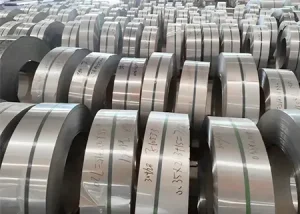

ASTM B424
- Home
- Products
- Alloy Steel Stocks
- ASTM B424
ASTM B424 Basic Info
When working with materials specified in ASTM B424, it’s important to follow safety precautions to ensure both personal safety and product integrity. Proper ventilation should be maintained in areas where welding or cutting operations are conducted to prevent inhalation of potentially harmful fumes. Additionally, use appropriate personal protective equipment such as gloves, goggles, and respirators to minimize exposure to airborne particles and maintain a safe working environment.
Characteristics of ASTM B424
- Corrosion Resistance: ASTM B424 steel offers exceptional resistance to corrosion, especially in aggressive environments like sulfuric and phosphoric acids.
- High Strength: This steel possesses high strength properties, making it suitable for applications where structural integrity is crucial.
- Weldability: ASTM B424 steel is known for its excellent weldability, allowing for ease of fabrication and construction.
- Resistance to Oxidizing and Reducing Acids: It provides reliable resistance to both oxidizing and reducing acids, ensuring longevity and performance in harsh chemical environments.
ASTM B424 Data Sheet
Steel Grade
Dimensions and Tol.
Equivalent Steel Grades
Chemical Composition
Mechanical Properties
Fabrication and Welding
Steel Grade
Alloy 825
Alloy 825-6Mo
Alloy 825HS
Alloy 825 Mod
Alloy 825HS Mod
Alloy 822
Alloy 822HS
Alloy 822HS Mod
Dimensions and Tol.
Plate:
- Thickness: 0.1875 – 2.000 inches
- Width: 24 – 60 inches
- Length: 96 – 240 inches
- Tolerances: ±0.031 inches
Sheet:
- Thickness: 0.020 – 0.1875 inches
- Width: 24 – 60 inches
- Length: 96 – 240 inches
- Tolerances: ±0.005 inches
Strip:
- Thickness: 0.020 – 0.1875 inches
- Width: 0.375 – 36 inches
- Length: Coil
- Tolerances: ±0.005 inches
Equivalent Steel Grades
Alloy 825:
Germany: DIN 2.4858
Japan: JIS NCF825
China: GB NS1402
UK: BS NA16
Alloy 825-6Mo:
Germany: DIN 2.4858
Japan: JIS NCF825
China: GB NS1402
UK: BS NA16
Alloy 825HS:
Germany: DIN 2.4858
Japan: JIS NCF825
China: GB NS1402
UK: BS NA16
Alloy 825 Mod:
Germany: DIN 2.4858
Japan: JIS NCF825
China: GB NS1402
UK: BS NA16
Alloy 825HS Mod:
Germany: DIN 2.4858
Japan: JIS NCF825
China: GB NS1402
UK: BS NA16
Alloy 822:
Germany: DIN 2.4602
Japan: JIS NCF822
China: GB NS141
UK: BS NA16
Alloy 822HS:
Germany: DIN 2.4602
Japan: JIS NCF822
China: GB NS141
UK: BS NA16
Chemical Composition
Alloy 825:
Nickel (Ni): 38.0 – 46.0%
Iron (Fe): 22.0% min
Chromium (Cr): 19.5 – 23.5%
Molybdenum (Mo): 2.5 – 3.5%
Copper (Cu): 1.5 – 3.0%
Titanium (Ti): 0.6 – 1.2%
Aluminum (Al): 0.2% max
Carbon (C): 0.05% max
Manganese (Mn): 1.0% max
Silicon (Si): 0.5% max
Sulfur (S): 0.03% max
Phosphorus (P): 0.03% max
Alloy 825-6Mo:
Nickel (Ni): 38.0 – 46.0%
Iron (Fe): 22.0% min
Chromium (Cr): 19.5 – 23.5%
Molybdenum (Mo): 2.5 – 3.5%
Copper (Cu): 1.5 – 3.0%
Titanium (Ti): 0.6 – 1.2%
Aluminum (Al): 0.2% max
Carbon (C): 0.05% max
Manganese (Mn): 1.0% max
Silicon (Si): 0.5% max
Sulfur (S): 0.03% max
Phosphorus (P): 0.03% max
Alloy 825HS:
Nickel (Ni): 38.0 – 46.0%
Iron (Fe): 22.0% min
Chromium (Cr): 19.5 – 23.5%
Molybdenum (Mo): 2.5 – 3.5%
Copper (Cu): 1.5 – 3.0%
Titanium (Ti): 0.6 – 1.2%
Aluminum (Al): 0.2% max
Carbon (C): 0.05% max
Manganese (Mn): 1.0% max
Silicon (Si): 0.5% max
Sulfur (S): 0.03% max
Phosphorus (P): 0.03% max
Alloy 825 Mod:
Nickel (Ni): 38.0 – 46.0%
Iron (Fe): 22.0% min
Chromium (Cr): 19.5 – 23.5%
Molybdenum (Mo): 2.5 – 3.5%
Copper (Cu): 1.5 – 3.0%
Titanium (Ti): 0.6 – 1.2%
Aluminum (Al): 0.2% max
Carbon (C): 0.05% max
Manganese (Mn): 1.0% max
Silicon (Si): 0.5% max
Sulfur (S): 0.03% max
Phosphorus (P): 0.03% max
Alloy 825HS Mod:
Nickel (Ni): 38.0 – 46.0%
Iron (Fe): 22.0% min
Chromium (Cr): 19.5 – 23.5%
Molybdenum (Mo): 2.5 – 3.5%
Copper (Cu): 1.5 – 3.0%
Titanium (Ti): 0.6 – 1.2%
Aluminum (Al): 0.2% max
Carbon (C): 0.05% max
Manganese (Mn): 1.0% max
Silicon (Si): 0.5% max
Sulfur (S): 0.03% max
Phosphorus (P): 0.03% max
Alloy 822:
Nickel (Ni): 33.0 – 38.0%
Iron (Fe): Balance
Chromium (Cr): 19.0 – 23.0%
Molybdenum (Mo): 3.0 – 3.5%
Copper (Cu): 1.5 – 3.0%
Manganese (Mn): 1.0% max
Silicon (Si): 0.5% max
Sulfur (S): 0.03% max
Alloy 822HS:
Nickel (Ni): 33.0 – 38.0%
Iron (Fe): Balance
Chromium (Cr): 19.0 – 23.0%
Molybdenum (Mo): 3.0 – 3.5%
Copper (Cu): 1.5 – 3.0%
Manganese (Mn): 1.0% max
Silicon (Si): 0.5% max
Sulfur (S): 0.03% max
Mechanical Properties
Alloy 825:
- Tensile Strength: 550 – 750 MPa
- Yield Strength (0.2% Offset): 220 – 550 MPa
- Elongation: 30% min
Alloy 825-6Mo:
- Tensile Strength: 690 – 895 MPa
- Yield Strength (0.2% Offset): 345 – 690 MPa
- Elongation: 30% min
Alloy 825HS:
- Tensile Strength: 650 – 800 MPa
- Yield Strength (0.2% Offset): 415 – 650 MPa
- Elongation: 30% min
Alloy 825 Mod:
- Tensile Strength: 550 – 750 MPa
- Yield Strength (0.2% Offset): 220 – 550 MPa
- Elongation: 30% min
Alloy 825HS Mod:
- Tensile Strength: 650 – 800 MPa
- Yield Strength (0.2% Offset): 415 – 650 MPa
- Elongation: 30% min
Alloy 822:
- Tensile Strength: 550 – 750 MPa
- Yield Strength (0.2% Offset): 220 – 550 MPa
- Elongation: 30% min
Alloy 822HS:
- Tensile Strength: 650 – 800 MPa
- Yield Strength (0.2% Offset): 415 – 650 MPa
- Elongation: 30% min
Fabrication and Welding
Hot Forming:
ASTM B424 steel can be hot formed between 1600°F and 2250°F (870°C and 1230°C).
Cold Forming:
Cold forming of ASTM B424 steel is generally limited due to its high strength and work hardening. It may require intermediate annealing.
Machining:
ASTM B424 steel is machinable in the annealed condition.
Welding Processes:
- Gas tungsten arc welding (GTAW or TIG)
- Gas metal arc welding (GMAW or MIG)
- Shielded metal arc welding (SMAW or stick)
- Submerged arc welding (SAW)
- Plasma arc welding (PAW)
Preheating and Interpass:
Preheating is generally not required. Interpass temperature should be maintained below 350°F (177°C).
Post Weld Heat Treatment:
Post weld heat treatment (PWHT) is not required for ASTM B424 steel.
Consumables:
Use matching or slightly over-alloyed filler metals to ensure the desired properties in the weld joint.
ASTM B424 Used in Marine Engineering
ASTM B424 steel finds significant use in marine engineering due to its excellent corrosion resistance and high strength properties. Here’s how it is utilized in marine engineering applications:
Corrosion Resistance:
- Seawater: One of the most aggressive environments for metals due to its high chloride content. ASTM B424’s resistance to seawater corrosion makes it ideal for marine applications.
- Salt Spray: Marine environments often subject structures to salt spray, which can accelerate corrosion. ASTM B424’s corrosion resistance ensures longevity in such conditions.
- Acids and Alkaline Solutions: Marine environments can also contain acidic or alkaline solutions due to industrial activities. ASTM B424’s resistance to these solutions prevents corrosion damage.
Specific Applications:
- Shipbuilding: ASTM B424 steel is used in various shipbuilding components, including hulls, decks, bulkheads, and superstructures.
- Marine Structures: It is employed in the construction of offshore platforms, oil rigs, piers, and docks where exposure to saltwater and harsh weather is constant.
- Piping Systems: Piping systems for seawater, ballast, and cooling systems benefit from ASTM B424’s corrosion resistance, reducing maintenance and replacement needs.
Benefits for Marine Engineering:
- Longevity: Structures made with ASTM B424 have a longer service life due to reduced corrosion.
- Maintenance Reduction: Lower maintenance requirements and less frequent replacements result in cost savings over time.
- High Strength: ASTM B424’s high strength ensures structural integrity, critical for marine applications where loads can be significant.
- Weldability: Ease of welding makes it feasible for fabricators to work with ASTM B424 in creating complex marine structures.
Examples:
- Hull Plating: ASTM B424 may be used for hull plating due to its combination of strength and corrosion resistance, protecting the vessel from seawater corrosion.
- Marine Fasteners: Fasteners such as bolts and nuts made from ASTM B424 resist corrosion, ensuring structural integrity in marine structures.
Considerations:
- Design Codes: ASTM B424 meets specific design codes for marine structures, ensuring compliance with industry standards.
- Localized Corrosion: Proper design and material selection are crucial to prevent localized corrosion in crevices and joints.
Conclusion:
In marine engineering, ASTM B424 steel is a reliable choice for structures and components that require exceptional corrosion resistance, durability, and strength. Its use helps ensure the safety, longevity, and efficiency of marine vessels and structures in challenging marine environments.