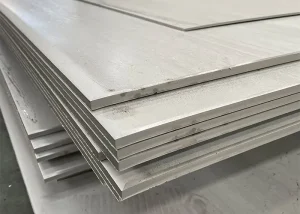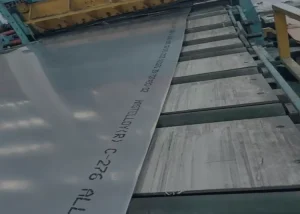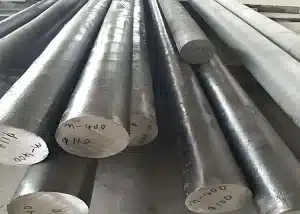
Bars of Incoloy 825 alloy stacked on wooden pallets, showcasing their polished surface and industrial-grade quality.

INCOLOY 825

Incoloy 825 is a nickel-iron-chromium alloy containing molybdenum, copper, and titanium. It offers enhanced corrosion resistance in both mildly oxidizing and reducing environments, providing superior protection compared to alloy 800, particularly against aqueous corrosion.

Specifications

Standard/Code

Specification Details

BS 3076 NA16

2.4858, NFe 32 C 20 DU, NiCr 21 Mo

ASTM B425

UNS N08825

API 6CRA 825

Incoloy 825 for corrosion-resistant alloy applications

Characteristics

Composition: An austenitic nickel-iron-chromium alloy with molybdenum, copper, and titanium additions.

Corrosion Resistance: Excellent resistance to both oxidizing and reducing environments. It resists chloride stress-corrosion cracking, pitting, and intergranular attack.

Chemical Resistance: Highly resistant to sulfuric, sulfurous, phosphoric, nitric, hydrofluoric acids, alkalis, and acidic chloride solutions.

Fabrication: Easily formable and weldable by various techniques, typical of nickel-based alloys. Titanium stabilizes the alloy to prevent sensitization during welding.

Standards

ASTM B425

–Plate, Sheet, and Strip–

ASTM B564

–Forgings–

ASME SB 425

–plate, sheet, and strip–

–Welded Pipe & Tube–

DIN

17752

–German standard–

ISO

9723

–International standards–

In Stock

alloy stock 1

Data Sheet

Chemical Composition

Element

Min

Max

Nickel + Cobalt

38.0%

46.0%

Cobalt

2.00%

Chromium

19.5%

23.5%

Copper

1.50%

3.00%

Iron

22.0%

Silicon

0.50%

Manganese

1.00%

Carbon

0.05%

Aluminum

0.20%

Physical Properties

PropertyValue
Density0.294 lbs/in³ (8.14 g/cm³)
Specific Heat (32 – 212 °F)0.105 Btu/lb·°F (440 J/kg·°C)
Mean Coefficient of Thermal Expansion7.7 x 10⁻⁵ in/in·°F (13.9 mm/m·°C) from 70 – 212 °F (20 – 100 °C)
Thermal Conductivity6.4 BTU/h·ft·°F (11.1 W/m·K) at 70 °F (21 °C)
Modulus of Elasticity28.4 x 10³ ksi (196 x 10³ MPa) in tension
Magnetic Permeability at 70 °F (21 °C)Annealed: 1.005 H = 200 Oersted
Melting Point2500 – 2550 °F (1370 – 1400 °C)

Corrosion Resistance

General Corrosion Resistance

    • Excellent resistance to both oxidizing and reducing environments.
    • Effectively resists general corrosion in a wide range of conditions.

Localized Corrosion Resistance

    • Provides strong protection against pitting and crevice corrosion.
    • Resists intergranular corrosion, even in harsh environments.

Stress Corrosion Cracking (SCC)

    • Outstanding resistance to chloride-induced stress corrosion cracking, which is common in marine and chemical processing applications.

Performance in Specific Environments

    • Sulfuric Acid: Superior resistance across various concentrations, as demonstrated in laboratory testing.
      • Corrosion rate in boiling laboratory sulfuric acid solutions:
        • 10% concentration: 20 mils/year (0.5 mm/year)
        • 40% concentration: 11 mils/year (0.28 mm/year)
        • 50% concentration: 20 mils/year (0.5 mm/year)
    • Phosphoric Acid: Excellent resistance, making it suitable for fertilizer production and chemical applications.
    • Sulfur-Containing Flue Gases: Highly resistant in environments with sulfur-based compounds.
    • Sour Gas and Oil Wells: Effectively resists corrosion in hydrogen sulfide (H₂S)-rich environments.
    • Sea Water: Provides long-term durability against the corrosive effects of chloride-rich marine environments.

Comparison with Other Alloys

    • Outperforms 316 stainless steel in boiling sulfuric acid, with significantly lower corrosion rates.
    • Comparable to Inconel® 625 in many environments but with unique advantages in sulfuric acid solutions.

Mechanical Properties(Room Temperature)

Property

Value

Unit

0.2% Proof Stress

241

N/mm² (35 ksi)

Tensile Strength

590

N/mm² (86 ksi)

Elongation (5.65√S₀ or 4D)

30

%

Reduction of Area

40

%

Hardness (Brinell)

327 (max.)

HB

Mechanical Properties(Elevated Temperature)

Property

Condition

Value

Unit

Compressive Yield Strength

Annealed at 1725°F (940°C) for 1 hour

423

MPa (61,400 psi)

Ultimate Tensile Strength

Annealed at 1725°F (940°C) for 1 hour

720

MPa (104,500 psi)

Temperature Limit for Usage

Avoided above

540

°C (1000°F)

Ductility and Impact Strength

Reduced above

540

°C (1000°F)

Welding and Fabrication

Welding

  • Compatibility
    • Incoloy® 825 is compatible with a variety of welding, brazing, and soldering techniques.
    • For best practices, refer to SSINA’s “Welding of Stainless Steels and Other Joining Methods.”
  • Performance in Welding

    • Ensures excellent joint integrity and maintains the alloy’s corrosion resistance.
    • Suitable for welding applications requiring strength and durability in challenging environments.
  • Expert Guidance

    • Specialized resources are available to assist with welding techniques to ensure optimal results.

Fabrication

  • Heat Treatment
    • During manufacturing, Incoloy® 825 is heat treated to optimize stabilization, corrosion resistance, mechanical properties, and formability.

    • For subsequent fabrication:

      • Annealing should be performed at 1700–1800°F (930–980°C).

      • Rapid air cooling or water quenching is recommended after annealing for thicker cross-sections.

      • Lower temperature annealing ensures stabilization, while higher temperature annealing enhances softness and grain structure, ideal for forming and deep drawing.

  • Quenching
    • Not necessary for thin cross-section products (e.g., sheets, strips, wires).
    • Recommended for heavier cross-sections to prevent sensitization and maintain corrosion resistance.
  • General Fabrication Processes
    • Heating, forming, pickling, and finishing procedures should follow industry best practices.
    • Refer to the SMC bulletin “Fabricating” for comprehensive guidance.

Applications

Aerospace
Automotive
Marine
Oil and Gas
Pharmaceutical
Chemical
Pollution Control
Welding

Customized Package

Effective packaging solutions are crucial for preserving the quality of stainless steel sheets during transportation. The image showcases neatly stacked sheets wrapped in green protective covers and secured with strong straps, ensuring they remain intact.
  • Oil-coated paper wraps our plates, providing protection against corrosion.
  • Plates are placed on wooden pallets and strapped to secure them, preventing shifting during transportation.
Secure packaging plays a vital role in maintaining the quality and integrity of metal pipes during storage and transportation. The image illustrates pipes wrapped in durable protective material to prevent surface damage and corrosion.
  • Thick woven plastic bags are used to bundle several bars and rods together.
  • Each bundle is carefully packed, with the weight not exceeding 1500 KG for safe handling.
Efficient packaging ensures the safe transportation of stainless steel and alloy tubes. The image displays robust wooden crates used to secure and protect the tubes, minimizing damage during transit.
  • Tubes and pipes are packed in air cushion film to shield them from dirt and scratches.
  • For extra protection, they are placed in wooden cases to prevent damage during transit.

Logistics

air freight
rail freight
sea freight

At AlloyXpert, sea transportation is the most commonly used method for the majority of our orders and is considered the default shipping mode. Therefore, our quotations are typically based on FOB, CFR, or CIF terms. For customers with urgent requirements, we also offer air transportation as an expedited shipping option. Please feel free to reach out for customized solutions based on your delivery needs.

Related Products

ASTM B424

Inconel 625

Hastelloy C276

Monel 400

MAKE AN ENQUIRY

Complete the form below to make an enquiry or request a quote and one of our team will get back to you shortly.