
ASTM A192
- Home
- Products
- Carbon Steel Stocks
- ASTM A192
Basic Info
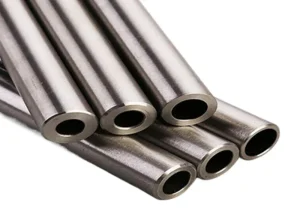
The ASTM A192 standard specifies the standard specifications for seamless carbon steel boiler tubes, used in high-pressure and low-temperature boilers and heat exchangers. These pipes have excellent heat resistance and pressure resistance, and perform well in high temperature and high pressure environments. A192 pipes undergo strict chemical composition and mechanical performance testing to ensure their quality meets standards. This standard also covers the size and processing requirements of pipes to ensure their suitability for various boiler and heat exchanger applications.
Characteristics
High Pressure Resistance: ASTM A192 steel is specifically designed to withstand high-pressure environments, making it suitable for use in boiler and superheater tubes where pressure resistance is crucial.
Heat Resistance: This steel exhibits excellent heat resistance, allowing it to maintain its structural integrity and mechanical properties even at elevated temperatures encountered in boiler operations.
Seamless Construction: ASTM A192 tubing is manufactured using seamless construction techniques, ensuring uniformity in wall thickness and consistent mechanical properties throughout the tube length.
ASTM A192 Data Sheet
Dimensions and Tolerances
Equivalent Steel Grades
Chemical Composition
Mechanical Properties
Fabrication and Welding
Dimensions and Tolerances
Shape:Round
Outer Diameter: 1/2 inch to 7 inches (12.7 mm to 177.8 mm)
Wall Thickness: 0.085 inch to 1 inch (2.2 mm to 25.4 mm)
Length: Random lengths, custom cut lengths
Tolerances: According to ASTM A192 standards
Equivalent Steel Grades
United States:
- Equivalent Grade(s): SA-192
- Standard: ASME SA192
European Union:
- Equivalent Grade(s): CFS 430
- Standard: EN 10216-2
Japan:
- Equivalent Grade(s): STB340, STB410
- Standard: JIS G3461
China:
- Equivalent Grade(s): 10#
Chemical Composition
Carbon (C): 0.06–0.18%
Manganese (Mn): 0.27–0.63%
Phosphorus (P): 0.035% (max)
Sulfur (S): 0.035% (max)
Silicon (Si): 0.25% (max)
Mechanical Properties
- Tensile Strength: 325 MPa (min)
- Yield Strength: 180 MPa (min)
- Elongation: 35% (min)
- Hardness: HRB 77-95
Fabrication and Welding
Forming: ASTM A192 steel can be easily formed using conventional methods such as cold or hot forming. Care should be taken to avoid excessive strain during forming to prevent deformation or cracking.
Machining: ASTM A192 steel has good machinability, allowing the use of standard machining techniques such as drilling, milling, and turning. Proper lubrication and tooling selection are recommended to achieve desired results.
Heat Treatment: ASTM A192 steel is typically supplied in the normalized condition and does not require further heat treatment after fabrication. However, stress relieving may be performed if necessary to reduce residual stresses.
Welding: Welding of ASTM A192 steel is generally performed using conventional methods such as gas tungsten arc welding (GTAW), gas metal arc welding (GMAW), or shielded metal arc welding (SMAW). Preheating is not usually required, but interpass temperature control is recommended to prevent cracking. Post-weld heat treatment is typically not necessary for ASTM A192 steel. Proper filler metal selection is crucial to ensure weld integrity and mechanical properties.
Inspection and Quality Control: Inspection and quality control during fabrication and welding of ASTM A192 steel should adhere to applicable industry standards and specifications. This includes visual inspection, dimensional checks, and non-destructive testing (NDT) methods such as ultrasonic testing (UT) or radiographic testing (RT) to ensure weld integrity and overall quality.
ASTM A192 Material Suppliers
Online Directories: Start by searching on online industrial directories such as Thomasnet, Alibaba, or GlobalSpec. These directories often list numerous suppliers along with their contact information, product catalogs, and certifications.
Manufacturer Websites: Visit the websites of well-known manufacturers of steel and metal products. Many of these companies produce ASTM A192 materials and may have dedicated pages or sections showcasing their product offerings, specifications, and contact details.
Trade Associations and Organizations: Explore websites of trade associations and organizations related to steel and metal industries. They often provide directories or member lists that include reputable suppliers of ASTM A192 materials.
Industry Events and Exhibitions: Keep an eye out for industry events, trade shows, and exhibitions focused on steel, metalworking, or boiler and heat exchanger technologies. These events provide opportunities to meet suppliers in person, discuss requirements, and establish connections.
Request for Quotations (RFQs): Consider sending out RFQs to multiple suppliers to compare prices, lead times, and other terms. Clearly outline your specifications, quantity requirements, and any additional criteria to ensure accurate quotations.