
ASTM A283
- Home
- Products
- Carbon Steel Stocks
- ASTM A283
Basic Info
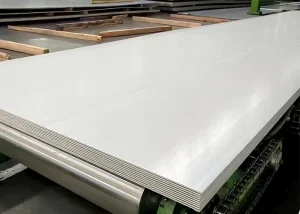
The ASTM A283 standard specifies the standard specifications for low to medium strength carbon steel plates, which are suitable for the manufacturing of structural components for general engineering purposes, such as buildings, bridges, and ships. This standard covers the chemical composition, mechanical properties, and dimensional requirements of steel plates, ensuring that products have appropriate strength and weldability. These steel plates are widely used in multiple industrial fields, providing economical and reliable structural materials.
Characteristics
Carbon Content: ASTM A283 steel contains varying levels of carbon, which contributes to its strength and weldability.
Tensile Strength: This steel has moderate tensile strength, making it suitable for structural applications where strength is important but not critical.
Ductility: ASTM A283 exhibits good ductility, allowing it to be formed and shaped without sacrificing its structural integrity.
Weldability: Due to its low carbon content and composition, ASTM A283 steel is easily weldable, making it ideal for fabrication and construction purposes.
Versatility: ASTM A283 steel is versatile and can be used in a wide range of applications including bridges, buildings, machinery, and general structural components.
ASTM A283 Data Sheet
Steel Grade
Dimensions and Tolerances
Equivalent Steel Grades
Chemical Composition
Mechanical Properties
Fabrication and Welding
Steel Grade
Grade A
- Tensile Strength (MPa): 310–415
- Yield Strength (MPa): ≥ 165
- Elongation (%): 25
Grade B
- Tensile Strength (MPa): 345–450
- Yield Strength (MPa): ≥ 185
- Elongation (%): 23
Grade C
- Tensile Strength (MPa): 380–515
- Yield Strength (MPa): ≥ 205
- Elongation (%): 20
Grade D
- Tensile Strength (MPa): 415–550
- Yield Strength (MPa): ≥ 230
- Elongation (%): 20
Dimensions and Tolerances
Plate
- Width (mm): 600–2000
- Thickness (mm): 4.5–120
- Tolerance on Thickness (mm): ±0.010 (0.25)
- Tolerance on Width (mm): ±0.025 (0.64)
Sheet
- Width (mm): 600–2000
- Thickness (mm): 0.4–6.35
- Tolerance on Thickness (mm): ±0.010 (0.25)
- Tolerance on Width (mm): ±0.025 (0.64)
Strip
- Width (mm): 12.7–610
- Thickness (mm): 0.4–5.16
- Tolerance on Thickness (mm): ±0.015 (0.38)
- Tolerance on Width (mm): ±0.025 (0.64)
Equivalent Steel Grades
United Kingdom
- Equivalent Grade: BS 4360 GR43A
- Standard: BS 4360
Germany
- Equivalent Grade: DIN 17100 ST44-2
- Standard: DIN 17100
Japan
- Equivalent Grade: JIS G3101 SS400
- Standard: JIS G3101
China
- Equivalent Grade: GB Q235A/Q235C
- Standard: GB/T 700
- Notes: Q235A and Q235C are similar to ASTM A36 Grade C
Chemical Composition
Carbon (C)
- Grade A: 0.14–0.22
- Grade B: 0.17–0.24
- Grade C: 0.20–0.26
- Grade D: 0.27–0.40
Manganese (Mn)
- Grade A: 0.60 max
- Grade B: 0.90 max
- Grade C: 0.90 max
- Grade D: 0.90 max
Phosphorus (P)
- Grade A: 0.025 max
- Grade B: 0.025 max
- Grade C: 0.025 max
- Grade D: 0.025 max
Sulfur (S)
- Grade A: 0.040 max
- Grade B: 0.040 max
- Grade C: 0.040 max
- Grade D: 0.040 max
Silicon (Si)
- Grade A: 0.15–0.40
- Grade B: 0.15–0.40
- Grade C: 0.15–0.40
- Grade D: 0.15–0.40
Copper (Cu)
- Grade D: 0.20 min
Mechanical Properties
Tensile Strength (MPa)
- Grade A: 310–415
- Grade B: 345–450
- Grade C: 380–515
- Grade D: 415–550
Yield Strength (MPa)
- Grade A: ≥ 165
- Grade B: ≥ 185
- Grade C: ≥ 205
- Grade D: ≥ 230
Elongation (%)
- Grade A: 25
- Grade B: 23
- Grade C: 20
- Grade D: 20
Fabrication and Welding
Cutting
- Method: Flame Cutting, Plasma Cutting, Shearing
- Guidelines: Use proper cutting tools and techniques.
- Notes: Avoid excessive heat input and maintain cleanliness.
Forming
- Method: Hot Forming, Cold Forming
- Guidelines: Follow recommended forming temperatures and methods.
- Notes: Cold forming may require intermediate annealing.
Machining
- Method: Drilling, Milling, Turning
- Guidelines: Use sharp tools and appropriate speeds and feeds.
- Notes: Maintain proper cooling/lubrication for the operation.
Welding
- Method: Arc Welding, Gas Welding, Resistance Welding
- Guidelines: Preheat and control interpass temperature.
- Notes: Select suitable welding consumables and methods.
Quality Assurance Measures for ASTM A283 Steel
Quality assurance measures for ASTM A283 steel involve comprehensive testing procedures and adherence to stringent certification standards to ensure its reliability and integrity. Here are the key points:
Material Testing: ASTM A283 steel undergoes various tests to verify mechanical properties and chemical composition. Tests include tensile, hardness, impact, and chemical analysis.
Non-Destructive Testing: Methods like ultrasonic and magnetic particle inspection detect surface and internal defects without damaging the material.
Certification Standards: Manufacturers obtain certification from accredited bodies, ensuring compliance with standards like ASTM A283/A283M.
Compliance with Regulations: ASTM A283 steel adheres to relevant industry regulations and building codes, ensuring consistency and quality.
Robust Quality Assurance: Implementation of robust quality assurance measures guarantees the material’s reliability for diverse applications.