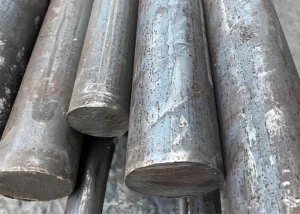

ASTM A709
- Home
- Products
- Carbon Steel Stocks
- ASTM A709
Basic Info
The ASTM A709 standard specifies the standard specifications for structural steel used in bridges and other highway engineering. These steels have good weldability and mechanical properties, and are widely used in building structures. This standard covers the chemical composition, mechanical properties, and dimensional requirements of steel, ensuring that the product meets the requirements of engineering design and meets quality standards.
Characteristics
High Strength: ASTM A709 steel offers high strength with a minimum yield strength of 50 ksi (345 MPa), making it suitable for structural applications in demanding environments.
Low Alloy Composition: It is a low-alloy steel with alloying elements such as copper, manganese, phosphorus, sulfur, and silicon, which enhance its mechanical properties and corrosion resistance.
Good Formability: This steel grade possesses good formability, enabling it to be easily shaped and manipulated into various structural components without compromising its integrity.
Superior Toughness: ASTM A709 steel demonstrates superior toughness, which is essential for structural applications subjected to dynamic loading, impact, and harsh environmental conditions.
Corrosion Resistance: It offers good corrosion resistance, especially in atmospheric environments, making it suitable for outdoor structural applications such as bridges and highway structures.
ASTM A709 Data Sheet
Steel Grade
Dimensions and Tolerances
Equivalent Steel Grades
Chemical Composition
Mechanical Properties
Fabrication and Welding
ASTM A709 vs. ASTM A36 Steel Comparison
Steel Grade
Grade 36:
- Yield Strength: 36 ksi
- Tensile Strength: 58-80 ksi
- Elongation: 21%
Grade 50:
- Yield Strength: 50 ksi
- Tensile Strength: 65-95 ksi
- Elongation: 18%
Grade 50W:
- Yield Strength: 50 ksi
- Tensile Strength: 70-100 ksi
- Elongation: 18%
Grade HPS 50W:
- Yield Strength: 50 ksi
- Tensile Strength: 70-110 ksi
- Elongation: 18%
Grade HPS 70W:
- Yield Strength: 70 ksi
- Tensile Strength: 85-110 ksi
- Elongation: 17%
Grade HPS 100W:
- Yield Strength: 100 ksi
- Tensile Strength: 110-130 ksi
- Elongation: 16%
Dimensions and Tolerances
Plate/Sheet
- Width (mm): 600-2500
- Thickness (mm): 6-120
- Tolerance on Width (mm): ±10
- Tolerance on Thickness (mm): ±0.5
Coil/Strip
- Width (mm): 600-2500
- Thickness (mm): 0.6-6.0
- Tolerance on Width (mm): ±10
- Tolerance on Thickness (mm): ±0.05 (for thickness ≤ 0.72), ±0.1 (for thickness > 0.72)
Equivalent Steel Grades
United States
- Equivalent Grade(s): AAR (TD M270) Grade 36, 50, 70W, HPS 50W, HPS 70W
- Standard: AAR (TD M270)
Canada
- Equivalent Grade(s): CSA G40.21 44W, 50W, 70W, HPS 50W, HPS 70W
- Standard: CSA G40.21
Germany
- Equivalent Grade(s): DIN 17100 St52-3
- Standard: DIN 17100
China
- Equivalent Grade(s): Q345B, Q345C, Q345E
- Standard: GB/T 1591
Chemical Composition
Element丨Composition Range (%)
Carbon (C): 0.23 max
Manganese (Mn): 0.60–1.25
Phosphorus (P): 0.025 max
Sulfur (S): 0.045 max
Silicon (Si): 0.15–0.50
Vanadium (V): 0.04–0.15
Columbium (Cb): 0.005 max
Nitrogen (N): 0.025 max
Copper (Cu): 0.20 min, when copper steel is specified
Mechanical Properties
Yield Strength
- Condition: Room Temperature
- Value:
Grade 36: ≥ 250 MPa
Grade 50: ≥ 345 MPa
Grade 50W: ≥ 345 MPa
Grade HPS 50W: ≥ 345 MPa
Grade HPS 70W: ≥ 485 MPa
Grade HPS 100W: ≥ 690 MPa
Tensile Strength
- Condition: Room Temperature
- Value:
Grade 36: 400–552 MPa
Grade 50: 483–620 MPa
Grade 50W: 483–620 MPa
Grade HPS 50W: 483–620 MPa
Grade HPS 70W: 620–690 MPa
Grade HPS 100W: 690–825 MPa
Elongation
- Condition: 8-inch or 200 mm
- Value:
Grade 36: ≥ 20%
Grade 50: ≥ 18%
Grade 50W: ≥ 18%
Grade HPS 50W: ≥ 18%
Grade HPS 70W: ≥ 16%
Grade HPS 100W: ≥ 15%
Reduction of Area
- Condition: –
- Value:
Grade 36: ≥ 20%
Grade 50: ≥ 21%
Grade 50W: ≥ 21%
Grade HPS 50W: ≥ 23%
Grade HPS 70W: ≥ 23%
Grade HPS 100W: ≥ 25%
Charpy V-notch Impact Energy
- Condition: Room Temperature
- Value:
Grade 36: 20 J min at -20°C
Grade 50: 20 J min at -20°C
Grade 50W: 20 J min at -20°C
Grade HPS 50W: 20 J min at -20°C
Grade HPS 70W: 20 J min at -20°C
Grade HPS 100W: 27 J min at -20°C
Fabrication and Welding
Fabrication:
Cutting
- Guidelines: Use thermal cutting methods such as oxy-fuel, plasma, or laser cutting for plates and sheet materials. For bars and structural sections, adaptations to shearing techniques are viable.
- Notes: Carefully monitor heat input during cutting processes to avoid thermal deformation and heat-affected zones (HAZ) and ensure dimensional accuracy.
Forming
- Guidelines: ASTM A709 steel can be formed using common forming methods such as bending, rolling, and pressing. Ensure that the risk of cracking during forming is minimized, and use appropriate lubricants to prevent surface damage.
- Notes: Refer to ASTM A6/A6M for recommendations regarding handling and forming maximum forming radii to maintain material integrity and properties.
Machining
- Guidelines: Carbide tooling is recommended for machining ASTM A709 and hard-to-machine steel alloys. Use appropriate cutting speeds, feeds, and coolant to optimize tool life and maintain dimensional accuracy.
- Notes: Perform machining operations in a well-ventilated area to prevent exposure to fumes and maintain operator safety.
Welding:
SMAW
- Guidelines: Shielded Metal Arc Welding (SMAW) is suitable for welding ASTM A709 steel, especially for thicker sections. Use low-hydrogen electrodes with matching or higher tensile strength to achieve sound, strong welds.
- Notes: Preheat thick sections and maintain interpass temperatures as specified in codes to prevent cracking and ensure proper fusion.
GMAW
- Guidelines: Gas Metal Arc Welding (GMAW) is ideal for welding ASTM A709 with high welding speeds and good penetration. Employ shielding gas to ensure clean welds and prevent material defects.
- Notes: Clean the weld area thoroughly to remove dirt, grease, and other contaminants that can affect weld quality and integrity.
FCAW
- Guidelines: Flux-Cored Arc Welding (FCAW) offers high deposition rates and deep penetration, making it suitable for welding thicker sections of ASTM A709 steel. Choose appropriate filler materials for mechanical properties.
- Notes: Conduct pre-weld and post-weld inspections to ensure proper heat input, alignment, and weld penetration.
GTAW
- Guidelines: Gas Tungsten Arc Welding (GTAW) produces high-quality welds with excellent control over heat input and fusion. Use appropriate filler materials to achieve the desired weld profile and mechanical properties.
- Notes: Perform post-weld heat treatment as necessary to relieve residual stresses and improve weld integrity.
ASTM A709 vs. ASTM A36 Steel Comparison
ASTM A709 Steel:
- Strength: Higher strength with minimum yield strength of 50 ksi
- Composition: Low-alloy steel with additional alloying elements
- Weldability: Good weldability with suitable preheating and procedures
- Applications: Primarily used for structural applications requiring high strength
- Cost: Generally higher cost due to alloying elements and higher strength
ASTM A36 Steel:
- Strength: Lower strength with minimum yield strength of 36 ksi
- Composition: Carbon steel with minimal alloying elements
- Weldability: Excellent weldability with minimal preheating requirements
- Applications: Widely used in general construction and structural applications
- Cost: Lower cost due to simpler composition and lower strength