
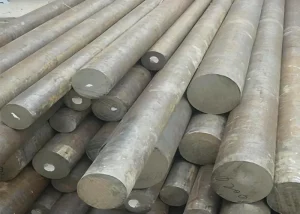
ASTM A913
- Home
- Products
- Carbon Steel Stocks
- ASTM A913
Basic Info
The ASTM A913 standard specifies the standard specifications for high-strength low alloy steel profiles, which are applicable to bridges, buildings, and other structures. These profiles have excellent welding and mechanical properties and are widely used in engineering structures. This standard covers the chemical composition, mechanical properties, and dimensional requirements of profiles to ensure that products meet engineering design requirements and meet quality standards.
Characteristics
High-Strength: ASTM A913 steel offers exceptional strength, making it suitable for heavy-duty structural applications.
Low-Alloy: This steel grade is classified as a low-alloy steel, combining strength with improved weldability and formability.
Superior Weldability: ASTM A913 steel exhibits excellent weldability, allowing for ease of fabrication and construction.
Formability: ASTM A913 steel can be easily formed into various shapes and profiles, offering versatility in design and construction.
ASTM A913 Data Sheet
Steel Grade
Dimensions and Tolerances
Equivalent Steel Grades
Chemical Composition
Mechanical Properties
Fabrication and Welding
Steel Grade
Grade 50
Grade 60
Grade 65
Grade 70
Grade 80
Dimensions and Tolerances
Grade 50:
- Shape:
- W-shape: Width Range: 3.5 – 18 inches, Thickness Range: 0.25 – 4.0 inches
- HP-shape: Width Range: 6 – 14 inches, Thickness Range: 0.25 – 4.0 inches
- M-shape: Width Range: 4 – 12 inches, Thickness Range: 0.25 – 4.0 inches
- Tolerances:
- Depth: ±0.0625 inches, Width: ±0.0625 inches, Weight: ±6%
Grade 60:
- Shape:
- W-shape: Width Range: 3.5 – 18 inches, Thickness Range: 0.25 – 4.0 inches
- HP-shape: Width Range: 6 – 14 inches, Thickness Range: 0.25 – 4.0 inches
- M-shape: Width Range: 4 – 12 inches, Thickness Range: 0.25 – 4.0 inches
- Tolerances:
- Depth: ±0.0625 inches, Width: ±0.0625 inches, Weight: ±6%
Grade 65:
- Shape:
- W-shape: Width Range: 3.5 – 18 inches, Thickness Range: 0.25 – 4.0 inches
- HP-shape: Width Range: 6 – 14 inches, Thickness Range: 0.25 – 4.0 inches
- M-shape: Width Range: 4 – 12 inches, Thickness Range: 0.25 – 4.0 inches
- Tolerances:
- Depth: ±0.0625 inches, Width: ±0.0625 inches, Weight: ±6%
Grade 70:
- Shape:
- W-shape: Width Range: 3.5 – 18 inches, Thickness Range: 0.25 – 4.0 inches
- HP-shape: Width Range: 6 – 14 inches, Thickness Range: 0.25 – 4.0 inches
- M-shape: Width Range: 4 – 12 inches, Thickness Range: 0.25 – 4.0 inches
- Tolerances:
- Depth: ±0.0625 inches, Width: ±0.0625 inches, Weight: ±6%
Grade 80:
- Shape:
- W-shape: Width Range: 3.5 – 18 inches, Thickness Range: 0.25 – 4.0 inches
- HP-shape: Width Range: 6 – 14 inches, Thickness Range: 0.25 – 4.0 inches
- M-shape: Width Range: 4 – 12 inches, Thickness Range: 0.25 – 4.0 inches
- Tolerances:
- Depth: ±0.0625 inches, Width: ±0.0625 inches, Weight: ±6%
Equivalent Steel Grades
United States: ASTM A913 Grade 50
Canada: CSA G40.21 Grade 50W
Germany: DIN 17100 St52-3N
Japan: JIS G3106 SM490B
Chemical Composition
Grade 50:
- Carbon (C): 0.11 max
- Manganese (Mn): 1.10–1.60
- Phosphorus (P): 0.035 max
- Sulfur (S): 0.040 max
- Silicon (Si): 0.50–1.00
- Vanadium (V): 0.03–0.08
- Nitrogen (N): 0.012–0.030
- Niobium (Nb): 0.005–0.030
- Aluminum (Al): 0.020–0.050
- Copper (Cu): 0.20 max
Grade 60:
- Carbon (C): 0.12 max
- Manganese (Mn): 1.10–1.60
- Phosphorus (P): 0.035 max
- Sulfur (S): 0.040 max
- Silicon (Si): 0.50–1.00
- Vanadium (V): 0.03–0.08
- Nitrogen (N): 0.012–0.030
- Niobium (Nb): 0.005–0.030
- Aluminum (Al): 0.020–0.050
- Copper (Cu): 0.20 max
Grade 65:
- Carbon (C): 0.13 max
- Manganese (Mn): 1.10–1.60
- Phosphorus (P): 0.035 max
- Sulfur (S): 0.040 max
- Silicon (Si): 0.50–1.00
- Vanadium (V): 0.03–0.08
- Nitrogen (N): 0.012–0.030
- Niobium (Nb): 0.005–0.030
- Aluminum (Al): 0.020–0.050
- Copper (Cu): 0.20 max
Grade 70:
- Carbon (C): 0.14 max
- Manganese (Mn): 1.10–1.60
- Phosphorus (P): 0.035 max
- Sulfur (S): 0.040 max
- Silicon (Si): 0.50–1.00
- Vanadium (V): 0.03–0.08
- Nitrogen (N): 0.012–0.030
- Niobium (Nb): 0.005–0.030
- Aluminum (Al): 0.020–0.050
- Copper (Cu): 0.20 max
Grade 80:
- Carbon (C): 0.15 max
- Manganese (Mn): 1.10–1.60
- Phosphorus (P): 0.035 max
- Sulfur (S): 0.040 max
- Silicon (Si): 0.50–1.00
- Vanadium (V): 0.03–0.08
- Nitrogen (N): 0.012–0.030
- Niobium (Nb): 0.005–0.030
- Aluminum (Al): 0.020–0.050
- Copper (Cu): 0.20 max
Mechanical Properties
Grade 50:
- Yield Strength: 345 MPa (min)
- Tensile Strength: 420–620 MPa
- Elongation: 18% (min)
- Charpy V-notch Impact Energy: 27 J (min)
Grade 60:
- Yield Strength: 415 MPa (min)
- Tensile Strength: 520–680 MPa
- Elongation: 16% (min)
- Charpy V-notch Impact Energy: 27 J (min)
Grade 65:
- Yield Strength: 450 MPa (min)
- Tensile Strength: 570–720 MPa
- Elongation: 15% (min)
- Charpy V-notch Impact Energy: 27 J (min)
Grade 70:
- Yield Strength: 485 MPa (min)
- Tensile Strength: 620–760 MPa
- Elongation: 14% (min)
- Charpy V-notch Impact Energy: 27 J (min)
Grade 80:
- Yield Strength: 550 MPa (min)
- Tensile Strength: 690–862 MPa
- Elongation: 12% (min)
- Charpy V-notch Impact Energy: 27 J (min)
Fabrication and Welding
Grade 50:
- Fabrication Considerations: Suitable for machining, drilling, punching, and forming. Preheating is generally not required unless thickness exceeds 25 mm. Cold-forming may be done with caution. Heat treatment is not required. Flame cutting may result in surface hardening.
- Welding Considerations: Weldability is good with proper preheating and welding procedures. Use low-hydrogen welding electrodes and proper welding techniques. Post-weld heat treatment may be required for heavy sections.
Grade 60:
- Fabrication Considerations: Similar to Grade 50, suitable for machining, drilling, punching, and forming. Preheating may be required for thickness > 25 mm. Cold-forming may be done with caution. Heat treatment is not required. Flame cutting may result in surface hardening.
- Welding Considerations: Similar to Grade 50, good weldability with proper procedures. Use low-hydrogen electrodes and proper welding techniques. Post-weld heat treatment may be required for heavy sections.
Grade 65:
- Fabrication Considerations: Similar to Grade 50 and Grade 60, suitable for machining, drilling, punching, and forming. Preheating may be required for thickness > 25 mm. Cold-forming may be done with caution. Heat treatment is not required. Flame cutting may result in surface hardening.
- Welding Considerations: Similar to Grades 50 and 60, good weldability with preheating and interpass temperature control. Use suitable filler metal for welding.
Grade 70:
- Fabrication Considerations: Similar to Grade 50, Grade 60, and Grade 65, suitable for machining, drilling, punching, and forming. Preheating may be required for thickness > 25 mm. Cold-forming may be done with caution. Heat treatment is not required. Flame cutting may result in surface hardening.
- Welding Considerations: Similar to Grades 50, 60, and 65, good weldability with preheating and interpass control. Post-weld heat treatment may be required for heavy sections.
Grade 80:
- Fabrication Considerations: Similar to Grades 50, 60, 65, and 70, suitable for machining, drilling, punching, and forming. Preheating may be required for thickness > 25 mm. Cold-forming may be done with caution. Heat treatment is not required. Flame cutting may result in surface hardening.
- Welding Considerations: Similar to Grades 50, 60, 65, and 70, good weldability with proper preheating and interpass control. Post-weld heat treatment may be required for heavy sections.
Strength Meets Versatility: Unlocking Efficiency with ASTM A913 Materials
The ability of ASTM A913 materials to offer both high strength and excellent weldability makes them highly desirable for a wide range of structural and construction applications. With ASTM A913, engineers and builders can confidently design and construct robust structures while maintaining ease of fabrication and assembly.
This unique combination allows for efficient welding processes, reducing construction time and costs while ensuring strong and durable connections. Whether it’s for bridges, buildings, or other critical infrastructure projects, ASTM A913 materials provide the reliability and performance needed to meet demanding specifications and standards.
In summary, the exceptional strength and weldability of ASTM A913 materials not only ensure structural integrity and safety but also contribute to streamlined construction processes and cost-effective project delivery, making them a top choice for engineers, architects, and contractors alike.

