ASTM A1016
- Home
- Products
- Stainless Steel Stocks
- ASTM A1016
Basic Info
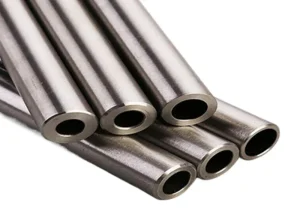
The ASTM A1016 standard specifies the manufacturing requirements for seamless and welded stainless steel pipes used for high-temperature services. This standard applies to pipeline systems operating in high temperature, high pressure, and corrosive environments, such as the petroleum and chemical industries. The A1016 standard covers the chemical composition, mechanical properties, dimensions, and processing requirements of pipes to ensure that product quality meets the standards and meets the requirements of engineering design.
Characteristics
Wide Range of Applications: ASTM A1016 covers tubes suitable for various industries and applications, including petrochemical, chemical processing, power generation, and automotive. This versatility makes it a popular choice for environments requiring resistance to corrosion, high temperatures, and pressure.
Seamless and Welded Options: ASTM A1016 includes specifications for both seamless and welded tubes, providing flexibility to accommodate different manufacturing processes and application requirements.
High Corrosion Resistance: The ferritic, austenitic, and stainless steel alloys covered by ASTM A1016 exhibit excellent corrosion resistance, making them suitable for use in corrosive environments such as chemical processing plants and offshore platforms.
High-Temperature Performance: ASTM A1016 tubes are capable of withstanding high temperatures, making them ideal for applications involving elevated temperatures, such as heat exchangers, boilers, and furnace components.
Dimensional Accuracy: ASTM A1016 specifies strict requirements for dimensions and tolerances, ensuring that tubes meet precise size and shape specifications. This dimensional accuracy is essential for seamless integration into systems and equipment.
Quality Assurance: Compliance with ASTM A1016 ensures that tubes meet stringent quality standards for chemical composition, mechanical properties, and testing methods. This quality assurance provides confidence in the performance and reliability of the tubes in demanding industrial applications.
ASTM A1016 Data Sheet
Steel Grade
Dimensions and Tolerances
Equivalent Grades
Chemical Composition
Mechanical Properties
Fabrication and Welding
Steel Grade
Ferritic Alloy Steel
Example Grades: T11, T22, T91
Austenitic Alloy Steel
Example Grades: TP304, TP316, TP321
Stainless Steel
Example Grades: TP304L, TP316L, TP347
Dimensions and Tolerances
Shape
Round, Square, Rectangular, Oval, Elliptical, etc.
Diameter
0.25 inches (6.35 mm) and above
Wall Thickness
0.015 inches (0.38 mm) and above
Length
Specific lengths or random lengths
Tolerances
Diameter: ±0.005 inches (0.13 mm)
Wall Thickness: ±10% or as specified
Length: ±1/8 inch (3.2 mm) or as specified
Straightness: Within ASTM A1016 requirements
Equivalent Grades
United States
ASTM A213/A213M Grade T11, ASTM A312/A312M Grade TP304
United Kingdom
BS 3059 Part 2 Grade 360, BS 6323 Part 7 Grade CFS 6
Japan
JIS G3462 Grade STBA 12, JIS G3459 Grade SUS304
European Union
EN 10216-2 Grade 10CrMo9-10, EN 10217-7 Grade X5CrNi18-10
Chemical Composition
Carbon (C)
Typical Range: 0.03 – 0.25%
Manganese (Mn)
Typical Range: 0.30 – 2.00%
Phosphorus (P)
Typical Range: 0.040% max
Sulfur (S)
Typical Range: 0.030% max
Silicon (Si)
Typical Range: 0.10 – 1.00%
Chromium (Cr)
Typical Range: 10.00 – 30.00%
Nickel (Ni)
Typical Range: 8.00 – 25.00%
Molybdenum (Mo)
Typical Range: 0.15 – 10.00%
Nitrogen (N)
Typical Range: 0.10% max
Mechanical Properties
Tensile Strength
415 – 690 MPa
Yield Strength
205 – 550 MPa
Elongation
20% – 40%
Hardness
Varies depending on grade
Impact Toughness
Varies depending on grade
Fabrication and Welding
Fabrication
Cutting: Use appropriate cutting methods such as sawing or shearing to achieve the desired tube lengths. Avoid excessive heat input to prevent material distortion.
Forming: Cold forming techniques such as bending and rolling may be employed to shape the tubes. Ensure that the forming process does not compromise the integrity of the tubes.
Machining: If machining is required, use sharp tools and appropriate cutting speeds to minimize work hardening and achieve dimensional accuracy.
Cleaning: Remove any contaminants or surface impurities from the tubes before further processing or welding.
Welding
Preparation: Ensure proper fit-up and joint preparation to achieve full penetration and minimize distortion. Beveling or chamfering may be necessary for thicker tubes.
Welding Method: Use welding methods such as Gas Tungsten Arc Welding (GTAW), Gas Metal Arc Welding (GMAW), or Shielded Metal Arc Welding (SMAW) suitable for the material and application.
Consumables: Select welding consumables, including electrodes and filler metals, compatible with the base material to ensure weld integrity and mechanical properties.
Welding Parameters: Control welding parameters such as heat input, travel speed, and interpass temperature to minimize the risk of distortion, cracking, and metallurgical changes.
Post-Weld Treatment: Perform post-weld heat treatment as necessary to relieve residual stresses and restore material properties. This may include annealing, stress relieving, or solution heat treatment.
Inspection: Conduct thorough visual inspection and non-destructive testing (NDT) to detect weld defects such as cracks, porosity, or incomplete fusion. Follow relevant codes and standards for inspection procedures.
Advantages
Longevity and Durability: ASTM A1016-compliant steel tubes are engineered to withstand harsh operating conditions, providing long-term durability and reliability. Their resistance to corrosion, erosion, and abrasion ensures extended service life, reducing maintenance costs and downtime for customers.
Versatility and Customization: ASTM A1016-compliant steel tubes offer versatility and customization options to meet diverse customer requirements. Available in various shapes, sizes, and grades, these tubes can be tailored to specific applications, allowing customers to optimize performance and efficiency in their projects.
Compliance and Standardization: By adhering to ASTM A1016 specifications, customers can ensure compliance with industry standards and regulations, enhancing safety, quality, and regulatory compliance. Standardization simplifies procurement processes, facilitates project planning, and fosters confidence in product performance and reliability.