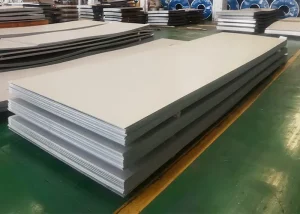
ASTM A682
- Home
- Products
- Carbon Steel Stocks
- ASTM A682
Basic Info
ASTM A682 STEEL is a standard specification for cold-rolled steel strip. In terms of carbon content, it typically contains low to medium levels of carbon, depending on the grade specified within the standard. The mechanical performance of ASTM A682 STEEL can vary based on factors such as the grade, processing, and heat treatment. Generally, it offers good formability, strength, and surface finish suitable for a wide range of applications including automotive, appliances, and electronics.
Characteristics
Good Formability: It can be easily formed into various shapes without sacrificing its structural integrity, making it suitable for complex manufacturing processes.
High Strength: Despite its formability, ASTM A682 steel maintains excellent strength properties, ensuring structural integrity and durability in applications subject to mechanical stress.
Excellent Surface Finish: The cold-rolled process results in a smooth and uniform surface finish, ideal for applications where aesthetics are important, such as automotive panels and appliances.
ASTM A682 Data Sheet
Versatility
Steel Grade
Equivalent Steel Grades
Chemical Composition
Mechanical Properties
Fabrication and Welding
ASTM A682VS.ASTM A689
Versatility
Steel Plates
- Dimension: Thickness x Width, Length
- Tolerance: As per ASTM A6/A6M standards
- Notes: Flatness, surface finish, edge condition
Bars
- Dimension: Diameter x Length
- Tolerance: As per ASTM A108 standards
- Notes: Straightness, surface finish
Structural Shapes
- Dimension: Depth x Flange, Width x Thickness, Length
- Tolerance: As per ASTM A6/A6M standards
- Notes: Thickness, length, straightness, surface finish, tensile properties
Steel Grade
Grade 1, Grade 2, Grade 3, Grade 4, Grade 5, Grade 6
Grade 1050, Grade 1070, Grade 1095, Grade 6150, Grade 9260
Equivalent Steel Grades
United States
- Equivalent Steel Grades: AISI/SAE 1008, AISI/SAE 1010, AISI/SAE 1018, AISI/SAE 1095, AISI/SAE 6150, AISI/SAE 9260
- Standard: ASTM A682
EU
- Equivalent Steel Grades: EN 10130 DC01, EN 10130 DC04, EN 10130 DC05, EN 10130 DC06, EN 10130 DC07
- Standard: EN 10130
China
- Equivalent Steel Grades: GB/T 5213 Q195, GB/T 5213 Q215, GB/T 5213 Q235, GB/T 5213 Q345, GB/T 5213 SS400
- Standard: GB/T 5213
India
- Equivalent Steel Grades: IS 513 CR1, IS 513 CR2, IS 513 CR3, IS 513 CR4, IS 513 CR5
- Standard: IS 513
Chemical Composition
United States
- Equivalent Steel Grades: AISI/SAE 1008, AISI/SAE 1010, AISI/SAE 1018, AISI/SAE 1095
- Equivalent Steel Grades: AISI/SAE 6150, AISI/SAE 9260
- Standard: ASTM A682
EU
- Equivalent Steel Grades: EN 10130 DC01, EN 10130 DC04, EN 10130 DC05
- Equivalent Steel Grades: EN 10130 DC06, EN 10130 DC07
- Standard: EN 10130
China
- Equivalent Steel Grades: GB/T 5213 Q195, GB/T 5213 Q215, GB/T 5213 Q235
- Equivalent Steel Grades: GB/T 5213 Q345, GB/T 5213 SS400
- Standard: GB/T 5213
India
- Equivalent Steel Grades: IS 513 CR1, IS 513 CR2, IS 513 CR3
- Equivalent Steel Grades: IS 513 CR4, IS 513 CR5
- Standard: IS 513
Mechanical Properties
Grade 1008 (Max %)
- Carbon: 0.1
- Manganese: 0.30-0.50
- Phosphorus: 0.03
- Sulfur: 0.05
- Silicon: 0.03
Grade 1010 (Max %)
- Carbon: 0.08-0.13
- Manganese: 0.30-0.60
- Phosphorus: 0.03
- Sulfur: 0.05
- Silicon: 0.03
Grade 1018 (Max %)
- Carbon: 0.14-0.20
- Manganese: 0.60-0.90
- Phosphorus: 0.04
- Sulfur: 0.05
- Silicon: 0.03
Grade 1020 (Max %)
- Carbon: 0.18-0.23
- Manganese: 0.30-0.60
- Phosphorus: 0.04
- Sulfur: 0.05
Grade 1095 (Max %)
- Carbon: 0.90-1.03
- Manganese: 0.30-0.50
- Phosphorus: 0.035
- Sulfur: 0.045
- Silicon: 0.15-0.35
Grade 6150 (Max %)
- Carbon: 0.48-0.53
- Manganese: 0.70-0.90
- Phosphorus: 0.025
- Sulfur: 0.04
- Silicon: 1.40-2.00
- Chromium: 0.80-1.10
- Vanadium: 0.15-0.35
Grade 9260 (Max %)
- Carbon: 0.56-0.64
- Manganese: 0.75-1.00
- Phosphorus: 0.035
- Sulfur: 0.04
- Silicon: 1.80-2.20
Fabrication and Welding
Formability
- Fabrication Considerations: ASTM A682 steel exhibits excellent formability, making it suitable for various cold forming processes such as bending, stamping, and drawing.
- Welding Considerations: Weldability of ASTM A682 steel is generally good, but proper preheating and control of interpass temperatures may be necessary for thick sections to prevent cracking.
Machinability
- Fabrication Considerations: ASTM A682 steel typically has good machinability characteristics, allowing for ease of machining operations such as drilling, milling, and turning.
- Welding Considerations: ASTM A682 steel can be welded using commonly used welding methods such as shielded metal arc welding (SMAW), gas metal arc welding (GMAW), and gas tungsten arc welding (GTAW). Preheating and post-weld heat treatment may be required for thick sections to minimize the risk of weld cracking.
Heat Treatment
- Fabrication Considerations: Heat treatment processes such as annealing or stress relieving may be required for certain applications to improve the material’s properties or relieve internal stresses.
- Welding Considerations: Proper edge preparation is essential for quality welds, and the weld area should be clean and free of contaminants to ensure sound welds.
Surface Finish
- Fabrication Considerations: ASTM A682 steel typically has a smooth surface finish after cold rolling, which may require additional surface treatment such as pickling or coating for specific applications.
- Welding Considerations: Welded joints should be carefully inspected for defects such as porosity, cracking, or incomplete fusion, and appropriate non-destructive testing methods may be employed to ensure weld quality.
Edge Condition
- Fabrication Considerations: ASTM A682 steel is available with either mill edge or slit edge conditions, and proper edge preparation is crucial for subsequent fabrication processes such as welding or forming.
- Welding Considerations: Welding parameters, including welding currents, voltages, travel speeds, and electrode or filler metal selections, should be carefully controlled to achieve desired weld properties and minimize the risk of defects.
ASTM A682VS.ASTM A689
Chemical Composition
- ASTM A682 Steel: Carbon, manganese, phosphorus, sulfur, silicon
- ASTM A689 Steel: Carbon, manganese, phosphorus, sulfur
Mechanical Properties
- ASTM A682 Steel: Vary depending on grade
- ASTM A689 Steel: Vary depending on grade
Fabrication
- ASTM A682 Steel: Good formability, suitable for cold forming
- ASTM A689 Steel: Good machinability, suitable for machining
Welding
- ASTM A682 Steel: Good weldability with proper procedures
- ASTM A689 Steel: Good weldability with proper procedures