ASTM A666
- Home
- Products
- Stainless Steel Stocks
- ASTM A666
Basic Info
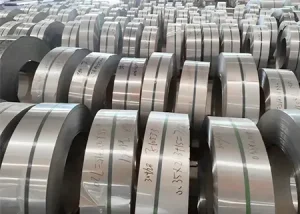
ASTM A666 is a standard specification for annealed or cold-worked austenitic stainless steel sheet, strip, plate, and flat bar. It covers the requirements for chemical composition, mechanical properties, dimensions, and surface finishes of stainless steel products. This standard is widely used in various industries, including automotive, aerospace, construction, and food processing, due to the excellent corrosion resistance, formability, and strength of austenitic stainless steels. ASTM A666 provides guidelines for both annealed and cold-worked conditions, offering flexibility in processing and fabrication. Compliance with this standard ensures consistency and quality in the production of stainless steel materials for diverse applications.
Characteristics
Corrosion Resistance: ASTM A666 specifies stainless steel grades known for their excellent resistance to corrosion, making them suitable for use in harsh environments, including marine, chemical, and food processing industries.
Formability: Austenitic stainless steel grades covered by ASTM A666 exhibit good formability, allowing for easy fabrication into various shapes and components through processes such as bending, machining, and welding.
Strength: While not as high as some other steel alloys, ASTM A666 stainless steel grades offer sufficient strength for many applications, particularly when combined with their corrosion resistance and formability.
Surface Finish Options: ASTM A666 provides guidelines for a range of surface finishes, including mill finish, bright annealed, and polished finishes, allowing for customization to meet specific aesthetic and functional requirements.
Dimensional Accuracy: ASTM A666 specifies tight dimensional tolerances for stainless steel sheet, strip, plate, and flat bar, ensuring consistency and precision in the manufacturing process.
Versatility: With a wide range of grades and finishes available, ASTM A666 stainless steel is versatile and finds applications in diverse industries such as automotive, aerospace, construction, and medical equipment manufacturing.
ASTM A666 Data Sheet
Steel Grade
Dimensions and Tolerances
Equivalent Grades
Chemical Composition
Mechanical Properties
Fabrication and Welding
Steel Grade
301
Chromium-Nickel Austenitic Stainless Steel
302
Chromium-Nickel Austenitic Stainless Steel
304
Chromium-Nickel Austenitic Stainless Steel
304L
Low Carbon Version of Type 304 Stainless Steel
305
Chromium-Nickel Austenitic Stainless Steel
316
Chromium-Nickel-Molybdenum Austenitic Stainless Steel
316L
Low Carbon Version of Type 316 Stainless Steel
316Ti
Titanium-Stabilized Chromium-Nickel Austenitic Stainless Steel
321
Titanium-Stabilized Chromium-Nickel Austenitic Stainless Steel
347
Niobium-Stabilized Chromium-Nickel Austenitic Stainless Steel
430
Ferritic Stainless Steel
Dimensions and Tolerances
Shape
Sheet, Strip, Plate, Flat Bar
Thickness
0.010 inches (0.25 mm) to 0.187 inches (4.75 mm) for sheet and strip
0.1875 inches (4.76 mm) to 4.000 inches (101.6 mm) for plate
0.0625 inches (1.59 mm) to 0.750 inches (19.05 mm) for flat bar
Width
Up to 60 inches (1524 mm) for sheet and strip
Up to 96 inches (2438 mm) for plate and flat bar
Length
Custom lengths or coils
Tolerances
Thickness: As specified in ASTM A666 standard
Width: As specified in ASTM A666 standard
Length: As specified in ASTM A666 standard or custom
Equivalent Grades
United States
Equivalent Grades: AISI 301, 304, 316, 430
Standard: AISI/SAE
Notes: AISI/SAE standards are commonly used in North America
United Kingdom
Equivalent Grades: 1.4310, 1.4301, 1.4401, 1.4016
Standard: BS EN (European Standard)
Notes: BS EN standards are widely adopted in the UK and Europe
Japan
Equivalent Grades: SUS301, SUS304, SUS316, SUS430
Standard: JIS (Japanese Industrial Standard)
Notes: JIS standards are commonly used in Japan and Asia
China
Equivalent Grades: 1Cr17Ni7, 0Cr18Ni9, 0Cr17Ni12Mo2, 1Cr17
Standard: GB/T (Chinese National Standards)
Notes: GB/T standards are prevalent in China and Asia
Chemical Composition
Carbon (C)
AISI 301: 0.15 max
AISI 304: 0.08 max
AISI 316: 0.08 max
AISI 430: 0.12 max
Manganese (Mn)
AISI 301: 2.00 max
AISI 304: 2.00 max
AISI 316: 2.00 max
AISI 430: 1.00 max
Phosphorus (P)
AISI 301: 0.045 max
AISI 304: 0.045 max
AISI 316: 0.045 max
AISI 430: 0.040 max
Sulfur (S):
AISI 301: 0.030 max
AISI 304: 0.030 max
AISI 316: 0.030 max
AISI 430: 0.030 max
Silicon (Si)
AISI 301: 1.00 max
AISI 304: 1.00 max
AISI 316: 1.00 max
AISI 430: 1.00 max
Chromium (Cr)
AISI 301: 16.00-18.00
AISI 304: 18.00-20.00
AISI 316: 16.00-18.00
AISI 430: 16.00-18.00
Nickel (Ni)
AISI 301: 6.00-8.00
AISI 304: 8.00-10.50
AISI 316: 10.00-14.00
Molybdenum (Mo)
AISI 316: 2.00-3.00
Iron (Fe)
AISI 301: Balance
AISI 304: Balance
AISI 316: Balance
AISI 430: Balance
Mechanical Properties
Tensile Strength
AISI 301: 75 ksi min (515 MPa min)
AISI 304: 75 ksi min (515 MPa min)
AISI 316: 75 ksi min (515 MPa min)
AISI 430: 70 ksi min (485 MPa min)
Yield Strength
AISI 301: 30 ksi min (205 MPa min)
AISI 304: 30 ksi min (205 MPa min)
AISI 316: 30 ksi min (205 MPa min)
AISI 430: 25 ksi min (170 MPa min)
Elongation
AISI 301: 40% min
AISI 304: 40% min
AISI 316: 40% min
AISI 430: 22% min
Hardness (Rockwell B)
AISI 301: 92 max
AISI 304: 92 max
AISI 316: 92 max
AISI 430: 89 max
Fabrication and Welding
Cutting
AISI 301: Shearing, Sawing, Laser Cutting
AISI 304: Shearing, Sawing, Laser Cutting
AISI 316: Shearing, Sawing, Laser Cutting
AISI 430: Shearing, Sawing, Laser Cutting
Forming
AISI 301: Cold Forming, Bending, Roll Forming
AISI 304: Cold Forming, Bending, Roll Forming
AISI 316: Cold Forming, Bending, Roll Forming
AISI 430: Cold Forming, Bending, Roll Forming
Machining
AISI 301: Carbide Tooling, High Cutting Speeds
AISI 304: Carbide Tooling, High Cutting Speeds
AISI 316: Carbide Tooling, High Cutting Speeds
AISI 430: Carbide Tooling, High Cutting Speeds
Welding
AISI 301: Shielded Metal Arc Welding (SMAW), Gas Metal Arc Welding (GMAW), Gas Tungsten Arc Welding (GTAW)
AISI 304: Shielded Metal Arc Welding (SMAW), Gas Metal Arc Welding (GMAW), Gas Tungsten Arc Welding (GTAW)
AISI 316: Shielded Metal Arc Welding (SMAW), Gas Metal Arc Welding (GMAW), Gas Tungsten Arc Welding (GTAW)
AISI 430: Shielded Metal Arc Welding (SMAW), Gas Metal Arc Welding (GMAW), Gas Tungsten Arc Welding (GTAW)
Applications
Kitchen Appliances: Individuals may be interested in how ASTM A666 stainless steel is used in kitchen appliances such as refrigerators, ovens, dishwashers, and sinks due to its corrosion resistance, durability, and hygienic properties.
Architectural and Building Construction: There could be interest in the use of ASTM A666 materials in architectural and building construction for applications such as fa莽ades, handrails, cladding, roofing, and structural components due to their aesthetic appeal, strength, and corrosion resistance.
Medical Equipment: People may search for information about ASTM A666 materials used in medical equipment and devices such as surgical instruments, medical implants, and diagnostic equipment due to their biocompatibility, corrosion resistance, and ease of sterilization.
Automotive Industry: There could be interest in how ASTM A666 materials are used in the automotive industry for applications such as exhaust systems, trim components, and structural parts due to their strength, corrosion resistance, and ability to withstand harsh environmental conditions.
Food Processing and Packaging: Individuals may be interested in the use of ASTM A666 stainless steel in food processing and packaging equipment such as conveyor systems, storage tanks, and packaging machinery due to its hygienic properties, corrosion resistance, and ease of cleaning.