ASTM A632
- Home
- Products
- Stainless Steel Stocks
- ASTM A632
Basic Info
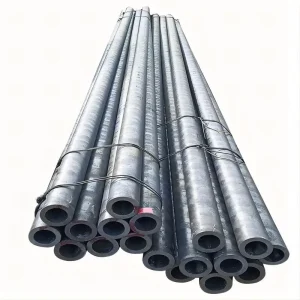
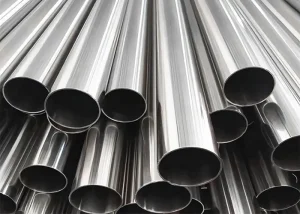
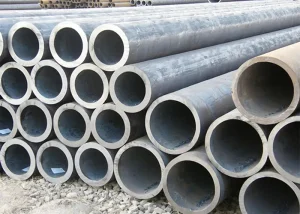
ASTM A632 is a standard that specifies the requirements for seamless and welded austenitic stainless steel tubing for general corrosion-resisting and low- or high-temperature service. It includes different grades and sizes of tubing used in a variety of industrial and chemical processing applications, ensuring the quality and integrity of these materials.
Characteristics
Corrosion Resistance: Stainless steel tubing specified by ASTM A632 offers excellent corrosion resistance, ensuring durability in harsh environments.
Seamless and Welded Options: A632 covers both seamless and welded tubing, providing flexibility in design and fabrication.
Wide Range of Grades: The standard includes various grades of austenitic stainless steel tubing suitable for general corrosion-resisting and low- or high-temperature service.
Dimensional Accuracy: A632 ensures the dimensional accuracy of stainless steel tubing, crucial for compatibility and fit in various applications.
ASTM A632 Data Sheet
Steel Grade
Dimensions and Tolerances
Equivalent Grades
Chemical Composition
Mechanical Properties
Fabrication and Welding
Steel Grade
1018
1020
1045
1117
1141
1215
4140
8620
Dimensions and Tolerances
Round
Width: 0.1885 – 2.750 inches
Thickness: 0.016 – 0.065 inches
Tolerance Width: +/- 0.005 inches
Tolerance Thickness: +/- 0.003 inches
Square
Width: 0.1885 – 2.750 inches
Thickness: 0.016 – 0.065 inches
Tolerance Width: +/- 0.005 inches
Tolerance Thickness: +/- 0.003 inches
Rectangular
Width: 0.1885 – 2.750 inches
Thickness: 0.016 – 0.065 inches
Tolerance Width: +/- 0.005 inches
Tolerance Thickness: +/- 0.003 inches
Equivalent Grades
United Kingdom
BS 970 316S11
Germany
DIN 1.4401
Japan
JIS SUS316
Chemical Composition
Carbon (C): 0.08 max
Manganese (Mn): 2.00 max
Phosphorus (P): 0.045 max
Sulfur (S): 0.030 max
Silicon (Si): 1.00 max
Chromium (Cr): 16.0 – 18.0
Nickel (Ni): 10.0 – 14.0
Molybdenum (Mo): 2.00 – 3.00
Mechanical Properties
Tensile Strength
Description: Maximum stress a material can withstand without failure
Typical Value: 75,000 – 100,000 psi (517 – 689 MPa)
Yield Strength
Description: Stress at which material begins to deform plastically
Typical Value: 30,000 – 50,000 psi (207 – 345 MPa)
Elongation
Description: Percentage increase in length after fracture
Typical Value: 40% – 60%
Hardness
Description: Resistance to surface indentation
Typical Value: HRB 80 – 90, HV 180 – 200
Modulus of Elasticity
Description: Measure of stiffness
Typical Value: 28 x 10^6 psi (193 GPa)
Poisson’s Ratio
Description: Measure of lateral contraction when stretched
Typical Value: 0.3
Thermal Conductivity
Description: Ability to conduct heat
Typical Value: 144 BTU/(hr·ft²·°F) (25 W/(m·K))
Thermal Expansion
Description: Change in length per unit length per degree change
Typical Value: 16.5 µin/(in·°F) (9.2 µm/(m·K))
Density
Description: Mass per unit volume
Typical Value: 0.285 lb/in³ (7.9 g/cm³)
Electrical Conductivity
Description: Ability to conduct electricity
Typical Value: 2.5% IACS
Fabrication and Welding
Fabrication
ASTM A632 specifies that the fabrication of stainless steel tubing should be carried out using methods suitable for stainless steels. This includes processes such as cold working, hot working, and machining. Care should be taken to avoid contamination and damage to the material during fabrication.
Welding
Welding of ASTM A632 stainless steel tubing should be performed using processes suitable for austenitic stainless steels. Common welding methods include TIG (Tungsten Inert Gas), MIG (Metal Inert Gas), and resistance welding. It’s essential to use filler materials compatible with the base metal to ensure proper weld integrity and corrosion resistance.
Welding Precautions
Prior to welding, the surface of the stainless steel tubing should be thoroughly cleaned to remove any contaminants, oils, or oxides that could affect the quality of the weld.
Proper shielding gas should be used during welding to prevent oxidation and ensure a clean weld bead.
Control of heat input is crucial to prevent distortion and minimize the risk of sensitization, which can lead to intergranular corrosion.
Post-welding treatments such as annealing or solution annealing may be necessary to restore the corrosion resistance and mechanical properties of the welded joints.
Welding parameters should be carefully adjusted according to the thickness and composition of the tubing to achieve optimal weld penetration and fusion without causing heat-affected zone (HAZ) enlargement or distortion.
Guardians of Durability: Unlocking Unrivaled Corrosion Resistance with ASTM A632 Materials
ASTM A632 materials offer unparalleled corrosion resistance, making them an ideal choice for applications where exposure to harsh environments or corrosive substances is a concern. Engineered with high levels of chromium and nickel, these stainless steel alloys form a protective oxide layer on the surface, effectively shielding the material from corrosion, rust, and degradation over time. Whether used in marine structures, chemical processing equipment, medical devices, or architectural components, ASTM A632 materials demonstrate remarkable durability and longevity even in the most demanding conditions. Customers can rely on these materials to maintain their integrity and performance, reducing maintenance costs and extending the service life of their products. With ASTM A632, you can trust that your investment is safeguarded against the damaging effects of corrosion, ensuring peace of mind and long-term satisfaction.
ASTM A108 steel’s superior machinability means that it can be efficiently and precisely shaped, drilled, turned, and milled to meet the most intricate design requirements. Whether it’s creating intricate parts for automotive applications or precision components for machinery, ASTM A108’s machinability allows for cost-effective production without compromising on quality.
The optimal balance of carbon content and other alloying elements in ASTM A108 grades ensures minimal tool wear and maximum tool life, reducing production costs and downtime. Manufacturers benefit from increased productivity and efficiency, as these materials are known for their smooth surface finish and dimensional accuracy.
Engineers and fabricators can confidently choose ASTM A108 materials, knowing that they are not only strong and reliable but also easy to machine to meet the demands of their projects. In a competitive market where precision and speed are paramount, ASTM A108’s exceptional machinability stands out as a key advantage, attracting customers seeking high-performance materials for their manufacturing needs.