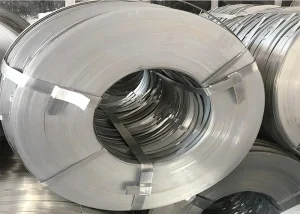

ASTM A959
- Home
- Products
- Stainless Steel Stocks
- ASTM A959
Basic Info
The ASTM A959 standard provides general requirements and testing methods for stainless steel. This standard covers the requirements for the chemical composition, mechanical properties, grain size, and corrosion resistance of stainless steel. It also includes detailed procedures for chemical analysis, tensile testing, hardness testing, impact testing, etc. of stainless steel materials. The A959 standard ensures that the quality and performance of stainless steel materials comply with industrial standards and meet various engineering and application requirements.
Characteristics
Comprehensive Coverage: ASTM A959 encompasses a wide range of stainless and heat-resisting steel grades, including austenitic, ferritic, martensitic, duplex, and precipitation-hardening alloys.
Specifications for Multiple Properties: The standard specifies requirements for various properties such as chemical composition, mechanical properties, dimensions, tolerances, surface finish, and testing methods.
Material Diversity: ASTM A959 covers stainless steel sheet and strip in various forms, including hot-rolled, cold-rolled, annealed, and heat-treated conditions, catering to diverse industrial applications.
Quality Assurance: Compliance with ASTM A959 ensures the quality, consistency, and performance of stainless steel products, providing assurance to manufacturers, suppliers, and end-users.
Industry Relevance: ASTM A959 is widely recognized and utilized in industries such as automotive, aerospace, construction, food processing, and more, where stainless steel materials are crucial for performance, durability, and corrosion resistance.
Guidance for Material Selection and Specification: The standard offers valuable guidance for selecting, specifying, and using stainless steel sheet and strip materials, helping stakeholders make informed decisions based on their specific application requirements.
ASTM A959 Data Sheet
Steel Grade
Dimensions and Tolerances
Equivalent Grades
Chemical Composition
Mechanical Properties
Fabrication and Welding
Steel Grade
Austenitic Stainless Steel
301, 302, 303, 304, 304L, 305, 316, 316L, 317, 317L, 321, 347, and more
Ferritic Stainless Steel
405, 409, 430, 439, 441, 444, and more
Martensitic Stainless Steel
410, 416, 420, 431, 440A, 440C, and more
Duplex Stainless Steel
2205 (UNS S32205), 2507 (UNS S32750), and more
Precipitation-Hardening Stainless Steel
17-4 PH (UNS S17400), 15-5 PH (UNS S15500), and more
Dimensions and Tolerances
Stainless Steel Sheet
Dimensions: Thickness: 0.3 mm – 6.0 mm
Tolerances: Thickness: ±0.05 mm – ±0.5 mm
Stainless Steel Strip
Dimensions: Width: 10 mm – 1500 mm
Tolerances: Width: ±0.1 mm – ±0.5 mm
Equivalent Grades
United States
AISI/SAE designation (e.g., AISI 304, AISI 316, AISI 430)
United Kingdom
BS (British Standard) designation (e.g., BS 304S31, BS 316S11)
Germany
DIN (Deutsches Institut für Normung) designation (e.g., DIN 1.4301, DIN 1.4401)
Japan
JIS (Japanese Industrial Standards) designation (e.g., JIS SUS 304, JIS SUS 316)
Chemical Composition
Carbon (C)
0.03 – 0.15%
Manganese (Mn)
2.00% max
Phosphorus (P)
0.045% max
Sulfur (S)
0.03% max
Silicon (Si)
1.00% max
Chromium (Cr)
16.00 – 20.00%
Nickel (Ni)
10.00 – 14.00%
Molybdenum (Mo)
2.00 – 3.00%
Nitrogen (N)
0.10% max
Copper (Cu)
0.75% max
Iron (Fe)
Balance
Mechanical Properties
Tensile Strength
500 – 1000 MPa
Yield Strength
200 – 800 MPa
Elongation
25% – 60%
Hardness (Brinell)
150 – 300 HB
Hardness (Rockwell B)
70 – 90 HRB
Hardness (Rockwell C)
20 – 40 HRC
Modulus of Elasticity
190 – 210 GPa (28 × 10^6 – 30 × 10^6 psi)
Poisson’s Ratio
0.25 – 0.30
Shear Modulus
70 – 80 GPa (10 × 10^6 – 12 × 10^6 psi)
Fabrication and Welding
Cutting
Method: Shearing, Sawing, Plasma Cutting
Guidelines: Use tools designed for stainless steel cutting to minimize contamination and achieve clean edges.
Notes: Ensure proper ventilation during cutting to prevent exposure to fumes.
Forming
Method: Bending, Pressing, Roll Forming
Guidelines: Use equipment with sufficient capacity to avoid work hardening and cracking.
Notes: Annealing or stress relieving may be necessary to restore material properties.
Machining
Method: Turning, Drilling, Milling
Guidelines: Use sharp tools and cutting fluids to reduce work hardening and tool wear.
Notes: Maintain proper feeds and speeds to prevent work hardening.
Welding
Method: TIG (GTAW), MIG (GMAW), Stick (SMAW)
Guidelines: Select appropriate filler metal matching the base metal grade. Use low heat input to minimize distortion and prevent carbide precipitation.
Notes: Perform post-weld cleaning to avoid contaminants and corrosion.
Preparation
Guidelines: Ensure proper fit-up and joint preparation to achieve full penetration and minimize distortion.
Notes: Avoid excessive heat input to prevent warping.
Back Purging
Guidelines: Implement back purging with inert gas for critical applications to prevent oxidation and ensure sound welds.
Notes: Perform thorough cleaning, especially for high-purity applications.
Post-Weld Heat Treatment
Method: Annealing, Stress Relieving
Guidelines: Heat treat as needed to relieve residual stresses and restore material properties.
Notes: Follow recommended temperature and time cycles to prevent grain growth or distortion.
Surface Finishing
Method: Grinding, Polishing, Pickling
Guidelines: Remove scale, oxide, and other contaminants to improve appearance and corrosion resistance.
Notes: Avoid scratches or defects that can lead to corrosion.
Inspection and Testing
Method: Visual, Dye Penetrant, Radiographic
Guidelines: Inspect welds for defects such as cracks, porosity, and incomplete fusion. Perform dye penetrant or radiographic testing for critical applications.
Notes: Follow ASTM standards for inspection and testing procedures.
Comparison with Other Stainless Steel Standards
Grading Systems: Understanding how ASTM A959 materials correspond to grading systems used in other standards, such as AISI/SAE, EN, and JIS, can help users identify equivalent grades and select materials suitable for their applications. While the naming conventions and numbering systems may differ between standards, there are often equivalences established through cross-referencing and comparative analysis.
Chemical Composition and Mechanical Properties: Comparing the chemical composition and mechanical properties specified in ASTM A959 with those in other standards allows users to assess similarities and differences. This comparison helps in evaluating material performance and compatibility across different standards and regions. It’s essential to consider variations in testing methods and tolerances between standards when making comparisons.
Global Acceptance and Compliance: Understanding how ASTM A959 materials align with other international standards like EN and JIS provides insight into their global acceptance and compliance. Users can assess whether materials meeting ASTM A959 requirements also satisfy the criteria set forth by other standards, facilitating international trade and collaboration. Harmonization efforts between standards organizations aim to minimize discrepancies and promote interoperability among different systems.