
Definition and Significance of Thickness

Stainless steel sheets come in various thicknesses, each suited for different applications. Understanding these thicknesses is crucial for selecting the right material for your project. Thickness directly affects the strength, durability, and performance of stainless steel sheets.
Definition and Measurement Methods of Thickness
Thickness is typically defined as the distance between two parallel surfaces of the sheet. The thickness of stainless steel sheets is commonly measured in gauges, where a lower gauge number represents a thicker sheet. However, it’s important to note that different countries may use different measurement systems, so be sure to verify the unit of measurement.
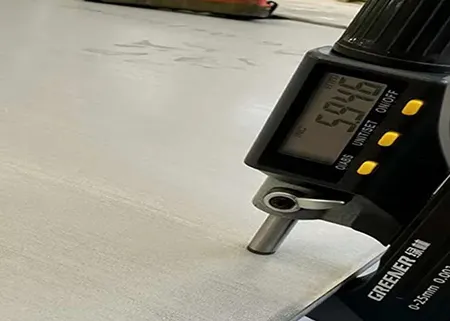
Impact of Thickness on the Performance and Applications of Stainless Steel Sheets
The thickness of a stainless steel sheet has a significant impact on its performance in various applications. Thicker sheets offer increased strength and durability, making them suitable for heavy-duty applications such as construction, industrial equipment, and structural components. On the other hand, thinner sheets are more flexible and lightweight, often used in applications where weight is a concern, such as automotive body panels or electronics.
Thicknesses Chart of Stainless Steel Sheets (Gauge, inch, mm)
| Gauge | Inch | Millimeter |
| 7 | 0.1875 | 4.76 |
| 8 | 0.1644 | 4.18 |
| 9 | 0.1483 | 3.77 |
| 10 | 0.1345 | 3.4163 |
| 11 | 0.1196 | 3.038 |
| 12 | 0.1046 | 2.656 |
| 13 | 0.0897 | 2.278 |
| 14 | 0.0747 | 1.897 |
| 15 | 0.0673 | 1.709 |
| 16 | 0.0598 | 1.519 |
| 17 | 0.0538 | 1.366 |
| 18 | 0.0478 | 1.214 |
| 19 | 0.0418 | 1.062 |
| 20 | 0.0359 | 0.912 |
| 21 | 0.0329 | 0.836 |
| 22 | 0.0299 | 0.759 |
| 23 | 0.0269 | 0.683 |
| 24 | 0.0239 | 0.607 |
| 25 | 0.0209 | 0.531 |
| 26 | 0.0179 | 0.455 |
| 27 | 0.0164 | 0.417 |
| 28 | 0.0149 | 0.378 |
| 29 | 0.0135 | 0.343 |
| 30 | 0.012 | 0.305 |
| 31 | 0.0109 | 0.277 |
| 32 | 0.0097 | 0.248 |
| 33 | 0.009 | 0.229 |
| 34 | 0.0082 | 0.208 |
| 35 | 0.0075 | 0.191 |
| 36 | 0.0068 | 0.173 |
| 37 | 0.0062 | 0.157 |
| 38 | 0.0056 | 0.142 |
| 39 | 0.005 | 0.127 |
| 40 | 0.0045 | 0.114 |
Common Thickness Ranges of Stainless Steel Sheets
Thin Sheet Thickness Range
Thin stainless steel sheets typically range from 30 to 7 gauge (0.0125 inches to 0.1875 inches). These sheets are flexible, lightweight, and often used in industries like automotive, aerospace, and electronics for their versatility and formability.

Medium Sheet Thickness Range
Medium thickness stainless steel sheets range from 7 to 14 gauge (0.1875 inches to 0.0781 inches). These sheets strike a balance between strength and formability, making them suitable for a wide range of applications including kitchen appliances, food processing equipment, and decorative applications.
Thick Sheet Thickness Range
Thick stainless steel sheets typically range from 14 gauge and thicker (0.0781 inches and above). These sheets provide exceptional strength and are commonly used in heavy machinery, construction, shipbuilding, and architectural structures where durability and load-bearing capacity are essential.
Stainless Steel Sheet Thickness Classification
| Thickness Range | Gauge Range | Thickness (mm) | Thickness (inch) |
| Thin Sheet | 30 to 7 gauge | 0.315 mm to 4.750 mm | 0.0125″ to 0.1875″ |
| Medium Sheet | 7 to 14 gauge | 4.750 mm to 2.000 mm | 0.1875″ to 0.0781″ |
| Thick Sheet | 14 gauge and thicker | 2.000 mm and thicker | 0.0781″ and thicker |
Applications of Stainless Steel Sheets with Different Thicknesses
Applications of Thin Sheets
Automotive Body Panels
Thin stainless steel sheets are commonly used in the automotive industry for body panels due to their lightweight nature and corrosion resistance. These sheets provide structural integrity while keeping the overall weight of the vehicle low.
Electronics Enclosures
Thin stainless steel sheets are ideal for creating enclosures for electronic devices. They offer protection against electromagnetic interference and provide durability for housing sensitive components.
Aircraft Components
In the aerospace industry, thin stainless steel sheets find applications in aircraft components such as fuselage panels. They offer high strength-to-weight ratio and corrosion resistance, crucial for aircraft construction.
Solar Panel Frames
Thin stainless steel sheets are used to manufacture frames for solar panels. These frames provide structural support and protection for the solar cells, ensuring longevity and stability.
Kitchen Appliances
Thin stainless steel sheets are a popular choice for kitchen appliances such as refrigerators, stoves, and dishwashers. They offer a sleek and modern aesthetic while being easy to clean and resistant to stains and corrosion.

Applications of Medium Sheets
Food Processing Equipment
Medium thickness stainless steel sheets are commonly used in the food industry for equipment such as mixing tanks, conveyors, and processing surfaces. These sheets offer resistance to corrosion, chemicals, and high temperatures, making them ideal for food processing environments.
Chemical Processing Tanks
Medium sheets find extensive use in the chemical industry for the construction of tanks, pipes, and vessels. Their corrosion resistance properties ensure the safe handling and storage of various chemicals and liquids.
Architectural Trim
Stainless steel sheets with medium thickness are utilized in architectural applications for decorative trim and accents in buildings. These sheets offer a modern and sophisticated look while providing durability and resistance to environmental elements.
Conveyor Systems
Medium stainless steel sheets are crucial in the manufacturing industry for conveyor systems due to their strength and corrosion resistance. These sheets can withstand the rigors of material handling and transportation processes.
Decorative Panels
In interior design and construction, medium stainless steel sheets are used for decorative panels in homes, offices, and public spaces. These panels offer a sleek and elegant appearance, adding a contemporary touch to interior designs.
Applications of Thick Sheets
Industrial Machinery
Thick stainless steel sheets are essential in the manufacturing of heavy-duty industrial machinery. These sheets provide the necessary strength and durability required for equipment such as presses, crushers, and extruders.
Construction Beams and Columns
Thick stainless steel sheets play a crucial role in construction, particularly for beams and columns in buildings and infrastructure. Their load-bearing capacity and resistance to corrosion make them ideal for supporting heavy structures.
Shipbuilding Components
Thick stainless steel sheets are a staple in the shipbuilding industry for constructing hulls, decks, and other critical components. These sheets offer exceptional corrosion resistance in marine environments and withstand the harsh conditions at sea.

Bridge Components
Stainless steel sheets with significant thickness are used in the construction of bridge components, such as girders and supports. These components must endure heavy loads, exposure to weather, and corrosive elements, making thick stainless steel an ideal choice.
Pressure Vessels
Thick stainless steel sheets are utilized in the fabrication of pressure vessels for various industries, including oil and gas, chemical processing, and power generation. These vessels require materials that can withstand high pressure and corrosive substances, making thick stainless steel sheets a reliable option.

Factors to Consider in Choosing the Thickness of Stainless Steel Sheets
Usage Environment and Requirements
Environmental Conditions
Consider the conditions the stainless steel will face, such as temperature variations, humidity levels, and potential exposure to corrosive substances. Thicker sheets offer greater resistance to corrosion and harsh environments.
Application Requirements
Evaluate the specific requirements of the application. For example, if the stainless steel will be used in a high-stress application, such as structural components, thicker sheets may be necessary for added strength and durability.
Recommended Thickness Range
| Scenario | Description | Environmental Conditions | Application Requirements | Recommended Thickness Range |
| Marine Construction | Stainless steel for seaside pier | High exposure to saltwater, moisture, salt spray | Enhanced corrosion resistance | 14 gauge and above |
| Chemical Plant | Stainless steel for chemical storage tanks | Corrosive chemicals, high temperatures | Resistance to chemical corrosion, structural integrity | 7 to 14 gauge |
| Architectural Design | Stainless steel panels for building facade | Lightweight, modern aesthetic | Flexibility for intricate designs, contemporary look | 30 to 14 gauge |
| Industrial Machinery | Stainless steel components for heavy machinery | High stress, heavy loads | Structural integrity, durability under industrial use | 14 gauge and above |
Processing Techniques and Requirements
When it comes to choosing the thickness of stainless steel sheets, the selected fabrication methods and processing techniques play a significant role. Different thicknesses offer distinct advantages and challenges in various manufacturing processes. Here’s a detailed look at how processing techniques and requirements influence the optimal thickness of stainless steel sheets:
Thinner Sheets for Bending and Forming
Thinner stainless steel sheets, typically ranging from 30 to 14 gauge, are favored for applications that require bending and forming. These sheets offer several advantages when it comes to fabrication processes:
– **Ease of Bending**: Thinner sheets are more pliable and easier to bend into complex shapes without the risk of cracking or tearing. This makes them ideal for applications such as automotive body panels, where intricate curves and contours are common.

– **Formability**: Thinner sheets can be easily formed into various shapes using standard press brakes and rollers. This flexibility allows manufacturers to create custom designs and profiles with relative ease.
– **Reduced Weight**: In applications where weight is a concern, such as aerospace components or lightweight structures, thinner sheets offer the benefit of reduced weight without sacrificing strength.
– **Lower Costs**: Thinner sheets generally require less material, leading to lower material costs. Additionally, they often require less energy to form and fabricate, resulting in cost savings during production.
However, it’s important to note that thinner sheets may have limitations in terms of strength and durability. They may not be suitable for applications where high mechanical strength is required, such as heavy machinery components or structural supports.
Thicker Sheets for Cutting and Shaping
Thicker stainless steel sheets, typically 14 gauge and above, are preferred for applications that involve cutting and shaping with robust machinery. These sheets offer several advantages in manufacturing processes that require strength and durability:
– **Strength and Rigidity**: Thicker sheets provide greater strength and rigidity, making them suitable for heavy-duty applications. They can withstand higher loads and stresses, making them ideal for structural components in construction, industrial machinery, and shipbuilding.
– **Machining and Cutting**: Thicker sheets require more powerful machinery for cutting, drilling, and shaping. Plasma cutting, laser cutting, and water jet cutting are common methods used for thick stainless steel sheets due to their ability to penetrate the material effectively.

– **Welding**: Thicker sheets offer better weldability, allowing for stronger and more reliable weld joints. This is crucial for applications such as pressure vessels and chemical tanks, where leak-proof welding is essential.
– **Durability and Longevity**: Thicker sheets are inherently more durable and resistant to wear and tear. They can withstand harsh environments, corrosion, and abrasion, making them suitable for outdoor structures, bridges, and pressure vessels.
However, it’s important to consider that thicker sheets come with some trade-offs. They are heavier and may require more effort and energy to work with. Additionally, they can be more expensive due to the higher material costs and the need for specialized machinery.
Recommended Thickness Range
| Scenario | Description | Processing Technique | Recommended Thickness Range |
| 1. Automotive Manufacturing | Stainless steel for automobile body panels | Bending and forming complex shapes | 30 to 14 gauge |
| 2. Aerospace Components | Stainless steel parts for aircraft components | Precision cutting and shaping for intricate parts | 14 to 7 gauge |
| 3. Construction Beams | Stainless steel beams for building construction | Cutting and welding large structural beams | 14 gauge and above |
| 4. Decorative Metal Art | Stainless steel sheets for artistic sculptures | Precision cutting and intricate shaping | 30 to 14 gauge |
Cost and Economic Considerations
When selecting the thickness of stainless steel sheets, it’s essential to consider the cost implications associated with thinner and thicker options. Thicker sheets generally come at a higher cost due to increased material requirements, manufacturing complexity, and processing demands. Here’s a closer look at the cost and economic considerations when choosing the thickness of stainless steel sheets:
Thicker Sheets: Higher Material and Processing Costs
Material Costs: Thicker stainless steel sheets require more raw material to produce. The cost per square foot or square meter of thicker sheets is higher compared to thinner sheets due to the increased volume of stainless steel used.
Manufacturing Complexity
Thicker sheets often require more complex manufacturing processes, including cutting, shaping, and welding with specialized equipment. These processes can be more time-consuming and require skilled labor, contributing to higher labor costs.
Processing Demands
Thicker sheets may necessitate the use of heavier machinery, such as plasma cutters or laser cutters with higher power ratings. These machines consume more energy and require maintenance, adding to the overall processing costs.
Considerations for Project Budget
Evaluation of Project Budget: When considering thicker stainless steel sheets, it’s crucial to assess the project budget. Determine whether the added strength, durability, and other benefits of thicker sheets align with the project requirements and justify the higher cost.
Total Cost of Ownership
In some cases, the total cost of ownership (TCO) may favor thicker sheets despite the higher initial investment. Thicker sheets often offer greater longevity, reduced maintenance needs, and lower replacement costs over the long term.
Return on Investment (ROI)
For projects where strength and durability are critical factors, the ROI of thicker sheets should be evaluated. Consider factors such as the expected lifespan of the application, maintenance costs, and potential downtime due to repairs or replacements.
Balancing Strength and Cost
Optimizing Sheet Thickness: Finding the optimal balance between sheet thickness, strength, and cost is crucial. Thicker sheets offer increased strength and durability, which can result in longer service life and reduced risk of failure. However, thinner sheets may be sufficient for certain applications where cost savings are a priority.
Cost-Benefit Analysis
Conducting a cost-benefit analysis can help in making informed decisions. Compare the upfront costs of thicker sheets with the potential savings in maintenance, repairs, and downtime over the expected lifespan of the application.
In conclusion, when choosing the thickness of stainless steel sheets, it’s crucial to consider the specific requirements of the application, the environmental conditions it will face, the processing techniques and machinery available, as well as the cost and budget constraints. Thicker sheets offer increased strength and durability, making them suitable for harsh environments and high-stress applications. However, they also come with higher material and processing costs. Thinner sheets are more flexible and easier to work with, but may not provide the same level of strength and resistance to harsh conditions.
By carefully evaluating these factors, you can select the optimal thickness of stainless steel sheets to meet the needs of your project, ensuring longevity, performance, and cost-effectiveness.