
Introduction
Carbon steel pipes stand out in the steel pipes market. They have various features that make them usable across sectors. However, buyers and professionals have many questions regarding carbon steel pipes, whether about their properties, installation, or maintenance!
This guide answers those common questions about carbon steel pipes. You’ll understand its composition, production processes, and applications.
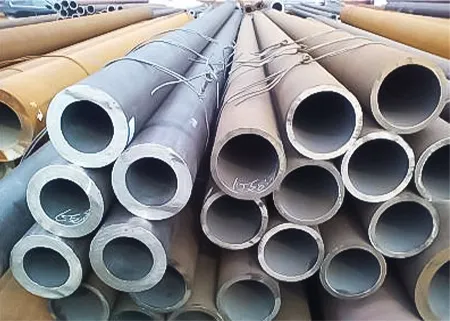
What Is Carbon Steel Pipe?
Carbon steel pipe contains carbon as the primary alloying element. It has many grades and varieties for different sectors. The oil and gas, construction, and mechanical industries use it.
The carbon content in carbon steel pipes can vary, affecting properties such as flexibility and strength.
The application of carbon steel pipes depends on several things. These include the operating process and corrosion resistance requirement. It also considers the applicable industry standards. The following is more information on carbon steel pipe:
- Composition: It mainly contains carbon and iron. Carbon concentration determines steel hardness and strength.
- Strength: These pipes’ strength makes them an excellent choice for construction. It makes them perfect for resistance to internal and external pressure. Carbon content and manufacturing process affect pipe mechanical qualities.
- Applications: Carbon steel pipe is adaptable. Its uses go beyond construction, manufacturing, oil, and gas. In addition to structural use, it conveys liquids, gases, and slurries.
- Corrosion Resistance: Carbon steel will rust in some situations. Coating and lining the pipes improves its corrosion resistance. These include galvanizing, epoxy coatings, and inner linings. The choice of coating material depends on its application. The operating conditions are also a key determinant.
- Specifications and Standards: Carbon steel pipes must meet industrial norms. Some organizations establish these specifications. The ASTM, EN, ASME, and ISO are examples. These guarantee consistent quality, dimensions, and performance characteristics.
Top 15 Frequently Asked Questions about Carbon Steel Pipe
This central section of our post answers the frequently asked questions about carbon steel pipes. We hope this will help you better understand these pipes.
Question 1: What Is the Manufacturing Process for Carbon Steel Pipes?
There are two main ways that carbon steel pipes are made. They can be welded or seamless. Different things affect the choice of production. These include the required pipe diameters, strength requirements, and specifications. Here is an overview of each procedure:
Seamless Pipe Production
First, a solid steel billet is prepared. After high heating, a piercing mill pierces the billet, creating a hole through the middle.
After that, the pierced billet is put through a sequence of rolling mills. The mill gradually lengthens and reduces in diameter to make a seamless tube. The pipe is subject to various processes to complete the finishing operations. It involves cutting to length, heat treatment, and straightening.
Welded Pipe Production
It starts with cutting and prepping steel plates or coils. The preparation follows specific dimensions necessary for pipe fabrication. The joining of steel plates or coils happens after rolling into cylindrical shapes. The longitudinal edges undergo welding through various methods.
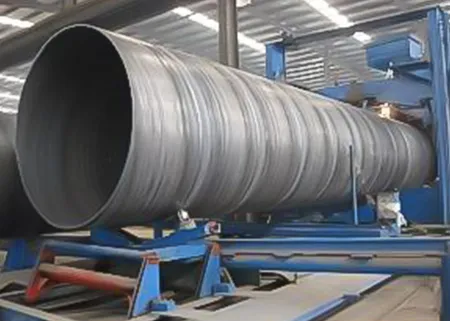
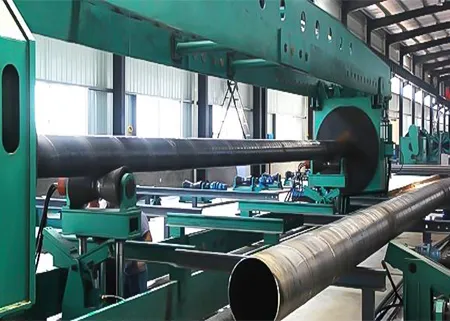
Spiral-welded pipes are produced by constantly rolling steel strips. Continuous welding joins the edges. Then, they undergo finishing operations. These include heat treatment, straightening, and NDT. The finishing operation helps ensure quality and compliance with standards.
Question 2: What Are the Common Standards and Specifications for Carbon Steel Pipes?
Carbon steel pipes have diverse standards and specifications since several sectors use them. Ordinary carbon steel pipe standards and specifications include:
ASTM Standards
- ASTM A106: It is produced in cold-drawn or hot-rolled seamless. This standard covers seamless pipes used in high-temperature service, which the mining industry relies heavily on for its operations.
- ASTM A53: It covers carbon black material and, in some instances, hot-dipped galvanized. Its performance and cost are comparable to API 5L B or ASTM A106B. The mining industry and slurry services extensively use it.
API Standards
- API 5L: This conveys water, gas, and oil products for oil and gas workers. It works for onshore and offshore applications.
- API 5CT: Specification of tube and casing. It is helpful in oil and gas drilling and completion.
ASME Standards
- ASME B36.10: It specifies wrought steel dimensions. It weighs for high/low pressures and temperatures.
- ASME B31.3: This comprises process piping requirements. It involves selecting, manufacturing, and inspecting carbon steel pipe materials.
ISO Standards
- ISO 3183: Transportation pipeline steel pipe. It is specific to the oil and gas industry.
- ISO 9329: Pressure application seamless steel tubes. It is involved in technical delivery conditions.
European Standards (EN)
- EN 10255: Weldable and threadable non-alloy steel tubes. It covers specifications suitable for welding and threading.
- EN 10216: Ideal for pressure-suited seamless steel tubes. It includes specifications for tubes used in pressure equipment.
The above are just a few of the many standards for carbon steel pipes. When selecting the suitable specification for your application, consider various parameters. These include the temperature, pressure, and corrosion resistance requirements.
Question 3: What Are the Factors to Consider When Choosing Carbon Steel Pipes for Applications?
Choosing carbon steel pipes for a specific usage involves various factors, including:
Operating conditions
The operating temperature and application pressure determine the required grade. It also defines the thickness of the carbon steel pipe. Find out if carbon steel is compatible with the materials used. Consider corrosion, erosion, and chemical reactions.
Environmental factors
Determine if there’s a corrosive environment. Then, choose the appropriate corrosion protection techniques. Consider the weather, UV radiation, and air contaminants if pipes are outside.
Mechanical needs
Determine mechanical requirements such as tensile, yield, and impact resistance. Material application and service life depend on this. Pipes may be subject to periodic or variable loads. So, consider carbon steel fatigue properties.
Fabrication and joining
Carbon steel is often welded to pipes. So, it’s essential to assess its welding ease. Consider pipe formability and bendability. It applies if the pipes must have a curve or bend during installation or manufacturing.
Regulation and standard compliance
Select carbon steel pipes that meet industry standards. Ensure the pipes for all laws relevant to its application.
Cost
Several factors determine the price of the pipes. These include grade and dimensions required, special coatings, or treatments needed. You should analyze the prospective expenditures involved with the installation and maintenance. Also, any necessary steps should be considered to prevent corrosion or insulation.
Maintenance and service life
Estimate the desired service life of the pipes. Then, choose a carbon steel grade that performs well over a long period.
Question 4: How Do Carbon Steel Pipes Compare to Other Materials Like Stainless Steel or PVC?
| Feature | Carbon Steel | Galvanized Steel | Copper | PVC |
| Material Cost | Low | Moderate | High | Low |
| Corrosion Resistance | Low (requires treatment) | Moderate | High | Excellent |
| Strength | High | Moderate | High | Low |
| Temperature Resistance | Moderate | Moderate | High | Moderate |
| Applications | General purpose, structural, industrial | Household applications | HVAC | Household |
Below is a comparison of carbon steel pipes to other materials:
- Cost: Stainless steel pipes cost more than carbon steel pipes. The latter is more expensive than PVC.
- Strength: The yield strength of carbon steel pipes is higher than that of some stainless steel pipes. Thus, they better suit applications for a high level of technical durability. They are also ideal for applications of high mechanical strength.
- Corrosion resistance: Between carbon and stainless steel pipes, the latter resist corrosion more. However, PVC is immune to corrosion.
- Weight: Carbon steel pipes are heavier than PVC. Stainless steel pipes might be lighter depending on quality and thickness.
- Appearance: Stainless steel pipes look better than carbon steel or PVC pipes. This factor is something to take into consideration in specific applications.
Question 5: What Is the Difference Between Carbon Steel and Stainless Steel?
Both steel types differ in composition and properties.
Iron and carbon are present in carbon steel. Manganese, phosphorus, and silicon are present in trim levels. On the other hand, iron and chromium form stainless steel. Other properties it has include manganese and molybdenum.
Furthermore, stainless steel resists rust better. That’s because of its chromite content. What this means is that stainless steel is suitable for more things. But carbon steel is more likely to rust and corrode. So, applying extra protection when using it is essential.
Carbon steel is more potent than stainless. It can handle higher temperatures and still be strong. While retaining its strength, stainless steel bends more than other steel. Another difference is the cost. Carbon steel costs less than stainless steel. It’s easier to produce and less chemically toxic than stainless steel. But stainless steel costs more. It has chrome alloying components and is harder to manufacture.
Carbon steel is applicable for construction, pipelines, and structures. Strength and low cost are more critical than corrosion protection in these situations. Furthermore, stainless steel doesn’t rust. So, it is suitable for low-maintenance use.
Question 6: How Does Carbon Content Affect the Properties of the Pipe?
Carbon steel pipes’ properties depend on their carbon content. Here’s how carbon content affects pipe properties:
Strength and hardness
High-carbon steel is more robust and deform-resistant. But lower-carbon steel welds better. Higher carbon steels lose ductility and brittleness with time.
Weldability
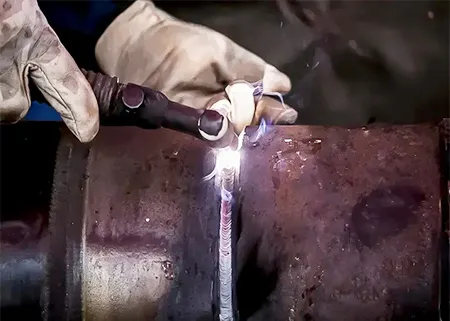
Carbon content makes high-carbon steel more challenging to weld. The heat-affected zone may shatter due to excessive carbon content. Welding low-carbon steel is straightforward. They crack less than carbon-rich steel. Welding or preheating high-carbon steels may prevent cracking.
Heat treatment response
The amount of carbon in steel impacts heat treatment. Heat higher carbon steels to get increased levels of hardness and strength. Meanwhile, low-carbon steels have a limited capacity for hardening by heat treatment.
Question 7: What Are the Quality Control Measures in Carbon Steel Pipe Production?
To assure product quality, many quality control procedures take place during manufacturing. These quality control methods are carried out at various production process phases. It starts with the assessment of raw materials. Then, it continues through testing and final inspection. Here are some standard quality control measures employed in carbon steel pipe production:
Raw material inspection
Before pipe production, the raw materials undergo testing. This happens to determine their chemical composition. This process also checks the mechanical qualities and visual faults.
Process monitoring
Regular monitoring and regulation of temperature are vital. Pressure, rolling speeds, and welding parameters regulation are also crucial. Doing this ensures adherence to prescribed tolerances.
Non-destructive testing
Pipes are submitted for inspection without damage using NDT. Popular NDT methods include magnetic particle inspection and radiography testing. It also contains ultrasonic testing.
Dimensional testing
This testing checks the finished pipes’ measurements. It ensures acceptable tolerances.
Hydrostatic testing
It exposes pipes to high internal pressure. Water or another liquid comes in handy for this process. It checks for leaks or faults in the pipe body or welds.
Visual Inspection
Pipes can undergo visual inspection. For this, trained inspectors look for surface defects or irregularities. They check for non-conformities in appearance or marking.
Quality management system
Carbon pipe manufacturers often have a quality management system. This is usually based on international standards. It takes place to ensure consistent quality. Also, it provides continuously improved procedures.
Question 8: How Are Carbon Steel Pipes Inspected for Defects?
Carbon steel pipes undergo testing during and after production. Pipes are checked for cracks, dents, and surface flaws. Measurement and comparison to tolerances take place during dimensional inspection. These include length, straightness, wall thickness, and outside diameter.
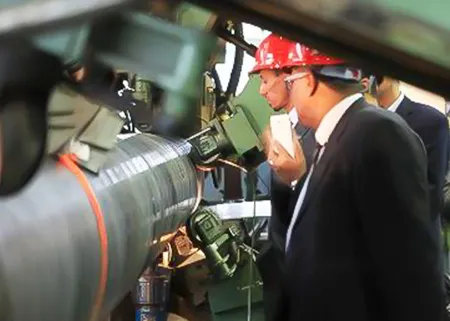
Pipe samples face mechanic testing for strength and deformation resistance. It covers hardness, flattening, and bend testing. These tests can identify production or material defects.
Also, chemical composition examination ensures the steel meets specifications. The weld’s quality also undergoes evaluation in different ways. These include visual assessment, magnetic particle inspection, and radiographic testing.
Question 9: Can You Use Carbon Steel Pipes in High-Temperature Environments?
Absolutely! Carbon steel pipes work in high-temperature environments.
They favor applications that include steam or fluids heated to high temperatures. They are durable and heat-resistant. Carbon steel is more robust because of its carbon content.
Note that the carbon steel grade should match the application’s temperature and pressure. That’s because different carbon steel types may have varying temperatures. They may also contain different pressure ratings.
Question 10: What Factors Contribute to the Corrosion of Carbon Steel Pipes?
Different things corrode carbon steel pipes. For instance, exposure to water can cause electrochemical processes. It could lead to rust production.
Also, higher temperatures cause a rise in the rate of corrosion reactions. It prompts the degradation of carbon steel pipes to occur more quickly. Environmental chemical composition may also be a factor. Chlorides, salts, and sulfur compounds may be present.
Impurities can also alter the resistance of carbon steel to corrosion. High-purity steels with fewer impurities resist corrosion better.
Question 11: How to Prevent or Minimize Corrosion in Carbon Steel Pipes?
Some effective methods are:
- Add galvanization to protect against galvanic corrosion. It also helps to strengthen the outer layers.
- Install sacrificial anodes near steel pipes. This will protect them from cathodic damage. In this case, the anodes rust instead of the steel lines.
- Dehumidify the air to reduce moisture. It reduces the rate of corrosion in locations where humidity has an effect. Add some chemicals to pipe fluid to prevent corrosion-causing electrochemical processes.
- Regular assessment and maintenance should be conducted to detect rust early. Thus, it prevents further damage. Doing this involves cleaning and removing any rust. It checks impurities that may be present in the pipes.
Question 12: What Are the Best Practices for Installing Carbon Steel Pipes?
Here are some best practices for installing carbon steel pipes:
Proper handling and storage
Be careful when handling pipes. It prevents dents, scratches, or anything that could weaken them. Keep pipes off the ground. Let them stay away from objects that could damage or corrode them. Store them on suitable supports. Also, keep the ends and openings of the pipes clean and free of trash and water.
Inspection before installation
Before installation, run some inspections. Check for any problems, like dents, cracks, or rust. Make sure there is nothing in the lines that could block them.
Surface Preparation
Before installing the pipes, clean their surfaces very well. Remove any dirt, rust, or other toxins. Follow the manufacturer’s directions on maintenance. It will help you put on the proper coatings or linings.
Alignment and support
Make sure the lines are correctly aligned during installation. So the system doesn’t have to deal with too much stress. To keep pipes from sagging or moving, provide enough support. You can use the right hangers, guides, or stakes.
Welding and joining
You should use qualified welders and approved welding methods. It helps if you don’t know how to do it yourself. Follow the industry rules for welding methods, joint preparation, and treatments.
Pressure testing
Test the pipe system for pressure after installation. Doing this ensures it’s solid and detects any leaks. Before using the lines, fix any problems or leaks that you see.
Proper insulation
Pipes may carry hot fluids or work in an area susceptible to corrosion. In this case, you might want to use suitable insulation materials. It traps the heat in and keeps the pipes from rusting.
Post-Installation Procedures
Ensure the pipe meets all design standards and specifications after installation. To start using the pipe system, follow the proper commissioning steps. For example, flush and clean the pipes to eliminate any building debris.
Question 13: How Often Should Carbon Steel Pipes Be Inspected and Maintained?
It depends on operating conditions, environment, and fluid type. Here are carbon steel pipe inspection and maintenance tips:
Initial inspection
After installation, thoroughly inspect the pipes. It ensures the appropriate pipe installation. Check if it is free from defects. Also, ensure it is compliant with applicable standards and specifications.
Routine inspections
Inspect regularly, typically every six months to a year. But this depends on the service conditions. It also depends on the risk associated with potential failures.
In-service inspections
Conduct a thorough inspection periodically, every 2 to 5 years. It may involve techniques such as ultrasonic and radiographic testing. It also involves magnetic particle inspection. These help to uncover internal or external defects.
Question 14: What Are the Common Shipping Methods Used for Carbon Steel Pipes (e.g., Truck, Rail, Sea Freight)?
Shipping methods rely on factors like the destination and specific application. Cost considerations are also essential. Cargo and pipe carrier ships can transport carbon steel pipes globally. Pipes can be stacked or grouped on the ship’s deck or in its holds. They are usually held in place with the proper lashing and dunnage.
Trains can go far and short lengths and are perfect for moving heavy or bulky pipes. Pipes are put on trailer railcars and taken where they need to go. Moving enormous amounts of goods over long distances may be cheaper than using a truck.
Trucking is a good choice for moving things over shorter distances or smaller amounts. The pipes are put on trailers or box trucks and driven across land.
Another option which isn’t common is Air transport. Although uncommon, it is ideal for urgent or time-sensitive deliveries. It can carry smaller amounts or specific pipe parts. Air transportation usually costs more, but it can deliver faster over long distances.
Question 15: Are There Any Precautions to Take When Shipping Carbon Steel Pipes?
Definitely! You must take special precautions when shipping carbon steel pipes over long distances. It helps prevent any damage to the pipes and shipment troubles.
Carbon steel pipes must be packaged appropriately. Doing so prevents moisture, abrasion, and external pressures during transport. Cap or seal pipe ends to remove dirt, moisture, and contaminants.
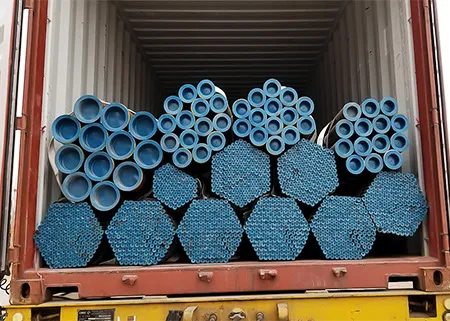
Additionally, exercise caution when loading and unloading pipes. Inspect them for any damage before and after the pipe’s transportation. Also, use the appropriate lifting equipment and techniques.
In delicate cargoes or harsh conditions, take appropriate precautions. Control temperature, ventilation, or insulation. Also, proper documentation and any special handling instructions should go with the shipment.
Transport steel pipes under local, national, and international regulations. Also, get relevant shipment permissions, licenses, or approvals to avoid shipping troubles.
Final Thoughts!
To maximize carbon steel pipe use, you must understand its properties. It will help you know how well it meets your requirements. Carbon steel pipes are cost-effective and can be used in different situations. Knowing their properties is also vital to making intelligent choices. Knowing the production process and corrosion prevention methods is also crucial.
When working with carbon steel pipes, it is essential to consider the surroundings. Consider the working conditions and any possible risks. Conducting regular checks will help extend the pipes’ service life. When purchasing carbon steel pipes, you must source them from a reliable manufacturer. A trustworthy supplier will ensure that the pipes meet the necessary quality standards.
Do you have any further questions or need guidance on selecting suitable carbon steel pipes? Do not hesitate to seek thorough assistance from experts at Alloyxpert!
Read More:
How to Find the Right Carbon Steel Pipe Manufacturer?
10 Key Benefits and Applications of Carbon Steel Pipes You Should Know