
Deep underground are abundant natural resources like oil and gas. These natural resources are extracted by drillers using various equipment. The drilling pipe is an essential piece of equipment for this challenging but gratifying job.
Drilling pipes are crucial in the oil and gas business. Accessing and extracting the Earth’s resources is made possible by drill pipes. They move the drilling fluid around. Also, they use rotational force for the drill bit while digging.
There are several steps in the manufacturing process of drilling pipes. The process ensures functionality and durability under extreme drilling conditions. This article explores what drilling pipes are, the different types of drilling pipes, and their properties. It also covers the raw materials, heat treatment, and finishing steps.
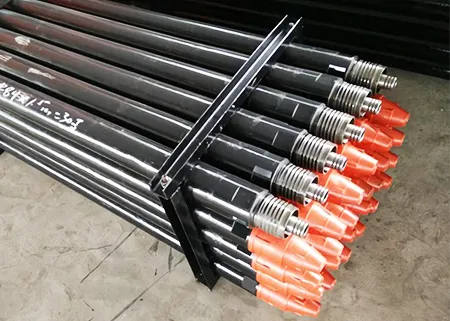
Key Highlights!
- Drilling pipes are essential for extracting oil and gas from underground.
- Drilling pipes must be solid and tough enough to withstand harsh underground conditions. Different materials like high-strength steel, alloy steel, and stainless steel are used in their manufacturing.
- The manufacturing process of drilling pipes involves several steps. The pipe manufacturer must follow strict guidelines.
- Drilling pipes undergo rigorous inspections to guarantee they meet the required standards.
- Alloyxpert is a trusted manufacturer specializing in high-performance steel alloys. The company serves as a one-stop shop for top-quality drilling pipes.
What Are Drilling Pipes?
Neither oil nor drills exist without drill pipes. Drilling pipes are long, hollow tubes for extracting resources underground. A drill pipe must be hollow so that fluid can flow through it. These hollow pipes are tempered and hardened to pump drill fluid into the drill bit.
Drilling pipes should resist high pressure and torsional and bending stress. The hardening process helps prevent accidents and handle the pressures of working underground.
These pipes undergo meticulous inspections and testing. It determines whether they have experienced wear due to the working conditions. These pipes must be strong enough to endure the Earth’s harsh conditions, such as high pressures.
What Are Different Types of Drilling Pipes?
Knowing how crusty the earth can be, different drilling pipes serve specific functions. These pipes can come in handy for many tasks during the drilling process. On that note, see below the various types of drilling pipes:
1) Drill Pipes
These are the heroes of the drilling operation. They are the main pipes for drilling through different rock types. These also come in handy for moving drilling fluids and tools. Drill pipes are made to handle a lot of force, weight, wear, and tear.
Most of the time, high-strength metal steels are used to make them. They also undergo harsh heat treatments and finishing techniques, ensuring their durability.
Heavy-weight drill pipes make the drill string heavier. It can help put more weight on the bit and make it go through faster.
A drill pipe with weights also helps keep the bottom hole assembly steady. It makes drills run more and lessens vibrations. Because of this, a heavy-weight drill pipe is sometimes better than a regular drill pipe.
2) Casing Pipes

Casing pipes are put into the borehole after drilling to the desired depth. They keep the well walls stable so they don’t fall apart while digging is going on. Casing pipes also keep a wellbore stable, so it needs to be able to handle hefty loads.
Additionally, these pipes keep different rock layers apart. They keep groundwater and other resources from contamination. At intervals, the drill string is pulled out. Then, the wellbore is covered with a casing glued in place.
Most casing pipes are made of materials that don’t rust, like stainless steel. Production with these materials helps it to withstand the well’s extreme conditions.
3) Tubing Pipes
Most of the time, pumps come in handy to get fluids to the surface. For this procedure, tubing pipes come in handy. Once the casing pipes are set up, the tube pipes are put inside the casing. Tubing pipes are smaller-diameter pipes. They are made of high-strength metal steel. It can also be made of rust-proof materials, like stainless steel.
Tubing pipes bring the oil or gas from the storage to the surface during production. Tubing pipes must be able to handle high temperatures and pressures. They also have to be able to handle the harmful effects of the fluids in extraction.
Also, the tubing pipe must be the right size to hold the oil and gas production. However, small tubing limits output. It also hinders the well’s economic performance.
| Feature | Drill Pipe | Casing Pipe | Tubing Pipe |
| Primary Function | Rotation & Fluid Delivery | Protects Wellbore Walls | Production Flow |
| Material | High-Strength Steel | Corrosion-Resistant Steel | High-Strength Steel |
| Diameter | Largest | Medium | Smallest |
| Strength | High | High | Moderate |
| Corrosion Resistance | Moderate | High | Moderate |
| Placement in Wellbore | Top | Middle | Bottom |
What Properties Are Required for Drilling Pipes?
The properties used in the manufacturing of drilling pipes determine their strength. The following properties are core for drilling pipes:
1) Tensile Strength
Consider how heavy and strong it must be for a drill string to go miles into the ground. Drilling pipes have to handle a lot of pulling. As they drill through rock layers deep underground, they have to deal with pushing forces. It includes the pipe’s weight and the drill bit’s weight. It also has to do with the force of the drilling fluid.
Hence, drilling pipes with high tensile strength can handle stretching. They can withstand pulling forces during drilling. It keeps them from breaking or failing when these huge loads are put on them.
Tensile strength also determines how much stretching force a material can endure. So, the material’s tensile strength is significant. It ensures that the pipe can withstand drilling.
2) Toughness
Toughness measures how well drilling pipes can handle the challenging conditions underground. Drilling pipes must be rigid enough to hold the impact of drilling activities.
Toughness is essential for keeping pipes from breaking. If this is missing, the outcome could be bad and cost a lot of money. It could cause problems with the well control or environment.
3) Corrosion Resistance
Drilling pipes come into contact with many corrosive chemicals deep underground. These include hydrogen sulfide, carbon dioxide, and brine liquids. Corrosion can weaken the pipe material. If care is not taken, it results in breakages and leaks.
So, corrosion protection keeps the pipes from breaking down. Pipes that resist corrosion can endure drilling fluids. So, choosing corrosion-resistant drilling materials is critical.
What Raw Materials Are Used in Manufacturing Drilling Pipes?
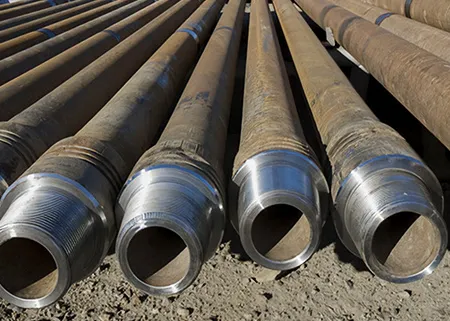
The raw materials used to make drilling pipes include:
1) Carbon Steel
Drilling pipes are often made of carbon steel. Manufacturers use it to produce drill pipes since it’s sturdy and lasting. Working with carbon steel is straightforward. As a result, it can be used for some cutting jobs where corrosion resistance is not the main priority.
Additionally, it is often used in less demanding situations because it is cheap. Noteworthy is the fact that carbon steel can rust in challenging conditions. Hence, it is not the best choice for more difficult drilling situations.
2) Alloy Steel
Some manufacturers prefer alloy steel over carbon steel for its qualities. It is used to make a lot of drilling pipes. This material makes pipes stronger, more challenging, and less likely to rust. High-strength alloy steel enhances mechanical qualities.
Chrome, nickel, and molybdenum strengthen these steels. They improve pipe qualities and help them work better in harsh drilling conditions. Alloy steels can be changed to meet specific needs. That is, for better corrosion resistance or resistance to high temperatures. So, they are a versatile choice for many drilling applications.
3) Stainless Steel
Materials like stainless steel are ideal. It doesn’t rust or break down quickly. Most stainless steels have chromium in them. This element makes an oxide layer that keeps the steel from corrosion. It is vital for corrosive drilling solutions or rough downhole conditions. Due to its strength and durability, steel is a primary material for drill pipes. It ensures the ability to survive harsh drilling conditions.
Another benefit is that it helps drill pipes last longer. Stainless steel has unique properties that suit some drill string parts. That enhances its performance and longevity.
Corrosive drilling fluids and harsh conditions can make downholes hard to deal with. But stainless steel makes things easier. Yet, their superior performance comes at a higher cost than other steels.
How Are Drilling Pipes Manufactured?
Now, to the main deal! Drilling pipes go through several processes before achieving the glorified final result. These processes go from preparing the pipe body to making tool joints and finishing.
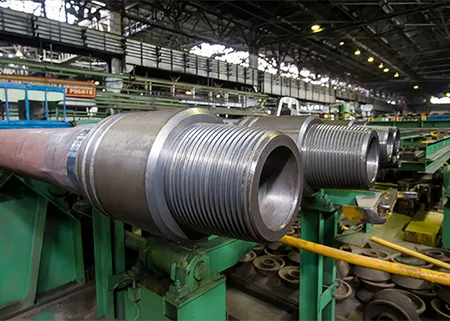
Drilling pipes must undergo each procedure to last a long time, work well, and meet the required needs. The steps below cover the manufacturing process of drilling pipes:
Step 1: Preparation of Pipe Body
The first step in the process involves the preparation of the pipe body. It can be done through the seamless or welded pipe manufacturing process.
A mandrel is used to make holes in a hot steel block. Through this process, a hollow shell is made. The shell is stretched even more by rolling it over a plug. The process continues until it gets to the desired length. Also, this helps get the right thickness and diameter.
Due to their excellent mechanical qualities, seamless pipes suit high-performance applications. The second process involves welded pipes. For this, a steel plate or coil forms a cylindrical shape. The longitudinal seam is welded using electric resistance or submerged arc welding.
Step 2: Manufacturing of Tool Joints
Tool joints are one of the most critical components of drilling pipes. They are responsible for connecting the various portions of the pipe. A tool joint can be found at the drill pipe’s beginning and end. This component handles transmitting the necessary amount of torque and strength.
The manufacturing of tool joints is often made out of high-grade steel than the rest of the pipe. It is subjected to extra heat treatment and machining procedures. It undergoes this process to ensure its durability and performance.
A forging method is ideal in the manufacturing process. The procedure begins with the cutting and preparation of a steel bar. Then, this is heated until it becomes pliable enough to take shape. Hammering, pressing, and rolling are forging procedures for shaping the heated bar.
Then, machining is performed on the forged tool joint. Doing so gets threads and other connecting features. It also helps to fulfill the dimensional requirements.
Step 3: Joining Pipe Body and Tool Joints
After manufacturing the pipe body and tool joints, the next step is to attach them. The process is done securely to create a full drilling pipe. One way to do this is through friction welding.
The two parts that need to be joined are heated by rubbing them together under intense pressure. The generated heat allows the metal to become pliable and fused. It forms a strong bond between the tool joint and the pipe body.
Step 4: Finishing and Inspection
The next step ensues when the pipe body and tool joints are joined. The drilling pipe is put through several finishing operations. This process guarantees high quality and that it can perform its intended functions. Among these procedures are straightening, heat treatment, and threading.
During straightening, the pipe is checked to ensure that it does not have any curve or deviation. Otherwise, it can potentially impact drilling operations. The drilling pipe undergoes heat treatment to enhance its mechanical properties. Below is a breakdown of other processes that make up the finishing procedure:
1) Visual Inspection
Visual inspection is reliable for finding material and component issues. Trained inspectors visually inspect the pipes. They use visual aids like magnifying lenses or UV light. These personnel look for any evident flaws, such as surface cracks, dents, or rust. In case of any flaws, they are sent in for necessary repairs.
2) Dimensional Inspection
Doing this guarantees that the pipes are within the specification. The pipe’s length, diameter, and wall thickness are all measured very accurately. Acceptance criteria set out in the industry guide dimensional inspection.
3) Non-Destructive Testing
It is essential since quality assurance is crucial. Different approaches are used to check materials for oversights. NDT methods find hidden interior problems. It includes X-ray radiography and ultrasonic testing.
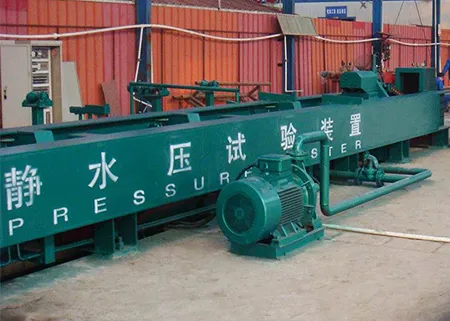
4) Hydrostatic Testing
This test fills pipes with water or another fluid. Then, it is subjected to high pressures. This test determines whether the pipes can endure harsh drilling operations. They check and record if there is a malfunction or a leak.
5) Mechanical Testing
The mechanical tests check tensile strength, hardness, or impact testing. It guarantees that the pipe’s materials are up to the applicable standards.
The only pipes that can pass onto the field have been approved for use. They must pass these stringent inspection and testing procedures. It is vital not to miss these procedures. That’s because they ensure high levels of safety and reliability. Note that these pipes are tested differently depending on the purpose they serve.
What Heat Treatment Processes Are Involved in Manufacturing Drilling Pipes?
Heat treatment is essential to improve the drill pipes’ mechanical qualities. The tubes are heated to a particular temperature. By doing so, it reaches the appropriate hardness and toughness. Then, they are swiftly quenched.
Heat treatment also relieves the residual tensions that occur during the forming process. Below are the heat treatment processes for drilling pipes:
1) Normalizing
The material is heated to a temperature higher than its critical temperature. Then, it is cooled in still air. The pace of cooling is significantly slower than that of annealing. So, this controlled cooling makes the microstructure more refined and consistent. This process also enhances the pipe’s mechanical properties.
Normalizing also refines the grain structure of the steel, increasing the steel’s toughness. Additionally, it alleviates any internal strains that may have been accumulated during manufacturing. Optimizing normalizing ensures drilling pipes have suitable mechanical properties. It also provides longevity and dependability during drilling operations.
2) Quenching and tempering
During the heat treatment process, quenching and tempering are two highly critical steps. These heat treatment processes enhance the mechanical qualities of pipes. After quenching, it undergoes high-temperature tempering.
Steel gets more robust and rigid through the process of quenching. It is possible to lessen the tension caused by quenching. It happens if matched with different temperature tempering. Yet, we also get the strength, toughness, and hardness to meet various requirements.
During tempering, quenched steel is kept at a low temperature. It is done for a limited time after warming. The aim is to lower the material’s hardness by reducing internal stress. Thus, steel can keep its strength while decreasing brittleness and increasing toughness.
Likewise, adjusting the tempering temperature and time results in increased strength and hardness.
3) Stress relieving
Let’s look at stress relieving. It is an essential heat treatment process for drilling pipes. During the production process, residual stresses may build up in steel. It could cause cracks or warping, neither of which is desirable.
As a result, it lessens the internal stresses brought on by production procedures. The pipes are, thus, more resistant to some types of corrosion and cracking.
During this process, the pipes undergo strengthening. They are also made more durable. It also improves their capacity to deal with challenging applications. To ease stress, heating steel to a certain level is ideal. The temperatures are usually between 550°C and 700°C.
It also keeps the pipe’s shape and size more uniform. That makes it easier to work with. The stress relieving technique during the heat treatment makes drilling pies more reliable. They become capable of meeting the obstacles of the oil and gas industry.
What Finishing Processes Are Used in Manufacturing Drilling Pipes?
Manufacturing drilling pipes requires finishing operations that are of the utmost importance. These processes ensure that the final product satisfies the necessary criteria. It also confirms that it’s appropriate for use in demanding operations. The following comprises the finishing processes in drilling pipes manufacturing:
1) Straightening
While manufacturing drilling pipes, they can bend or change shape. So, drilling pipes need to be straight for a flawless drilling process. It also helps prevent any potential future problems, such as excessive wear.
When drilling activities are ongoing, straining ensures the pipes can be quickly joined. Additionally, it determines that they can move through the wellbore without obstructions.
Hydraulic presses and special rollers smooth out bends. They are essential to getting the desired outcome. Carefully managing this procedure prevents over-straightening the material. It also hinders the introduction of more tension. As a result, the pipes can perform to their full potential in the field.
2) Threading
Threading the ends of the drill pipe comes in place to connect other drill string components. Cutting the threads onto the pipe ends and tool joints is necessary. Doing this completes the threading operation. Specialized threading machines are used for this process.
Also, to improve the wall thickness of the ends, they are upset after the threading process.
As a result, they are more durable and able to withstand the stress of drilling operations. Various threads are used to drill pipes. These include the following:
- Buttress Threads: These threads have a square or trapezoid form. They provide more torsional strength and resistance to longitudinal separation stresses.
- Tapered Threads: They have a tapered or conical shape. So, they make it possible to make up and break out of the connection easily. Yet maintaining a secure seal.
- Proprietary Threads: Several drilling pipe manufacturers develop their proprietary thread designs. They tailor it for specific applications or operating conditions.
3) Inspection and testing
In drill pipe production, quality control is essential. Each stage of manufacture undergoes strict quality control and inspection. It determines the dimensional correctness and mechanical characteristics of the pipes. Also, it checks structural integrity.
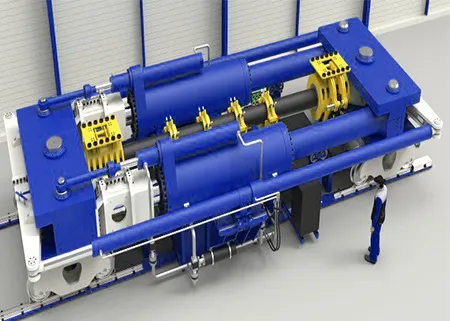
It includes testing methods like ultrasound testing and magnetic particle inspection. There are also other applicable NDT methods. These different testing methods can find any flaws or anomalies. If not done, some mistakes may jeopardize the integrity of the drill pipe.
The final inspection happens before moving them to the field. Hence, it ensures that they follow the necessary standards and specifications. After passing the inspection, they receive authorization for use in drilling activities. Getting all these in place ensures smooth operations during drilling.
Final Thoughts!
The drilling industry continues to explore new areas. So, there will be a constant need for high-quality drilling pipes. Manufacturers will always have new ideas because tools and technology are constantly evolving. Drilling pipe production comprises several meticulous manufacturing stages. Every step, from choosing the materials to the final check, ensures these pipes are solid.
Manufacturers must maintain their dedication to innovation to continue fulfilling the ever-changing demands. They must focus on quality control and adherence to industry standards. The purpose is to create dependable pipes capable of withstanding demanding drilling activities. Thus, it ensures smooth drilling operations and work satisfaction.
If you’re looking for a dependable supplier of drilling pipes made of premium steel alloys, contact Alloyxpert today. We offer many options to suit your specific drilling pipe needs. Check our range of drilling pipe solutions and request a quote now!