
Introduction
ASTM A519 Grade 4130 Tubing is a high-strength, low-alloy steel tube, widely used in applications requiring high strength and toughness. The ASTM A519 standard is set by the American Society for Testing and Materials (ASTM) and primarily covers the specifications for seamless carbon and alloy steel mechanical tubes. 4130 alloy steel tubing is widely used in aerospace, automotive manufacturing, and the oil and gas industries due to its good mechanical properties and excellent weldability.
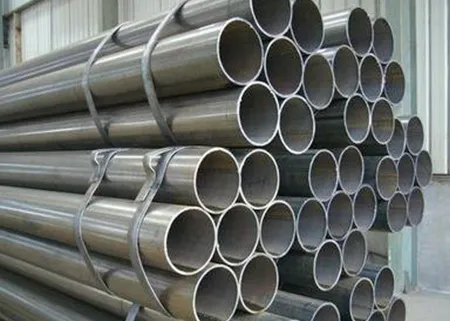
The main components of 4130 Tubing include carbon, manganese, silicon, chromium, and molybdenum, which together provide the material with excellent strength and corrosion resistance. Due to its outstanding performance, 4130 Tubing is particularly effective in high-stress environments, such as in aircraft structures, racing car chassis, and high-pressure pipelines.
What Are the Detailed Specifications of ASTM A519 Grade 4130 Tubing?
Chemical Composition
Element | Percentage (%) |
Carbon (C) | 0.28–0.33 |
Manganese (Mn) | 0.40–0.60 |
Phosphorus (P) | ≤ 0.035 |
Sulfur (S) | ≤ 0.040 |
Silicon (Si) | 0.15–0.35 |
Chromium (Cr) | 0.80–1.10 |
Molybdenum (Mo) | 0.15–0.25 |
Nickel (Ni) | Trace/Incidental |
Copper (Cu) | Trace/Incidental |
Iron (Fe) | Balance |
Mechanical Properties
Property | Value |
Tensile Strength (MPa) | 560–770 |
Yield Strength (MPa) | 460–650 |
Elongation (%) | 18–25 |
Hardness (HBW) | 140–220 |
Physical Properties
Property | Value |
Density | 7.85 g/cm³ |
Melting Point | 1432°C (2610°F) |
Thermal Conductivity | 42.7 W/m·K (at 20°C) |
Specific Heat | 460 J/kg·K (at 20°C) |
Modulus of Elasticity | 205 GPa |
Poisson’s Ratio | 0.29 |
Electrical Resistivity | 223 nΩ·m (at 20°C) |
What Is the Manufacturing Process of ASTM A519 Grade 4130 Tubing?
Hot Rolling
Hot rolling is one of the main processes for manufacturing ASTM A519 Grade 4130 Tubing. In the hot rolling process, the billet is first heated to a high temperature, usually above the material’s recrystallization temperature. Then, the billet passes through a series of rolling mills, such as continuous casting and hot rolling mills, gradually being shaped into the desired tube form. During this process, the billet undergoes extensive plastic deformation, allowing the grains to rearrange and eliminating internal residual stresses and defects.
Advantages of Hot Rolling:
- Improved Mechanical Properties: During the hot rolling process, the material’s grains are rearranged, enhancing the strength, toughness, and ductility of the material. By appropriately controlling the rolling temperature and parameters, the mechanical properties of the tubing can be adjusted to meet the requirements of different applications.
- Enhanced Material Uniformity: Hot rolling effectively eliminates internal defects in the billet, such as porosity and inclusions, thereby enhancing the uniformity and consistency of the tubing. This is especially important for engineering applications requiring high reliability and long-term use.
- Adaptability to Complex Shapes: Hot rolling allows for flexible adjustment of the forming rolls to produce tubing in various complex shapes, meeting different structural and functional needs. This flexibility makes ASTM A519 Grade 4130 Tubing widely applicable in fields such as aerospace, automotive, and mechanical manufacturing.
Cold Drawing
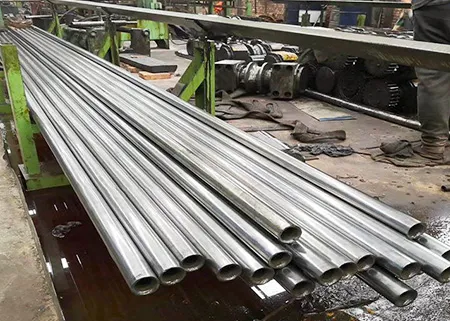
Cold drawing is another common manufacturing process, which involves reducing the diameter of the tubing at room temperature by pulling it through a die smaller than its original outer diameter, thereby increasing its length. The cold drawing process enhances the surface finish and dimensional accuracy of the tubing, while also improving its mechanical properties. Cold-drawn tubing typically exhibits higher strength and hardness, making it very suitable for high-precision and high-strength applications.
Normalizing
Normalizing is a heat treatment process that involves heating the tubing above its critical temperature and then cooling it in air to achieve a uniform microstructure. Normalizing helps eliminate the internal stresses introduced during the cold drawing process, enhancing the toughness and ductility of the tubing. Normalized 4130 Tubing shows better stability during welding and subsequent processing.
Annealing
Annealing is another important heat treatment process, which involves heating the tubing to a specific temperature and then slowly cooling it to soften the material and improve its machinability. Annealed 4130 Tubing exhibits higher flexibility and ductility, making it easier to bend, cut, and perform other processing operations. This is particularly important for applications requiring further processing.
What Are the Testing Requirements of ASTM A519 Grade 4130 Tubing?
Mechanical Testing
These testing methods comprehensively evaluate the mechanical properties of the tubing, ensuring its reliability and safety in actual applications.
- Tensile Testing: Measures the tensile strength, yield strength, and elongation of the tubing.
- Impact Testing: Assesses the material’s impact resistance at low temperatures.
- Hardness Testing: Determines the hardness of the tubing, typically using a Brinell hardness tester (HB).
Chemical Analysis
Chemical composition analysis is an important means to ensure that the tubing complies with ASTM A519 standards. Common chemical analysis methods include spectroscopy and chemical titration. By analyzing the elemental content in the tubing, it can be ensured that its chemical composition falls within the standard-prescribed ranges, thereby guaranteeing the performance and quality of the material.
Dimensional Inspection
These inspection methods ensure the dimensional consistency and accuracy of the tubing, meeting the requirements of practical applications.
- Outer Diameter Measurement: Uses calipers or an outer diameter gauge to measure the tubing’s outer diameter.
- Wall Thickness Measurement: Uses an ultrasonic thickness gauge or a micrometer to measure the tubing’s wall thickness.
- Length Measurement: Uses a steel tape or a laser measuring device to measure the tubing’s length.
What Are the Features of ASTM A519 Grade 4130 Tubing?
Corrosion Resistance
ASTM A519 Grade 4130 Tubing exhibits excellent corrosion resistance, primarily due to the chromium and molybdenum elements in its alloy composition. Chromium forms a dense oxide protective film on the steel surface, effectively preventing oxidation and corrosion. Molybdenum further enhances this protective effect, making 4130 Tubing perform exceptionally well in marine environments, chemical equipment, and high-humidity conditions. In these environments, the material’s corrosion resistance is particularly important, significantly extending its service life and reducing maintenance costs.
High Strength-to-Weight Ratio
4130 Tubing is widely used due to its high strength-to-weight ratio. A high strength-to-weight ratio means that 4130 Tubing can withstand greater loads at the same weight. This characteristic makes it highly popular in sectors such as aerospace and racing car manufacturing, where materials need to be both lightweight and robust. Using materials with a high strength-to-weight ratio can significantly improve structural performance, while also reducing energy consumption and material costs.
Good Weldability
4130 Tubing exhibits good weldability, making it more flexible and convenient in engineering applications. Due to its alloy composition and microstructure, 4130 Tubing can be joined using various welding methods, such as MIG welding, TIG welding, and arc welding. Good weldability is especially advantageous in applications requiring complex structures or repairs, reducing welding defects and the difficulty of subsequent processing.
How Are the Advantages of ASTM A519 Grade 4130 Tubing Characterized?
Versatility of Applications
The versatility of 4130 Tubing makes it suitable for a wide range of application scenarios. Whether in aerospace, automotive manufacturing, or in construction and mechanical engineering, 4130 Tubing provides reliable performance. Its diverse applications not only demonstrate its superior mechanical properties and chemical characteristics but also indicate its adaptability under different environmental and load conditions.
Durability and Long Life
4130 Tubing is highly favored for its durability and long life. Its excellent mechanical properties and corrosion resistance allow it to maintain stable performance in harsh working environments. This not only reduces the frequency of replacement and maintenance but also significantly saves long-term operational costs, especially in high-value and high-risk applications.
Compliance with Industry Standards
4130 Tubing that complies with ASTM A519 standards is recognized for its quality and performance by authoritative institutions, which is of significant importance for industry applications. Industry standards not only ensure material consistency and reliability but also provide confidence for users, ensuring that the materials used meet strict engineering and safety requirements.
Applications of ASTM A519 Grade 4130 Tubing
Aerospace Industry
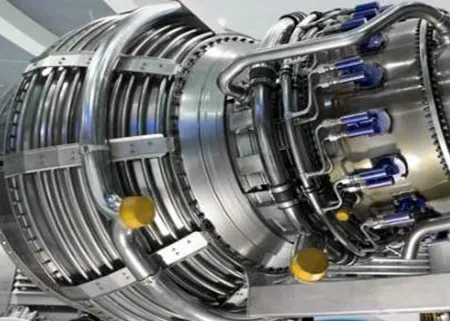
In the aerospace industry, 4130 Tubing is widely used to manufacture aircraft structural components and landing gears, among other high-stress parts. Its high strength-to-weight ratio and corrosion resistance make it an ideal choice. For example, in manufacturing lightweight aircraft frames, 4130 Tubing not only provides sufficient strength but also significantly reduces the weight of the aircraft, improving fuel efficiency and flight performance.
Automotive Industry
In automotive manufacturing, 4130 Tubing is commonly used to manufacture racing car chassis, roll cages, and suspension systems. Racing cars require materials that are both lightweight and robust to enhance speed and safety. The high strength and good weldability of 4130 Tubing make it the preferred material for racing engineers. Additionally, its stability under high temperature and high pressure conditions also makes it suitable for manufacturing engines and exhaust systems.
Construction Industry
In the construction industry, 4130 Tubing is used to manufacture support structures for high-rise buildings and bridges, among other critical components. Its high strength and durability enable it to withstand huge loads and wind forces. The corrosion resistance of 4130 Tubing is particularly important in exposed steel structures, effectively extending the lifespan of buildings and reducing maintenance costs.
Mechanical Engineering
In the field of mechanical engineering, 4130 Tubing is used to manufacture various mechanical parts, such as shafts, gears, and tools. Its high hardness and wear resistance allow it to be used long-term under high load and high wear conditions. Mechanical engineers rely on the reliable performance of 4130 Tubing to ensure the precision and durability of equipment.
Case Studies
Successful Projects Using 4130 Tubing
Several successful cases demonstrate the excellent performance of 4130 Tubing in actual applications. For example, an airline used 4130 Tubing as the material for the landing gear in its new jet aircraft. The results showed that not only was the landing gear lighter, but it also performed excellently across multiple landing cycles, extending the maintenance interval and reducing operating costs.
Examples of Practical Applications
In race car manufacturing, a top racing team used 4130 Tubing to construct frames and roll cages, resulting in outstanding performance in races and protecting drivers’ safety in multiple collisions. These practical application examples showcase the versatility and reliability of 4130 Tubing, further proving its wide applicability across various industries.
Comparison with Other Tubing Standards
The ASTM A519 standard plays a crucial role in ensuring material consistency and quality. The standard specifies the chemical composition, mechanical properties, and dimensional tolerances, ensuring consistency in material performance across different batches. This is vital for manufacturers and users because consistent material performance guarantees product reliability and safety.
By adhering to the ASTM A519 standard, manufacturers can produce high-quality mechanical tubing that meets customer demands, and users can confidently use these materials for various applications. Additionally, the ASTM A519 standard includes detailed testing and inspection requirements, ensuring each tube undergoes strict quality control before leaving the factory.
Comparison between ASTM A519 and ASTM A106
ASTM A519 and ASTM A106 are both commonly used tubing standards, but they differ in application and performance. ASTM A519 is mainly used for seamless mechanical tubing with high strength and corrosion resistance, suitable for high-stress applications. In contrast, ASTM A106 is primarily used for high-temperature and high-pressure pipelines, especially in the oil and gas industry. A106 tubing focuses on high-temperature performance and compression resistance.
Comparison between ASTM A519 and ASTM A213
ASTM A213 standards are mainly applicable to seamless ferritic and austenitic alloy steel boiler, superheater, and heat-exchanger tubes. In contrast, ASTM A519 is mainly used for mechanical and pressure applications. The two differ in material composition and usage environments, with A213 focusing more on high-temperature resistance and anti-oxidation performance, while A519 focuses more on mechanical strength and machinability.
Comparison between ASTM A519 and ASTM A335
ASTM A335 is an alloy steel seamless tubing standard, mainly used for high-temperature service. Compared to ASTM A519, A335’s application environment is more demanding, typically used in high-temperature, high-pressure power stations and petrochemical equipment. A519, on the other hand, is more broadly applied in high-strength and high-toughness mechanical and structural applications.
FAQs
What Is 4130 Per ASTM A519?
ASTM A519 Grade 4130 refers to a specific grade of seamless mechanical tubing. It is characterized by its high strength and excellent toughness, making it suitable for demanding applications in industries such as aerospace, oil and gas, and automotive.
What Is the ASTM A519 Equivalent To?
ASTM A519 is equivalent to several other standards for seamless carbon and alloy steel mechanical tubing, such as DIN 2391, EN 10305-1, and JIS G3441. These standards ensure the manufacturing of tubes with specified dimensions and mechanical properties for various engineering applications.
What Is the ASTM 4130 Equivalent To?
ASTM 4130 is equivalent to AISI 4130, SAE 4130, UNS G41300, and AMS 6345. These designations refer to the same type of steel alloy, which is a chromium-molybdenum low alloy steel renowned for its weldability, high strength, and excellent toughness.
What Is ASTM A519 Material?
ASTM A519 specifies seamless carbon and alloy steel mechanical tubing used for mechanical and pressure applications. The material, manufactured by hot or cold working, is characterized by its specified tensile strength, yield strength, and elongation properties.
Conclusion
Looking to the future, ASTM A519 Grade 4130 Tubing will continue to play a significant role in applications with increasingly high demands for strength, toughness, and corrosion resistance. With the development of new materials and processes, 4130 Tubing is expected to showcase its unique performance and advantages in even more fields. Through continuous improvement and innovation, 4130 Tubing will continue to provide reliable and efficient solutions for engineering and manufacturing industries.Visit Alloyxpert for more!
Read More:
What Makes ASTM A36 Steel Properties Ideal for Builders?
How To Use ASTM A120 Standards? Learn & Master Now!
A Comprehensive Guide to ASTM A240 Stainless Steel Standards