
Introduction
Q195 steel pipes and tubes play an important role in modern industry, and their wide range of applications covers multiple fields. This guide aims to explore in depth various aspects of Q195 steel pipes and tubes, including its chemical composition, mechanical properties, different types and its manufacturing process.

What Are Q195 Steel Pipes and Tubes?
Q195 steel introduction: Q195 steel is a commonly used low carbon steel material, widely used in various structural and manufacturing applications. Its low cost, good processability and weldability make it the preferred material for many industrial and construction projects.
Importance in Industry: Q195 steel is widely used around the world due to its reliability and versatility, covering many fields such as construction, pipelines, machinery manufacturing and automotive industry.
What Are the Types of Q195 Steel Pipes and Tubes?
Q195 steel is a low carbon steel, which is widely used in various pipe manufacturing due to its good plasticity, toughness and weldability. This article will introduce the main types of Q195 steel pipes and tubes and their applications in detail.
· Types of Q195 Steel Pipes
Q195 steel pipes can be divided into the following types according to different manufacturing processes and uses:
Welded Steel Pipe
- Straight Seam Welded Pipe (LSAW): Made by curling steel plates and performing straight seam welding, it is suitable for fluid transportation, structural support and other fields.
- Spiral Welded Pipe (SSAW):The steel plate is rolled into a spiral and welded. It has higher strength and larger diameter and is commonly used in oil and natural gas pipelines.
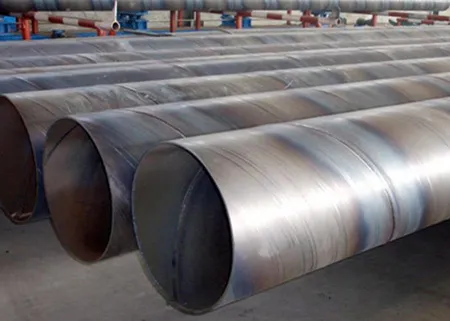
Seamless Steel Pipe
- Hot-rolled Seamless Pipe:Manufactured through hot rolling process, with high strength and toughness, widely used in high-pressure equipment, boilers and heat exchangers.
- Cold Drawn Seamless Pipe:Made by cold drawing process, it has high dimensional accuracy and smooth surface, suitable for precision machinery and hydraulic equipment.
Galvanized Steel Pipe
- Hot-dip Galvanized Steel Pipe:Processed by hot-dip galvanizing process, it has excellent anti-corrosion properties and is suitable for outdoor building structures, agricultural facilities, etc.
- Cold-dip Galvanized Steel Pipe: Processed through electroplating process, the cost is lower, but the anti-corrosion performance is not as good as hot-dip galvanized pipe, suitable for occasions with low requirements.
· Types of Q195 Pipes
Q195 steel is also widely used in the manufacture of various types of pipes, mainly including the following categories:
Round Pipe
- It is used in the fields of building structure, decoration and fluid transportation, and has good comprehensive performance.
Square Pipe
- It is commonly used in building structures, machinery manufacturing and steel structure engineering, and has good stability and load-bearing capacity.
Rectangular Pipe
- Similar to square tubes, but with a rectangular cross section, they are suitable for making structural and supporting parts.
Special-shaped Pipe
- According to specific needs, it can be processed into pipes with various complex cross-sections, such as elliptical pipes, hexagonal pipes, etc., which are used in special structural parts and decoration fields.
| Type | Classification | Manufacturing Process | Main Application |
| Welded steel pipe | Straight seam welded pipe | Straight seam welding | Fluid transport, structural support |
| Welded steel pipe | Spiral welded pipe | Spiral welding | Oil and natural gas pipelines |
| Seamless steel pipe | Hot rolled seamless pipe | Hot rolling | High-pressure equipment, boilers, heat exchangers |
| Seamless Steel pipe | Cold drawn Seamless pipe | Cold drawn | Precision machinery, hydraulic equipment |
| Galvanized steel | Hot dip galvanized steel | Hot dip galvanizing | Outdoor building structures, agricultural facilities |
| Galvanized steel | Cold galvanized steel pipe | Plating | Low corrosion protection requirements |
| Pipe | Round tube | Various | Building structure, decoration, fluid transportation |
| Pipe | Square tube | Various | Building structure, machinery manufacturing, steel structure engineering |
| Pipe | Rectangular tube | Various | Structural parts, supporting components |
| Pipe | Special-shaped tube | Various | Special structural parts, decoration field |
What Is the Chemical Composition of Q195 Steel?
Detailed chemical composition analysis: The main components of Q195 steel include carbon (C), silicon (Si), manganese (Mn), phosphorus (P), sulfur (S), and a small amount of iron (Fe). Its chemical composition directly affects its mechanical properties and processing characteristics.
Chemical Composition of Q195 Steel
| Element | Carbon (C) | Manganese (Mn) | Silicon (Si) | Sulfur (S) | Phosphorus (P) |
| Chemical composition(%) | 0.12 or less | 0.25-0.50 | 0.30 or less | 0.050 or less | 0.045 or less |
Chemical Composition of Q195, Q215 and Q235 Steel
| Steel Type | Element | Carbon (C) | Manganese (Mn) | Silicon (Si) | Sulfur (S) | Phosphorus (P) |
| Q195 | Chemical composition(%) | 0.12 or less | 0.25-0.50 | 0.30 or less | 0.050 or less | 0.045 or less |
| Q215 | Chemical composition(%) | 0.15 or less | 0.25-0.55 | 0.30 or less | 0.050 or less | 0.045 or less |
| Q235 | Chemical composition(%) | 0.20 or less | 0.30-0.70 | 0.30 or less | 0.045 or less | 0.040 or less |
What Are the Mechanical Properties of Q195 Steel?
Q195 is a common carbon structural steel, widely used in construction, manufacturing, transportation and other fields. This article will introduce in detail the four key performance indicators of Q195 steel: yield strength, tensile strength, elongation and impact resistance.
· Yield Strength
Yield strength refers to the maximum stress that a material can withstand before plastic deformation. For Q195 steel, its yield strength is generally around 195 MPa. This means that when the stress reaches 195 MPa, Q195 steel will begin to undergo significant plastic deformation.
· Tensile Strength
Tensile strength refers to the maximum stress that a material can withstand before tensile failure. The tensile strength of Q195 steel is usually between 315-430 MPa. This indicator determines the maximum load-bearing capacity of Q195 steel under tensile conditions, affecting its reliability and safety in structural applications.
· Elongation
Elongation is the ability of a material to undergo plastic deformation before breaking under tension, usually expressed as a percentage. The elongation of Q195 steel is generally 30%. High elongation means that the material can withstand large deformation without breaking during stretching, which is very important for applications that require a certain degree of plasticity.
· Impact Resistance
Impact resistance refers to the ability of a material to resist damage under impact load. Although the impact resistance of Q195 steel is not as good as some high-strength alloy steels, it still has good toughness at room temperature. Its impact energy is generally around 27 J, which is suitable for structural parts that do not require high impact toughness.
| Performance | Numerical Range | Illustration |
| Yield strength | ≈195 MPa | At this stress, plastic deformation begins |
| Tensile strength | 315-430 MPa | The maximum stress a material can withstand before breaking in tension |
| Elongation | ≈30% | The ability of a material to deform plastically before breaking in tension |
| Impact resistance | ≈27 J | The material’s ability to resist damage under impact loads |
What Are the Characteristics and Advantages of Q195 Steel Pipes and Tubes?
· High Strength and Durability
Q195 steel pipe has high strength and good durability, suitable for use in various harsh environments, ensuring the stability and safety of the structure.
· Cost-effectiveness
Q195 steel pipe has relatively low production cost, good mechanical properties and service life, which can reduce overall engineering and maintenance costs.
· Weldability and Processability
Q195 steel pipe has good welding and processing properties, can be manufactured and repaired through various welding and processing processes, and can adapt to a variety of manufacturing needs.
· Corrosion Resistance
After proper anti-corrosion treatment, Q195 steel pipe has good corrosion resistance and can be used for a long time in humid, acidic and alkali and other corrosive environments.
| Theme | Content |
| Dimensions and Tolerances | Outer diameter tolerance ±1%, wall thickness tolerance ±10% |
| Applicable standards | ASTM, ASME, ISO, DIN |
| Pipe Specifications | SCH 5, SCH 10, SCH 40 |
| Production Technology Overview | Hot rolled and cold drawn |
| The difference between hot rolling and cold drawing | Hot rolling: good toughness, low dimensional accuracy; cold drawing: high dimensional accuracy, smooth surface |
| Quality Control Measures | Raw material inspection, dimension inspection, surface quality inspection, mechanical property testing |
| General structure and mechanical structure | Building scaffolding, support frame, frame structure |
| Transportation of liquids, gases and oils | Water supply and drainage pipelines, gas pipelines, oil pipelines |
| Construction and engineering applications | Steel structure beams, columns, bridges |
| Automobile and machinery industry | Automobile frames, mechanical parts |
| High strength and durability | Applicable to various harsh environments, ensuring structural stability and safety |
| Cost-effectiveness | Low production cost, long mechanical performance and service life |
| Weldability and processability | Good welding and processing performance, suitable for various manufacturing needs |
| Corrosion resistance | After anti-corrosion treatment, it has good corrosion resistance and is suitable for corrosive environments |
What Are the Specifications and Standards for Q195 Steel Pipes and Tubes?
· Dimensions and Tolerances
The dimensions and tolerances of Q195 steel pipes and tubes vary due to their applications and manufacturing processes. Common dimensions include outer diameter, wall thickness and length. Tolerance standards generally refer to international standards, such as outer diameter tolerance controlled at ±1% and wall thickness tolerance controlled at ±10%.
· Applicable Standards
Q195 steel pipes and tubes must comply with multiple international standards during production and use to ensure their quality and performance. These standards include:
- ASTM (American Society for Testing and Materials Standards)
- ASME (American Society of Mechanical Engineers Standards)
- ISO (International Organization for Standardization)
- DIN (German Institute for Standardization)
· Pipe Specifications
Common pipe specifications for Q195 steel pipes are:
SCH 5: Thin-walled tube, suitable for low-pressure fluid transportation.
SCH 10: Medium wall thickness, suitable for medium pressure fluid transportation.
SCH 40: Heavy wall pipe suitable for high pressure fluid transfer and structural applications.
How Are Q195 Steel Pipes and Tubes Manufactured?
The production process of Q195 steel pipes and tubes mainly includes hot rolling and cold drawing. The hot rolling process heats the steel billet to a high temperature and then forms it by rolling; the cold drawing process is carried out at room temperature and is formed by stretching.
· Differences Between Hot Rolling and Cold Drawing Processes
Hot Rolling Process: Fast production speed, suitable for mass production, good product toughness, but relatively low dimensional accuracy.
Cold Drawing Process: The pipes produced have high dimensional accuracy and smooth surface, but the production speed is slow, which is suitable for small batches of high-precision products.
· Quality Control Measures
Q195 steel pipes and tubes require strict quality control measures during the production process, including raw material testing, dimension inspection, surface quality inspection, mechanical properties testing, etc., to ensure that the products meet relevant standards and user requirements.
You Can Also Read: Carbon Steel Pipe FAQs – Your Questions Answered
What Are the Applications and Uses of Q195 Steel Pipes and Tubes?
· General Structure and Mechanical Structure
Q195 steel pipe is widely used in general structures and mechanical structures, such as building scaffolding, support frames, frame structures, etc., because of its good strength and ductility.
· Transportation of Liquids, Gases and Oils
Q195 steel pipe is also used to transport various liquids, gases and oils, such as water supply and drainage pipelines, gas pipelines and oil pipelines, because of its good corrosion resistance and sealing properties.

· Construction and Engineering Applications
In construction and engineering, Q195 steel pipes are used to manufacture various types of building components, such as steel structure beams, columns, bridges, etc., due to their high strength and durability.
· Automobile and Machinery Industry
Q195 steel pipes are widely used in the automotive and machinery industries, such as automobile frames, mechanical parts, etc., because they are easy to process and weld, and can meet the needs of a variety of complex structures.
How to Carry Out Quality Assurance and Testing of Q195 Steel?
-
Chemical Composition Analysis
The first step in quality assurance of Q195 steel is chemical composition analysis. This includes determining the content of carbon, manganese, silicon, phosphorus, sulfur and other elements in the steel to ensure compliance with relevant standards and specifications. Commonly used methods include spectral analysis, chemical reagent analysis and X-ray fluorescence analysis.
-
Mechanical Properties Test
- Tensile Testing: Measures the tensile strength, yield strength and elongation of steel.
- Yield Test:Determines the maximum stress a material can withstand before plastic deformation.
- Elongation Test:Evaluates the ability of steel to deform before breaking in tension.
-
Technical Performance Test
- Flattening Test: Checks how well the steel flattens when under pressure.
- Impact Testing:Evaluates the toughness of a material under high stress conditions.
- Extension Test:Measures the performance of a material in radial expansion.
- Torsion Test:Tests the torsional strength of a material under torsional load.
- Flexure Test:Evaluates the material’s ability to deform under bending conditions.
- Hardness Test:Measures the hardness of a material. Common methods include Brinell hardness, Rockwell hardness and Vickers hardness.
-
Nondestructive Testing
- Ultrasonic Testing:Use high-frequency sound waves to detect internal defects such as cracks, pores, etc.
- Eddy Current Testing:Detects surface and near-surface defects through electromagnetic induction.
-
Water Pressure Test
The water pressure test is used to detect the pressure resistance of Q195 steel pipes. The steel pipes are filled with water and pressurized to ensure that there is no leakage and deformation under working pressure.
| Test Type | Details |
| Chemical composition analysis | Carbon, manganese, silicon, phosphorus and sulfur content |
| Mechanical properties test | Tensile test, yield test, elongation test |
| Technical performance test | Flattening test, impact test, extension test, twisting test, bending test, hardness test |
| Nondestructive Testing | Ultrasonic testing, eddy current testing |
| Hydrostatictest | Testing the pressure resistance of steel pipes |
How Does Q195 Compare to Other Steel Grades?
-
Comparison of Q195, Q215, Q235 and Q345
| Steel Type | Yield Strength (MPa) | Tensile Strength (MPa) | The Main Purpose |
| Q195 | ≈195 | 315-430 | Building structure, general mechanical structure |
| Q215 | ≈215 | 335-450 | Medium strength structures, mechanical parts |
| Q235 | ≈235 | 375-500 | High-strength structures, heavy machinery parts |
| Q345 | ≈345 | 450-630 | High-strength engineering, bridges, building structures |
-
Strengths and Limitations
Q195 Advantages: Low cost, good processing performance, easy welding.
Limitations of Q195: Low strength and hardness, not suitable for high load and high strength applications.
How To Order and Customize Q195 Steel Pipes and Tubes?
-
Order Process
- Determine the requirements: Including specifications, quantity, purpose, etc.
- Supplier selection: Choose the right supplier based on quality, price and service.
- Place an order: Confirm order details with the supplier and sign a contract.
- Payment: Payment will be made according to the contract provisions.
-
Customization Options
- Length: The length of the steel pipe can be customized according to specific needs.
- Shape: Round tube, square tube, rectangular tube, etc.
- End treatment: Smooth, chamfered, threaded, etc.
-
Lead Time and Shipping Options
The delivery lead time is usually determined by the order quantity and production plan, and the delivery options include land, sea and air transportation.

Conclusion
Q195 steel pipes and tubes play an important role in various industries due to their good performance and wide application fields. Through strict quality assurance and testing, it can be ensured that they meet the standards and requirements for use.Choosing the right steel grade for the specific application can improve project quality, safety and extend service life.With the advancement of technology and the expansion of application fields, Q195 steel will continue to play an important role in various industries, and its market demand and application prospects are broad. Visit ALLOYXPERT to select the appropriate steel tubing for your needs!