
Introduction
Working with a stainless steel bar requires many tools for cutting and shaping it. This blog explains how it can be done well. These are sawing, plasma cutting, and laser cutting.
We will focus on the information about the types of bars, the recommended cutting speed, and safety measures. Ensure the bar gets cut and shaped in the right manner.
What Are the Types of Stainless Steel Bars Available?
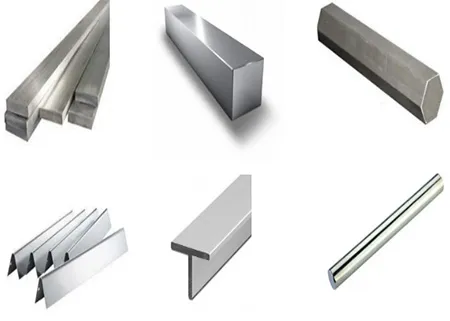
There are many categories of stainless steel bars. They each have their specific functions. Understanding them assists you to choose the right one for your job.
· Austenitic
This stainless steel bar contains 18% Cr and 8% Ni. It is good for making kitchen tools. Austenitic bars resist rust and heat. They are called the 300 series. 304 and 316 are common grades.
They can bend easily. Use them in heat exchangers. Austenitic bars have non-magnetic properties.
· Ferritic
The stainless steel bar here has 12-17% Cr. It is magnetic. These bars are used in car parts. They are known as the 400 series. 430 and 409 are common grades. Ferritic bars resist cracking. They have good mechanical strength. The bar works well for welding jobs.
· Martensitic
This stainless steel bar includes 12-14% Cr and 0.15% C. It is magnetic and strong. Martensitic bars can be hardened. They are used in knives and turbines. These are known as the 400 series.
Grades like 410 and 420 are common. They resist wear and are good for cutting tools.
· Duplex
The stainless steel bar here has a mix of austenitic and ferritic types. It has 22% Cr and 5% Ni.
Duplex bars are strong and resist rust. They are used in boats and chemical plants. 2205 and 2507 are common grades. The bar has a two-phase structure. It resists stress cracks.
· Precipitation-Hardening
This stainless steel bar has Cr and Ni. It becomes very strong after heat treatment. Used in airplanes and medical tools. Common grades are 17-4PH and 15-5PH.
The bar stays stable for a long time. Precipitation-hardening bars are tough and durable. They are used in high-strength applications.
· Round Bar
The round stainless steel bar is circular. It’s used in axles and fasteners. This bar has good strength. Common grades include 304 and 316. The bar comes in different sizes.
It’s easy to shape and weld. Used in many factories and decorations. Round bars have a smooth finish.
· Flat Bar
This stainless steel bar is flat and rectangular. Used in buildings and frames. It is strong and resists rust. Common grades are 304 and 316. The bar comes in various widths and thicknesses.
Flat bars are easy to cut and shape. They are used in construction and decoration projects.
· Hexagonal Bar
The hexagonal stainless steel bar has six sides. It’s used for making nuts and bolts. This bar has high precision. Grades like 303 and 316 are common. The bar is strong and rust-resistant.
Used in both factories and shops. Hexagonal bars are easy to machine. They are good for complex shapes.
How to Measure and Mark Stainless Steel Bars Accurately?
Before cutting steel bars it is advisable to measure and mark them appropriately. You know how it is when you draw lines before cutting paper.
· Measuring Tape
Use a measuring tape to measure a stainless steel bar. This tape shows numbers for lengths. The marks on it are clear. Each inch has 10 little lines. The tool helps you measure correctly.
The tape is long and can bend. It rolls up when not in use. This is easy to hold. Each tape has a clip to hang on a belt. The material is strong and won’t break.
· Vernier Caliper
A Vernier caliper measures a stainless steel bar very well. This tool has two scales. Each scale shows millimeters. The jaws measure the outside and inside. The depth probe checks holes.
They give readings up to three decimal places. The tool has a fine screw for small adjustments. This is strong and lasts long. Each caliper is used in engineering. It is a very precise tool.
· Steel Ruler
The steel ruler helps measure a stainless steel bar. This ruler shows inches and millimeters. The marks are etched on. They are easy to read. This ruler is flat and hard.
The edges are sharp for good lines. The stainless steel resists rust. Each ruler fits in a toolbox. This is great for metal and wood. The tool is very strong. Each line helps you measure right.
· Marking Fluid
Marking fluid helps you see lines on a stainless steel bar. This fluid is bright. The bottle has a brush. It dries quickly. The tool makes marks that stay. Each line helps in cutting.
This fluid is easy to use. It shows where to cut or weld. The bright color stands out. The tool helps guide the cutter. Each mark is clear. This fluid is used in metal work.
· Scriber
The scriber marks a stainless steel bar. This tool has a sharp point. Each mark shows where to cut. The handle is easy to hold. The point is hard and won’t wear out.
This tool is good for metal work. The scriber makes clear lines. Each stroke leaves a mark. This is used for accurate layouts. The tool is simple to use. Each mark is easy to see.
· Center Punch
The center punch makes dents in a stainless steel bar. This tool has a pointed tip. Each dent helps start drilling. The handle is easy to grip. The tip is very hard. This tool doesn’t break.
Each punch makes a small hole. This helps the drill stay in place. The tool is used in metal shops. Each strike is strong. This punch is good for precise work. The tool is important for drilling.
What Tools Are Required for Cutting Stainless Steel Bars?
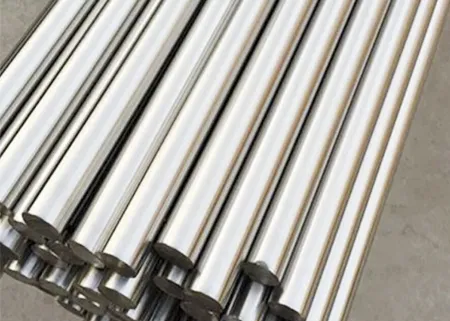
Sawing stainless steel bars requires tools that are specific to that material. It is time to discover which tools can ease the process and decrease the risk level. You can check out this short video on how to cut SS bars!
· Band Saw
Stainless steel bar can only be cut with a band saw that has a carbide blade. This goes right through the metal. The motor has a power of 2 HP. It operates at 3,000 RPMs.
The frame is sturdy. There are ball bearings. They support the blade. The table is rotated 45 degrees anticlockwise. The throat depth is 14 inches. Coolant keeps it cool.
The fence helps guide. Blade tension needs adjusting. That keeps it precise. The miter gauge assists in making angled cuts.
· Plasma Cutter
Employ a plasma cutter for faster cutting of a stainless steel bar. The torch produces an arc of electricity. This arc fuses metal at a very fast rate. It has the capability to generate a power output of 50 amps. It cuts with a high velocity jet. It requires fresh and dry air.
The two vital components are the electrode and the nozzle. They handle high heat. Its duty cycle is 60%. The drag shield assists with accuracy. Safety gloves are essential. The power supply has to meet the demand. That ensures efficient operation.
· Laser Cutter
A laser cutter cuts through a stainless steel bar with precision. It utilizes a high-energy beam. This beam vaporizes metal. It has a wavelength of 10.6 micrometers.
The focal lens focuses the beam. Power settings are possible up to 2000 Watts. Movement is directed by the CNC control. The chiller maintains temperature.
It requires a fine calibration. The cutting speed is 20 inches per minute. The assist gas removes the debris. Its kerf width is small. The exhaust system eliminates gases.
· Angle Grinder
Spinning disc of an angle grinder cuts a stainless steel bar neatly. The motor rotates at a rate of 11,000 revolutions per minute. This tool is handheld. Use a 4.5-inch disc.
There are guards for security. It has 7 amps of power. The handle is adjustable and assists with gripping. A spindle lock holds the disc in place. Cutting depth varies.
The size of the arbor is average. The guard can be changed without tools. Wear goggles for safety. There is too much noise.
· Circular Saw
A stainless steel bar can be cut using a circular saw which employs a toothed blade. It has a motor that rotates up to 5,800 RPM. The blade size is 7.25 inches. The depth adjustment is also very simple. Carbide tip provides enhanced durability. The guide rail allows for straight cuts only.
The bevel can be set to 45 degrees. Cleanliness is maintained by dust extraction. The shoe plate is stable. It has a comfortable grip. Safety switch prevents accidents. The cutting is smooth.
· Abrasive Saw
An abrasive saw cutting through a stainless bar. It employs a resin-bonded wheel. The wheel speed is 3500 RPM. This saw is stationary. It has a clamping vise.
The wheel diameter is 14 inches. The motor power is 15 amps. Sparks fly during cutting. Wear protective gear. The base is sturdy. The miter adjustments help in angles. The wheel guard offers safety. Its cutting is aggressive. The tool is robust.
· Power Shear
A power shear cuts a stainless steel bar cleanly. The blades move quickly. It has the capabilities to deliver 4 amperes of power. The absence of a throat also makes it easier to maneuver. Its cutting rate is 5 feet per minute. The flexibility of the guide guarantees accuracy.
The cutting head rotates. This allows flexibility. The trigger switch controls speed. The blades are replaceable. Its weight is light. Wear gloves for safety. The shearing is efficient. It is suitable for making straight cuts only.
· Jigsaw
A jigsaw carefully saws through stainless steel bar with finesse. It employs a reciprocating blade. The speed is variable. It reaches 3,200 SPM. The orbital action assists in cutting.
This tool is handheld. The bevel is set at 45 degrees. In the case of the blade clamp, it is of the quick-release type. The dust blower removes the dust from the line.
The shoe plate is easily movable or modifiable in some way. The LED light enhances illumination. Wear goggles for safety. Its motor power is 6 amps. The cutting is versatile.
What Are the Methods for Cutting Stainless Steel Bars?
The process of cutting steel bars is similar to cutting paper, only much more difficult. But there are ways of doing it in a cool manner. Let me tell you what they are!
· Sawing
Sawing uses a circular blade to cut through stainless steel bars. The blade spins at 3,000 RPM. This method makes cuts at 90° angles. The machine has settings for speed and depth.
Blades can have 24 or 36 TPI (teeth per inch). It keeps blades cool with a coolant system. The feed rate varies from 10 to 25 inches/min. Sawing is quick and precise. Wuxi Chengjiu Metal makes sure of high quality.
· Shearing
Shearing uses a sharp blade to cut stainless steel bars. The blade angle is set at 3°. They can cut many bars fast. The shear strength can reach 500 PSI. Hydraulic shears push down with great force. The blade gap is 0.1 inches for clean cuts. This process makes little waste. Our company offers this service.
· Plasma Cutting
Plasma cutting uses hot gas to slice stainless steel bars. The gas reaches 20,000°F. The torch guides the plasma stream. Current settings are between 50 and 200 amps.
The speed can be 100 inches/min. Gas pressure is about 70 PSI. Plasma cutting is good for thick bars. This method makes very precise cuts. Wuxi Chengjiu Metal meets all needs.
· Laser Cutting
Laser cutting uses strong light to cut stainless steel bars. The laser power is 2000 watts. This makes smooth edges. The beam is 0.2 inches wide. Cutting speed can be 150 inches/min.
The lens focus is set at 2.5 inches. Laser cutting is great for small details. We provide top metal solutions. It is used in many industries.
· Waterjet Cutting
Waterjet cutting uses high-pressure water. It cuts stainless steel bars cleanly. The water pressure is 50,000 PSI. Abrasives help the cut. Nozzles are 0.2 inches wide.
It works well for heat-sensitive metals. The speed is 75 inches/min. Waterjet cutting handles shapes well. We offer fast delivery. This method is eco-friendly and safe.
· Abrasive Cutting
Abrasive cutting uses a grinding wheel. It cuts stainless steel bars smoothly. The wheel spins at 8,000 RPM. Wheel size is 16 inches. This method makes little heat.
Coolant keeps things cool. Feed rates are 10 inches/min. Abrasive cutting gives nice finishes. Wuxi Chengjiu Metal does great work. It’s a versatile method.
· Flame Cutting
Flame cutting uses a torch with oxy-fuel. It cuts thick stainless steel bars. The flame reaches 6,000°F. Oxygen and fuel mix in the torch. Torch tips are 3 inches.
Preheating makes smooth cuts. The speed is 30 inches/min. Flame cutting is cost-effective. Our company leads in metal supply. It’s good for large projects.
How to Use a Band Saw for Cutting Stainless Steel Bars?
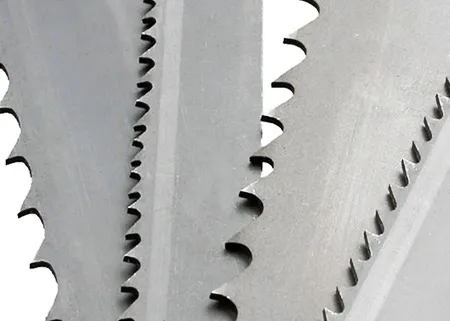
It is very enjoyable and easy to cut when you are using a band saw. Let’s learn how to do it safely and correctly.
· Blade Selection
Pick a bi-metal blade. It is for your stainless steel bar. The TPI should be 14. Blade length has to be compatible with the specifications of the machine. They fit a forty centimeter frame quite nicely. This helps the cut. It is desirable to have a blade speed of 60.
The teeth design should be M42. Provided that a wavy set style will do. This minimizes temperature and wear and tear. See to it that the blade that is to be used is sharp. It will cut smoothly.
· Tension Adjustment
Proper tension is vital. It ensures clean cuts. Increase tension to 25000 psi. This avoids blade breakage. The tension gauge helps. Twist the knob till it is right. They measure tension accurately. Incorrect tension bends blades. That affects cuts.
A tension meter should be used frequently. This maintains performance. Adjust as needed. It is the hallmark of good results. Always check before use. Proper tension ensures that the bar remains straight.
· Cutting Speed
Set the speed correctly. It influences the surface finish of the stainless steel bar. The rate should be 80 RPM. This minimizes burrs. High speed overheats blades. It causes warping. A slower speed is optimal. It prolongs blade life. Speed controls assist you in changing.
Monitor it during cutting. Changes may be needed. They make the process quite seamless. Maintaining a constant speed also is important because it provides clean cuts. Use the right settings.
· Coolant Use
Use coolant when cutting. It prevents overheating. Coolant flow rate is 0.5. This keeps blades cool. Without it, blades get dull rather fast. A coolant tank stores it. This system works well.
Check the levels often. They ensure efficient cooling. Use water-based coolants. Oil-based ones are messy. Keep the nozzle clean. It sprays evenly. Coolant prevents metal from melting. It helps smooth cuts. Always use it.
· Feed Rate
So set the feed rate right. It affects the appearance of the stainless steel bar. Use 2.5 mm/min. This avoids binding. A higher feed rate is faster. It risks blade damage. It is safer to feed at a slower rate. It’s for thick bars. Adjust it with knobs. They allow fine-tuning.
Correct feed rate reduces cutting friction hence minimal tear and wear to the material. Monitor it during operation. It affects efficiency. Proper settings produce the best outcomes.
What Is the Process of Plasma Cutting Stainless Steel Bars?
Plasma cutting is a really cool method of cutting steel. It uses hot gas! Let’s explore the steps.
· Power Source
Plasma cutters use power sources. They use either 120V or 240V. Transformers help to stabilize the current required for cutting. They help in the process of cutting the stainless steel bar.
These devices transform AC into DC. HF inverters cut cleanly. IGBTs and MOSFETs help in controlling it. The pilot arc begins the cut. Stable power is a clean cut. Voltage ranges can change.
· Cutting Torch
A plasma cutter has a cutting torch. This tool is essential for the stainless steel bar. The torch has an electrode and a nozzle. Electrodes use tungsten. Nozzles are copper.
They determine the direction of the plasma arc. HF starts the arc. Plasma gas goes through. Some of these include air, nitrogen and argon gases. This tool needs cooling. It is cooled by water or air.
· Gas Selection
Plasma cutters are devices that cut with gases. Each gas helps differently. An argon-hydrogen mixture is used for cutting thick bars. Pure nitrogen cuts fast.
For the stainless steel bar, a high surface finish is needed. This is the gas which cools the region. Argon makes smooth edges. A fluctuation in the type of gas selected influences its quality. Oxygen can enhance the rate of cutting.
· Arc Initiation
Plasma cutters involve arcs to cut. The pilot arc starts first. This step is essential for the stainless steel bar. It helps the main arc to slash through. The frequency of pilot arcs should be high.
They start steady. Main arcs cut materials. This prevents rough edges. Arc voltage and current are important variables. They change cut quality.
· Cutting Speed
Cutting speed matters. Cuts which are made in a short interval are efficient cuts. Slow cuts may cause formation of metal chips. This basically means that having more power brings about deeper cuts. In the process of cutting the stainless steel bar, it must be done carefully.
The speed increases as the thickness of the bar is increased. Operators set speed. This helps in getting good cuts. Machine settings ensure accuracy. Moderation helps to avoid sharp bends.
· Edge Quality
Edge quality is important. Tightly cut edges demonstrate that the cutting was precise. Burrs show bad cuts. It is true that proper torch setup does aid. Gas choice affects smooth edges.
Cutting speed matters. Thus, what is faster can be cleaner. Nozzle condition matters. Regular checks help. The face of the stainless steel bar should have good edges. Correct current settings help.
· Safety Measures
Safety is key. Wear safety gear. Gloves and goggles protect. Good airflow is important. When using the stainless steel bar it needs to be cut with a lot of care. Use guards on tools.
Check equipment often. Look at cables. Ensure there is a fire extinguisher around. Follow rules. Training helps stay safe. A clean area is safer. Stay alert.
How to Perform Laser Cutting on Stainless Steel Bars?
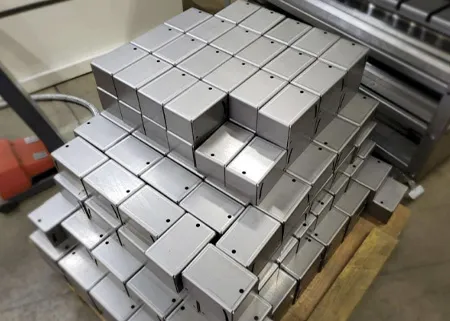
Laser cutting is like magic for me. A beam of light divides the steel. Let’s try it out!
· Laser Source
The stainless steel bar requires cutting and this is done with the help of a CO₂ laser. It uses 1.06 µm light. YAG crystals help amplify. Power can vary from 500W to 1500W, and fiber lasers are preferred. CNC controls the laser. This tech keeps things smooth.
It stops overheating. Goggles keep eyes safe. Cooling stops damage. Lasers make designs. Pulsed lasers manage heat. Depending on the thickness, instantaneous changes are possible. A good setup ensures that quality is kept at high level.
· Beam Focus
A focusing lens is employed to maintain the laser in a tight focus on the stainless steel bar. It’s adjustable. The beam is tiny. Working distances are 50mm to 200mm.
The beam is directed by the optical system. Collimating lenses align it. This is because the lens material used is ZnSe, which can withstand heat. Mirrors redirect light.
They keep it stable. Focus is crucial. Beam energy affects speed. Focus must be perfect. It helps with accuracy.
· Cutting Speed
Another important parameter commonly used in a stainless steel bar is cutting speed. They are ranging from 20 to 100 mm/s. Bar thickness changes speed. Linear drives help in moving fast.
The platform stays steady. Laser power is adjusted where necessary.
The cutting head moves at a high speed. Encoders keep it accurate. Cutting includes kerf width. Speed saves time. It stops warping. Monitoring keeps quality. It is in this way that it is effective.
· Assist Gas
Other assisting gases such as oxygen are used in cutting the stainless steel bar. It goes through a nozzle. The flow rates range between 5 L/min and 25 L/min.
The melted parts are carried away by gas. Nitrogen makes clean cuts. As for flow, the nozzle does make a difference. A regulator checks pressure.
Gas purity is important. Cooling keeps things working. Gas type changes speed. It makes smooth edges. Checks stop blockages. Gas helps precision. Quality stays high.
· Edge Finish
A lot depends on the edge finish of the stainless steel bar. A polished edge does not allow the formation of burrs. Polishing tools help. Edge looks better. Grinding wheels are utilized to remove and smoothen irregularities. Deburring tools smooth it. Speed must be steady.
Different types of grits make it smooth. Passivation stops rust. Quality check comes last. No defects allowed. They alter the way in which Finish operates. Eyes check smoothness. Quality control is compulsory.
· Machine Setup
Machine setup is one of the factors of a stainless steel bar. Calibration aligns parts. Laser head must be firm. Software guides it. Power and speed are set. A test cut checks it. Worktable must be flat. Fixtures hold it tight. Maintenance stops problems.
Tools keep it straight. Cooling stops heat. Safety gear is needed. Rules keep it safe. A good setup results in better outcomes. Proper setup is important.
| Feature | Description | Parameter | Unit | Optimal Value | Range | Importance |
| Laser Source | Fiber, CO2 | Power | W | 1000-3000 | 500-6000 | High |
| Beam Focus | Sharp, precise | Focus Spot Size | µm | 50 | 25-100 | Critical |
| Cutting Speed | Fast, controlled | Speed | mm/min | 1500 | 1000-2500 | Medium |
| Assist Gas | Oxygen, Nitrogen | Pressure | bar | 10 | 5-15 | High |
| Edge Finish | Smooth, burr-free | Roughness | µm | <25 | <50 | Essential |
| Machine Setup | Precise, calibrated | Alignment Accuracy | mm | 0.01 | 0.005-0.02 | Very High |
| Material Thickness | Variable, affects settings | Thickness | mm | 1-5 | 0.5-10 | High |
Table on How to Perform Laser Cutting on Stainless Steel Bars!
What Techniques Are Used for Shaping Stainless Steel Bars?
Taking and molding clay is similar to the process of shaping steel bars. Various methods achieve that goal. Let’s explore these methods!
· Bending
In this case, to bend a stainless steel bar, we use a mandrel. It maintains the bar high. A die then pushes it. The first bar is bent at an angle of 45 degrees. CNC machines help.
They ensure that it is correct. Nodes are stress points. We must check them. Springback is important. Adjustments are made. Pressure must stay steady. Engineers use formulas. They get perfect bends this way. Bending makes metal curve.
· Forging
To forge a stainless steel bar one needs a hammer and anvil. This makes it strong. The forge reaches 1,200°C. A press then compresses the bar. CAD plans the shape. Die molds form it.
Cooling happens after shaping. It will be seen that various types of alloys require different heats. HRC measures hardness. Engineers make sure that the bar is set high. Forging uses high temperatures. That makes the bar very strong.
· Extrusion
Extrusion forms a stainless steel bar. It forces metal through a die. Hydraulic presses apply up to 10,000 psi pressure. The bar reaches a temperature of 500°C. Extruders have die openings.
They make the shape. Control systems monitor speed. High speed results in a smooth surface. Engineers check dimensions. Cooling channels set hardness. Post-extrusion checks are vital. This process provides bars with special shapes. Engineers ensure accuracy.
· Rolling
Rolling is used to flatten a bar of stainless steel. Rollers turn at 100 rpm. Hot rolling process takes place at a temperature of 1,000°C. Cold rolling is done at a temperature that is slightly above the room temperature. Mills have many stands. Calipers check thickness.
Lubricants help rolling. Grain size gets smaller. This makes the bar strong. This makes the bar strong. Engineers align rollers. This process makes metal smooth. Rollers form and shape the bar to the required dimensions. Rolling ensures even thickness.
· Drawing
The process of drawing a stainless steel bar involves passing it through a die. This makes it thinner. Drawbenches pull with 5,000 N. Lubricants cut friction. Temperature control is key.
Annealing softens metal first. Engineers inspect diameter and surface quality. Micrometers are used. Several iterations may be required. Each pass polishes the bar. This boosts tensile strength. Engineers make sure that the bar is correct.
How to Achieve Precision Bending of Stainless Steel Bars?
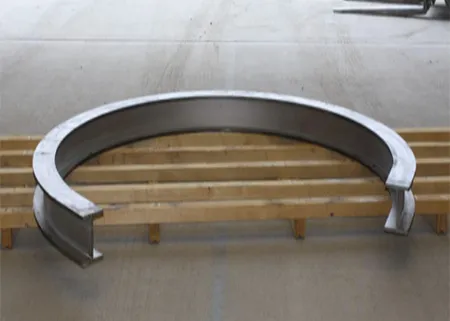
Bars for bending have to be precise. It is like drawing a perfect curve joining two points with a ruler. Let’s learn the tricks!
· Bending Machine
The press brake is used to bend the stainless steel bar. It applies force of 10 tons. A CNC (Computer Numerical Control) assists. The RAM goes up and down. It stops at 5 inches. Sensors check the position. This ensures that the bends are equal in size. The mandrel stops wrinkles.
Not all dies can be used with all kinds of bars. This makes the machine to operate effectively.
· Die Selection
Select the correct die to bend the stainless steel bar. There are U-dies and V-dies. The punch gets into the die. This shapes the bar. Materials which are more rigid will require more rigid dies.
A CNC machine assists in the proper positioning of the dies. The bar bends smoothly. This choice is important for good bends.
· Bending Angle
Choose the correct angle at which one is capable of bending the stainless steel bar. A protractor measures it. Align the bar first. One more consequence is that different angles require different punch heights. This alters the bend radius. Adjust the RAM angle. A digital meter indicates accuracy. The angle stays consistent. This keeps the bend right.
· Springback Compensation
Springback occurs after bending the stainless steel bar. Over-bend to fix it. The CNC system computes it. Elastic materials behave in different ways when they are released.
Warm up before making the final shot. This maintains the shape of the bar. It ensures accuracy. The CNC assists in regulating this process.
· Load Calculation
This means that load is critical in bending the stainless steel bar. A load cell measures force. It means that each bar size requires a certain amount of load.
The CNC system does this. This stops overload. Consequently, accurate load implies precise bends. The machine stays safe. It serves to safeguard the bar and the machine as well.
What Is the Role of Grinding in Shaping Stainless Steel Bars?
It is used to grind the shapes and smoothen the steel bars. The process is similar to sanding wood, but instead of wood, metal is being used. Now let’s see how it’s done!
· Surface Grinding
Surface grinding smoothens the outer surface of stainless steel bar. They use a wheel that has to be spun. Material is quickly removed by the grinder. This process leads to dimensions like Ra 0.8.
The spindle has a speed of rotation of 3000 RPM. That means slick to the touch or very glossy in appearance. They are the chuck, table and the guard. It uses coolants so that it will not heat up. Precision is key here. Consequently, the surface is flat and glossy.
· Cylindrical Grinding
Cylindrical grinding shapes a stainless steel bar round. The bar rotates around two axes. On it the grinding wheel travels. This ensures even grinding.
It has a CBN wheel that rotates at 200 RPM. The process produces good Ra 1.2 finish. These are; head stock, tail stock and grinding wheel. The table seems to move with ease. Coolants assist in cooling the bar.
· Tool Grinding
Tool grinding involves cutting and sharpening of tools for a stainless steel bar. It uses a CBN wheel. The process refines edges. Examples include flutes and tips. This ensures clean cuts. The grinder is capable of revolving at a speed of 1500 revolutions in a minute.
Angles and speeds matter. Coolant prevents overheating. It sharpens tools well. By using precision tools the bar can be shaped in a very easy way. Consequently, it is important to have sharp tools.
· Belt Grinding
Belt grinding finishes a stainless steel bar. It employs a fast moving belt. The process removes imperfections. The belt speed is 1000 RPM. Some of the parts are contact wheel and platen.
This results in a smooth surface. Depending on the polish, grit sizes vary. The belt operates in one direction. It complements the bar perfectly. The motor turns the belt.
· Abrasive Selection
Choice of material is highly important when it comes to grinding a bar of stainless steel. They use Al₂O₃ and SiC abrasives. Each suits different needs. The hardness of the surface and the size of the grit size are things that need to be understood.
On the grinding wheel, the type of bond matters. It uses vitrified or resin bond. This improves grinding efficiency. The process allows one to form smooth surfaces. These are the wheel and the bond.
How to Polish Stainless Steel Bars for a Professional Finish?
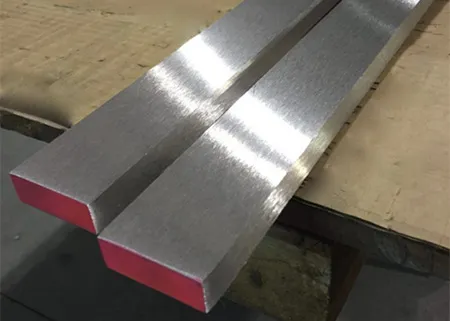
Brightening is done by polishing the steel bars. It’s like washing a window until it shines. Let’s learn the steps!
· Polishing Compound
Polishing compound gives metal that shining appearance. Rub compound on a piece of stainless steel bar. They should use grit 240 for it. They rotate at 800 RPM speed. This makes it shine.
Apply compound evenly. Use a cloth wheel. Lastly, rinse the bar to finish the process.
That removes extra compound. Achieve higher shine with 1500 grit. Compound cleans small scratches. Metal polish is used to smoothen the surface. They make a mirror finish. They seem to be new and trendy.
· Buffing Wheel
Buffing wheel assists in the process of polishing metals. Bolt it to a motor. It rotates at 1000 RPM. Stainless steel bar can be easily polished. A soft cloth wheel should be used. Spin for 10 minutes. That makes the bar shiny. They polish without scratches.
Buffing removes tiny marks. Use even pressure. There are also various types of the wheels. Neatness and tidiness of bars is smart. Buffing makes bars gleam.
· Abrasive Pads
Abrasive pads clean surfaces. Scrub with grit 320. Clean a stainless steel bar. Pads remove rust spots. Use circular motions. Scrub for 5 minutes. Each pass smoothens it. They improve shine.
Pads have different grits. Higher grit means better surface finish. Steel feels polished. These pads are flexible. Perfect for detailed work, the abrasive pads polish well. They clean and shine.
· Polishing Machine
A polishing machine is efficient in terms of time. Use at 1500 RPM. It polishes a stainless steel bar within a short span of time. Attach abrasive discs. This removes rough spots. Machines give even pressure. They provide a good surface texture. Polish for 8 minutes.
Better shine requires different discs. Machines have adjustable speeds. The higher speed makes it shiny. Polishing machines work well. They give a professional outlook to the company or organization. Buildings look new, especially bars.
· Surface Preparation
Surface preparation is important. Clean the bar first. Use a degreaser. This removes the oil and dirt from the face. Scrub with grit 200. They ensure a smooth base.
Rinse and dry. Preparation avoids mistakes. It ensures even polishing. Prepared surfaces shine better. Use alcohol to clean. Preparation takes time.
Conclusion
Appropriate equipment is useful in cutting and bending a stainless steel bar. We’ve discussed the tips to follow in order to get the best outcomes. For more details on cutting and shaping bars visit ALLOYXPERT. Make clean cuts and shapes quickly.