ASTM A299
- Home
- Products
- Carbon Steel Stocks
- ASTM A299
Basic Info
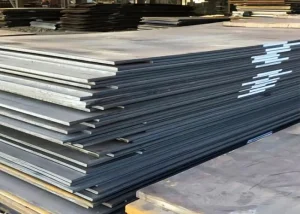
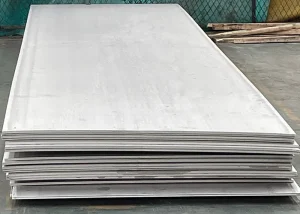
The ASTM A299 standard specifies the standard specifications for steel plates used in low-temperature pressure vessels for the manufacture of storage tanks, boilers, and other pressure vessels. These steel plates have excellent toughness and strength under low temperature conditions. This standard covers the chemical composition, mechanical properties, and dimensional requirements of steel plates, ensuring that products meet quality standards and can operate safely and reliably in low-temperature environments.
Characteristics
Pressure Vessel Grade: ASTM A299 steel is specifically designed for use in pressure vessel applications, making it suitable for storing and transporting liquids and gases under moderate to low pressures.
Two Grades: The specification includes two grades (A and B), each offering different levels of tensile strength and toughness to meet specific application requirements.
Weldability: ASTM A299 steel exhibits excellent weldability, allowing for ease of fabrication and the creation of complex structures without sacrificing integrity or performance.
Formability: This steel is known for its good formability, enabling it to be easily shaped and molded into various configurations during the manufacturing process.
Cost-Effective: ASTM A299 steel is often chosen for its cost-effectiveness, providing a balance between performance, durability, and affordability for pressure vessel applications.
Moderate to Low-Temperature Service: ASTM A299 steel is suitable for use in moderate to low-temperature service conditions, making it ideal for applications where elevated temperatures are not a concern.
ASTM A299 Data Sheet
Steel Grade
Dimensions and Tolerances
Equivalent Steel Grades
Chemical Composition
Mechanical Properties
Fabrication and Welding
Steel Grade
Grade A:
- Tensile Strength: 550 – 690 MPa
- Yield Strength: 345 MPa (min)
- Elongation: 19% (min)
Grade B:
- Tensile Strength: 620 – 725 MPa
- Yield Strength: 415 MPa (min)
- Elongation: 17% (min)
Dimensions and Tolerances
Plate
- Width (mm): 600–2000
- Thickness (mm): 4.5–120
- Tolerance on Thickness (mm): ±0.010 (0.25)
- Tolerance on Width (mm): ±0.025 (0.64)
Sheet
- Width (mm): 600–2000
- Thickness (mm): 0.4–6.35
- Tolerance on Thickness (mm): ±0.010 (0.25)
- Tolerance on Width (mm): ±0.025 (0.64)
Strip
- Width (mm): 12.7–610
- Thickness (mm): 0.4–5.16
- Tolerance on Thickness (mm): ±0.015 (0.38)
- Tolerance on Width (mm): ±0.025 (0.64)
Round bar
- Width (mm): 6–110
Equivalent Steel Grades
United Kingdom
- Equivalent Grade: BS 1501-224-460A/B
- Standard: BS 1501
- Notes: Pressure vessel steel grade
Germany
- Equivalent Grade: DIN 17155 17 Mn 4
- Standard: DIN 17155
- Notes: Pressure vessel steel grade
Japan
- Equivalent Grade: JIS G3115 SPV235
- Standard: JIS G3115
- Notes: Pressure vessel steel grade
China
- Equivalent Grade: GB 713 Q245R
- Standard: GB 713
- Notes: Pressure vessel steel grade
Chemical Composition
Carbon (C)
- Grade A: 0.24 max
- Grade B: 0.24 max
Manganese (Mn)
- Grade A: 0.90–1.60
- Grade B: 0.90–1.60
Phosphorus (P)
- Grade A: 0.025 max
- Grade B: 0.025 max
Sulfur (S)
- Grade A: 0.025 max
- Grade B: 0.025 max
Silicon (Si)
- Grade A: 0.15–0.40
- Grade B: 0.15–0.40
Mechanical Properties
Tensile Strength (MPa):
- Grade A: 515 – 655
- Grade B: 550 – 690
Yield Strength (MPa):
- Grade A: ≥ 310
- Grade B: ≥ 345
Elongation (%):
- Grade A: 19 min
- Grade B: 17 min
Fabrication and Welding
Cutting
- Method: Flame Cutting, Plasma Cutting, Shearing
- Guidelines: Use proper cutting tools and techniques
- Notes: Avoid excessive heat input and maintain cleanliness
Forming
- Method: Hot Forming, Cold Forming
- Guidelines: Follow recommended forming temperatures and methods
- Notes: Cold forming may require intermediate annealing
Machining
- Method: Drilling, Milling, Turning
- Guidelines: Use sharp tools and appropriate speeds and feeds
- Notes: Maintain proper cooling/lubrication for cooling
Welding
- Method: Arc Welding, Gas Welding, Resistance Welding
- Guidelines: Preheat and control interpass temperature
- Notes: Select suitable welding consumables and methods; perform post-weld heat treatment as necessary
Comparisons and Alternatives of ASTM A299 Steel
Comparison with Other Pressure Vessel Steels: ASTM A299 steel may be compared with other pressure vessel steels such as ASTM A285, ASTM A516, and ASTM A537. Engineers and designers often evaluate these materials based on factors such as mechanical properties, chemical composition, weldability, and cost-effectiveness to determine the most suitable option for their specific application.
Advantages and Disadvantages: When comparing ASTM A299 steel with alternative materials, it’s essential to consider its advantages and disadvantages. For example, ASTM A299 steel offers good weldability, formability, and moderate to high strength, but it may have limitations in terms of elevated temperature service compared to other high-temperature steels.
Suitability for Specific Applications: Engineers and designers assess the suitability of ASTM A299 steel and its alternatives based on the requirements of their specific application. Factors such as operating conditions, pressure levels, temperature ranges, and corrosion resistance play a crucial role in determining the most appropriate material for pressure vessel fabrication.
Cost-Effectiveness: Cost is often a significant consideration when selecting materials for pressure vessel applications. ASTM A299 steel may offer a balance between performance and cost-effectiveness compared to alternative materials. However, it’s essential to consider the overall lifecycle cost, including fabrication, installation, maintenance, and potential downtime, when evaluating cost-effectiveness.