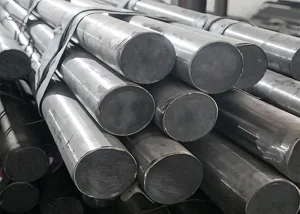

ASTM A790
- Home
- Products
- Stainless Steel Stocks
- ASTM A790
Characteristics
High Temperature Resistance: Capable of withstanding elevated temperatures encountered in industrial processes.
Corrosion Resistance: Provides excellent resistance to corrosion in aggressive environments such as seawater and chemical processing. The standout feature of ASTM A790 materials lies in their unrivaled resistance to corrosion, a quality that resonates deeply with customers seeking reliability and longevity in their infrastructure. Engineered to withstand the harshest environments, these stainless steel pipes and tubes exhibit an impressive resilience against corrosive substances such as acids, alkalis, and chlorides. This resilience translates to prolonged equipment lifespan, reduced maintenance costs, and minimized risks of leaks or failures, particularly in sectors like offshore oil and gas, chemical processing, and marine applications.
ASTM A790 Data Sheet
Steel Grade
Dimensions and Tolerances
Equivalent Grades
Chemical Composition
Mechanical Properties
Fabrication and Welding
Steel Grade
S31803
S32205
S32750
S32760
Dimensions and Tolerances
Round
Dimension:
NPS 1/8″ to 6″
Tolerances:
Outside Diameter: ±0.015 in (0.38 mm) for NPS 1/8″ to 1 ½”, ±0.025 in (0.64 mm) for NPS 2″ to 6″
Length: +1/8″, -0″
Weight: ±10%
Rectangular
Dimension:
Width: up to 12″
Thickness: up to 10″
Tolerances:
Width: ±0.015 in (0.38 mm)
Thickness: ±10% of nominal
Square
Dimension:
Size: up to 12″
Tolerances:
Size: ±0.015 in (0.38 mm)
Wall Thickness: ±10% of nominal
Equivalent Grades
S31803
Japan (JIS): SUS329J3L
Germany (DIN): 1.4462
United Kingdom (BS): 318S13
S32205
Japan (JIS): SUS329J1TB
Germany (DIN): 1.4462
United Kingdom (BS): 318S13
S32750
Japan (JIS): SUS329J4L
Germany (DIN): 1.441
United Kingdom (BS): 327S31
S32760
Japan (JIS): Not available
Germany (DIN): 1.4501
United Kingdom (BS): 329S31
Chemical Composition
Carbon (C): 0.030 max
Manganese (Mn): 2.00 max
Phosphorus (P): 0.030 max
Sulfur (S): 0.020 max
Silicon (Si): 1.00 max
Chromium (Cr): 24.0-26.0
Nickel (Ni): 8.0-10.5
Molybdenum (Mo): 3.0-4.0
Nitrogen (N): 0.20-0.30
Copper (Cu): 0.75 max
Mechanical Properties
Tensile Strength (min): 620 MPa (ksi)
Yield Strength (min): 450 MPa (ksi)
Elongation (min): 25%
Hardness (max): HRB 95 / HB 217 / HV 240
Density: 7.95 g/cm³
Poisson’s Ratio: 0.3
Modulus of Elasticity: 200 GPa (ksi)
Thermal Conductivity: 14.6 W/(m·K)
Specific Heat Capacity: 500 J/(kg·K)
Electrical Resistivity: 0.8 µΩ·m
Thermal Expansion Coefficient: 11 µm/(m·°C)
Melting Point: 1398°C (2550°F)
Fabrication and Welding
Heat Treatment: Austenitic stainless steel pipes intended for high-temperature or general corrosive service must undergo heat treatment based on the specified temperature and cooling procedures.
Welding Consumables: Welding consumables should comply with AWS A5.4/A5.9 specifications, considering the application and chemical composition of the base material.
Welding Procedures: Qualified procedures should be used, addressing the design, material thickness, and welding technique, with documentation in line with standard requirements.
Preheating: Preheating may be necessary depending on material thickness and service conditions. Preheating and interpass temperatures must comply with specified parameters.
Post Weld Heat Treatment (PWHT): PWHT is sometimes required depending on material characteristics, welding processes, and service conditions. It must be done according to specified temperatures and durations.
Inspection and Testing: Visual inspection should verify proper joint preparation, alignment, and cleanliness. Non-destructive testing (NDT) methods such as radiographic, ultrasonic, or dye penetrant testing may also be required.
Surface Preparation: Before welding, surfaces must be cleaned of contaminants by methods like grinding or brushing to ensure good weld integrity.
Welding Techniques and Parameters: Welding parameters like current, voltage, speed, and shielding gas application must be controlled, depending on the specific process (e.g., GTAW, SMAW).
Welding Position: Welding may be performed in various positions (flat, horizontal, vertical, or overhead), depending on job site requirements.
Welder Qualification: Welders must be qualified per applicable welding standards and procedures, maintaining certification with regular retesting.
Post-Weld Cleaning and Finishing: Welded joints should be cleaned and finished (e.g., grinding, brushing) to remove residual oxides and ensure weld integrity and appearance.
Protection Against Corrosion: Protection methods should be applied to avoid stainless steel contamination during fabrication, such as shielding from contact with carbon steel tools.
Repair and Removal of Defects: Weld joints should be inspected for defects, which must be repaired as necessary according to applicable welding standards.