
Steelmaking and Billet Casting Stages

Raw Material Selection and Proportion Control
In the initial stage of steelmaking, it is essential to verify that the quality of the chosen raw materials, including pig iron and scrap steel, adheres to the required standards.
Control the ratio of raw materials to ensure that the chemical composition of the final steel meets the requirements.
Ironmaking
Raw materials such as pig iron or scrap steel are put into a blast furnace and heated together with coke and limestone to reduce the iron oxides in the iron ore to iron. The temperature in the blast furnace is as high as several thousand degrees Celsius, and the refining molten iron contains impurities such as carbon.
Decarburization and Alloying
During the steelmaking process, the carbon content needs to be controlled to produce different types of steel.
In a converter or electric arc furnace, oxygen is introduced into the molten iron to oxidize the carbon in the iron.
Alloying elements such as chromium, nickel, molybdenum, etc. are added to adjust the properties of the steel. The addition of alloying elements can be done at different stages of steelmaking, depending on the desired final steel properties.
Impurity Removal
Impurities in molten steel are removed by adding deoxidizers, slag, or other chemicals. Ensure the purity and uniformity of molten steel.
Smelting Process Control
Monitor the temperature of the melting furnace to ensure that steelmaking is carried out within the appropriate range. Continuously detect the chemical composition of molten steel, including carbon content, alloying element content, etc. Control the content of oxygen, nitrogen, and other gases to affect the gas solubility and purity of molten steel.
Continuous Casting
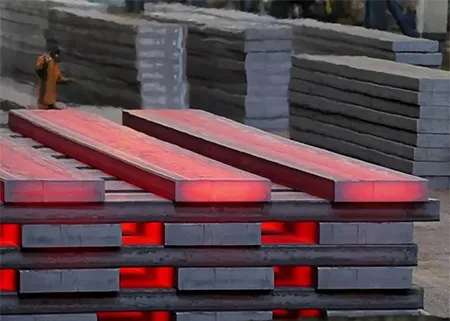
Pour the refined molten steel into the continuous casting machine to form a continuous cast slab.
The continuous casting machine cools the molten steel into billets through cooling and solidification.
Casting Process Control
Ensure that the size and shape of the continuous casting billet meet the requirements.
Control the cooling rate during continuous casting to adjust the grain structure and mechanical properties of the billet.
Monitor the surface quality of the cast slab, such as pores, inclusions, and other defects.
| Stage | Testing Equipment Used | Controlled Items | Purpose and Function |
| The raw material selection and proportion control | Chemical analyzers, spectrometers, sulfur content testers | Chemical composition of raw materials, sulfur content, element content, etc. | Ensure the quality of raw materials meets standards and control the proportion of alloy elements |
| Ironmaking | Melting temperature control system | temperature | Make sure iron is being smelted at the right temperature to avoid overheating or coldness |
| Chemical analyzer, gas analyzer | Chemical composition, gas content | Monitor the carbon content, oxygen content, nitrogen content, etc. in the molten iron | |
| Decarburization and alloying | Absorption spectrometer, elemental analyzer | Chemical composition, alloying element content | Ensure element content during decarburization and alloying meets requirements |
| Deoxidizer, oxygen content analyzer | oxygen content | Control oxygen content to affect decarburization and alloying effects | |
| Remove impurities | Melt filter, refining furnace, slag analyzer | Slag composition and impurity content | Remove slag and impurities to improve the purity and uniformity of molten steel |
| Vapor phase precipitation analyzer, inclusion detector | Gas content and inclusion detection | Ensure that the gas content and inclusion quantity in the molten steel are within acceptable limits | |
| Continuous casting | Continuous casting machine liquid level control system | Continuous casting billet size | Control the size and shape of continuous casting billets to ensure compliance with requirements |
| Liquid phase thermometer, temperature sensor | temperature | Ensure that the cooling process of the continuous casting billet is stable and avoid being too fast or too slow | |
| Magnetic particle flaw detector, ultrasonic flaw detector | Surface defects, internal defects | Detect surface and internal defects of blanks to ensure product quality |
Hot Rolled Slab
Raw Material Preparation Stage
Prepare raw materials: including steel billet, steel slag, additives, etc.
Weighing equipment: used for weighing to ensure the accuracy of raw material proportions.
Quality analyzer: detects raw material composition, oxygen content, etc. to ensure that raw material quality meets production requirements.
Cleaning equipment: Clean impurities, oxides, etc. on the surface of raw materials to ensure that subsequent production processes are not affected.
Warm-up Phase
Preheating furnace: Preheat the steel billet to the appropriate hot rolling temperature.
Temperature control system: monitor and control the temperature of the preheating furnace to ensure that the preheating temperature meets the requirements.
Hot rolling mill: By controlling rolling parameters, including rolling force, rolling speed, etc., the thickness and width of the slab are obtained.
Hot rolling process control: Monitor rolling temperature, speed, and rolling intensity to ensure a stable rolling process.
Ending Stage of Rolling
Cooling equipment: cool the hot rolled slab to room temperature.
Cooling process control: Control the cooling speed and method to make the slab structure uniform and improve the hardness and strength.
Fire extinguisher: Extinguish fire on the slab to prevent problems such as excessive hardness and brittleness of the slab.
Quality inspection: Conduct comprehensive quality inspection on the slab, including size, chemical composition, mechanical properties, etc.
Testing equipment: metallographic microscope, hardness tester, tensile testing machine, etc., to test the surface and internal quality of the slab to confirm product quality.
| Stage | Testing Equipment Used | Controlled Items | Purpose and Function |
| The raw material preparation stage | Weighing equipment, quality analyzers | Raw material ratio and chemical composition | Ensure the accuracy of raw material ratio and raw material quality meet requirements |
| cleaning equipment | Remove impurities, oxides, etc. | Ensure that subsequent production processes are not affected by impurities in raw materials | |
| warm-up phase | Temperature control system, temperature measuring instrument | pre-heat temperature | Control preheating temperature to improve slab plasticity |
| Hot rolling mill, metallographic microscope, hardness tester | Rolling parameters, slab structure, hardness | Obtain the thickness and width of the slab by controlling the rolling parameters | |
| Test the structure and hardness of the slab to ensure quality | |||
| rolling end stage | Cooling equipment, temperature measuring instruments | Cooling rate, slab temperature | Control cooling speed to improve slab hardness and strength |
| Fire extinguishers, quality inspection equipment | Fire extinguishing treatment, slab size, chemical composition, mechanical properties | Ensure that slab quality meets standards and prevent problems such as slab brittleness | |
| final slab processing stage | Cutting machinery, surface treatment equipment | Cutting size, surface quality | Ensure final product size and surface quality meet requirements |
| Packaging Equipment | packaging protection | Protect products from the external environment and prevent corrosion and damage |
Heat Treatment of Stainless Steel Plates or Coils
Raw Material Preparation Stage
Preparing steel plates or coils: raw materials to be heat treated.
Check the surface quality and dimensions of steel plates or coils.
Place the steel plates or steel coils on the handling equipment and prepare to enter the heat treatment equipment.
Heating Stage
Feed the steel plate or steel coil into the heating furnace.
Heating process control: ensure the required heating temperature and holding time are achieved, and adjust according to different materials and requirements.
Ensure that the temperature of the steel plate or steel coil is uniform during the heating process and reaches the required temperature.
Insulation Stage
After reaching the desired temperature, the steel plate or coil is kept at a constant temperature for a while.
Ensure that the internal structure of the steel plate or steel coil is uniform and maintained for a certain time to stabilize the organizational structure.
Cooling Stage
Remove the steel plate or steel coil from the heating furnace and enter the cooling equipment.
Cooling rate control: Control the cooling rate to achieve the desired tissue structure and performance.
Control the cooling speed and method, such as water cooling, air cooling, etc.
Ensure the cooling rate is moderate to avoid excessive internal stress and deformation while maintaining the properties of the steel plate or coil.
| Stage | Testing Equipment Used | Controlled Items | Purpose and Function |
| The raw material preparation stage | Surface quality testing equipment | Surface quality, size | Ensure that the surface quality of raw materials meets the requirements and the dimensions are accurate |
| heating stage | Temperature control system, thermometer | Heating temperature and holding time | Ensure the required heating temperature and holding time are achieved |
| heat preservation stage | Temperature monitoring equipment in the holding furnace | maintain constant temperature time | Ensure that the internal organization is homogenized and maintained for a certain time |
| cooling phase | Cooling rate control system, thermometer | cooling rate, cooling temperature | Control cooling rates to achieve the desired structure and performance |
| Cooling speed detection equipment | cooling rate | Monitor and control cooling rates to avoid problems caused by too fast or too slow | |
| cleaning phase | Surface cleaning equipment | Remove surface residue | Make sure there is no residue on the cleaned surface and prepare for the next step. |
| detection phase | Appearance quality inspection equipment, dimensional measuring instruments | Appearance quality, size | Check whether the appearance quality and size meet the standard requirements |
| Chemical composition analysis equipment | chemical composition | Ensure chemical composition meets standard requirements | |
| Metallographic microscope, tensile testing machine | Internal organization and mechanical properties | Check whether the internal organizational structure and mechanical properties meet the requirements | |
| packaging stage | Packaging testing equipment | Packaging integrity, anti-corrosion packaging | Detect packaging integrity to prevent the external environment from affecting product quality |
Cold Rolled Plate Production and Heat Treatment
Cold Rolled Plate Production
Raw Material Preparation Stage
Prepare raw materials: stainless steel billet.
Check the quality and size of the billet.
The steel billet is sent to the decarburization furnace or steel continuous casting machine for heat treatment and decarbonization.
Primary Rolling Stage
The heat-treated steel billet is sent to the cold rolling mill for rough rolling.
Cold rolling process control: monitor cold rolling temperature, rolling intensity, and rolling speed.
The cold-rolling mill performs primary rolling and presses the billet into thicker cold-rolled plates.
Rollers are used to roll the steel plate to reduce the thickness of the slab and reach the required thickness of the cold-rolled plate.
Finish Rolling Stage
The cold rolled plate after initial rolling is sent to the finishing rolling mill for finishing rolling treatment.
The finishing mill performs multiple passes on the cold-rolled plate to further reduce the thickness of the slab.
By adjusting the roller pressure and roller spacing, the thickness and surface quality of the slab are controlled.
Surface Treatment Stage
The finished cold rolled plates are subjected to surface treatment, such as pickling, galvanizing, etc.
Pickling can remove surface oxides and improve surface quality and finish.
Galvanizing can form a zinc layer on the surface to increase corrosion resistance.
Cold Rolled Plate Quality Inspection Stage
Detect plate thickness, flatness, surface quality, etc.
Use thickness measuring instruments, flatness detectors, surface quality inspection equipment, etc. for inspection.
Ensure that the quality of cold-rolled plates meets standard requirements.
| Stage | Testing Equipment Used | Controlled Items | Purpose and Function |
| The raw material preparation stage | Dimensional measuring instrument, appearance quality inspection equipment | Size, appearance quality | Ensure raw materials are accurate in size and defect-free in appearance |
| Early rolling stage | Thickness measuring instrument, rolling strength testing equipment | Plate thickness, rolling strength | Control plate thickness and rolling intensity to ensure rolling quality |
| Finish rolling stage | Thickness measuring instrument, surface quality inspection equipment | Sheet thickness and surface quality | Ensure that the thickness and surface quality of the board meet the requirements |
| Surface treatment stage | Chemical composition analysis equipment, zinc layer detection equipment | Chemical composition, zinc layer thickness | Ensure surface treatment quality, such as pickling to remove oxides, galvanizing uniformity, etc. |
| Cold rolled plate quality inspection stage | Thickness measuring instrument, flatness detector | Board thickness and straightness | Check whether the thickness and flatness of cold-rolled plates meet the standards |
Heat Treatment
Raw Material Preparation Stage
Cold-rolled plates are prepared as raw materials.
Check the dimensions and surface quality of cold rolled plates.
Heating Stage
The cold rolled plate is fed into the heating furnace.
Control the heating temperature and holding time of the heating furnace and adjust them according to different materials and requirements.
Ensure that the cold rolled plate has a uniform temperature during the heating process and reaches the required temperature.
Insulation Stage
After reaching the desired temperature, the cold rolled plate is kept at a constant temperature for a while.
Ensure that the internal structure of the cold-rolled plate is uniform and maintained for a certain time to stabilize the organizational structure.
Cooling Stage
The cold-rolled plates are taken out of the heating furnace and entered into the cooling equipment.
Cooling rate control: Control the cooling rate to achieve the desired tissue structure and performance.
Control the cooling speed and method, such as water cooling, air cooling, etc.
Ensure the cooling rate is moderate to avoid excessive internal stress and deformation while maintaining product performance.
| Stage | Testing Equipment Used | Controlled Items | Purpose and Function |
| The raw material preparation stage | Dimensional measuring instrument, appearance quality inspection equipment | Size, appearance quality | Ensure raw materials are accurate in size and defect-free in appearance |
| heating stage | Temperature control system, thermometer | Heating temperature and holding time | Ensure the required heating temperature and holding time are achieved |
| heat preservation stage | Temperature monitoring equipment in the holding furnace | maintain constant temperature time | Ensure that the internal organization is homogenized and maintained for a certain time |
| cooling phase | Cooling rate control system, thermometer | cooling rate, cooling temperature | Control cooling rates to achieve the desired structure and performance |
| Cooling speed detection equipment | cooling rate | Monitor and control cooling rates to avoid problems caused by too fast or too slow | |
| cleaning phase | Surface cleaning equipment | Remove surface residue | Make sure there is no residue on the cleaned surface and prepare for the next step. |
| detection phase | Appearance quality inspection equipment, dimensional measuring instruments | Appearance quality, size | Check whether the appearance quality and size meet the standard requirements |
| Chemical composition analysis equipment | chemical composition | Ensure chemical composition meets standard requirements | |
| Metallographic microscope, tensile testing machine | Internal organization and mechanical properties | Check whether the internal organizational structure and mechanical properties meet the requirements |
Stainless Steel Plate Surface Treatment
Raw Material Preparation Stage
Prepare cold-rolled stainless steel plates as raw materials.
Check the size and surface quality of the steel plate.
Pickling Treatment
Send the stainless steel plate into the pickling tank.
The acid in the pickling tank removes oxides and dirt from the surface of the steel plate.
Control the temperature, concentration, and treatment time of the pickling solution to ensure thorough cleaning.
Cleaning Stage
Send the pickled steel plate into the cleaning tank.
The cleaning fluid in the cleaning tank will clean away the pickling fluid residue and other impurities.
Ensure the purity of the cleaning solution and appropriate cleaning time to avoid residues affecting surface quality.
Control the temperature and circulation of the cleaning fluid to ensure surface cleanliness meets requirements.
Phosphating Treatment (optional)
If it is necessary to increase coating adhesion or improve corrosion resistance, stainless steel plates can enter the phosphating tank.
The phosphating solution in the phosphating tank will form a phosphating layer on the surface of the steel plate.
Control the temperature, concentration, and treatment time of the phosphating solution to ensure the formation of a uniform and dense phosphating layer.
Pickling and Subsequent Treatment
After phosphating treatment, the steel plate may need to be pickled twice to remove the phosphating solution residue.
Send the steel plate into the pickling tank for secondary pickling to ensure the surface is clean.
Galvanizing Treatment (optional)
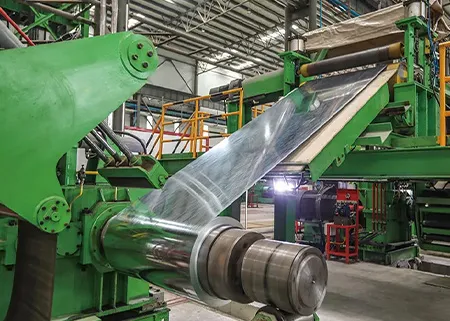
If you need to increase the corrosion resistance of stainless steel plates, they can be galvanized.
The hot-dip galvanizing solution in the galvanizing bath will form a zinc layer on the surface of the steel plate.
Control the temperature, concentration, and treatment time of the galvanizing solution to ensure the formation of a uniform and dense galvanizing layer.
Surface Coating (optional)
Stainless steel plates may require surface coating for specific applications.
Send the steel plate into spraying or coating equipment and apply the required coating, such as organic coating, glue, etc.
Control the nozzle position, spray speed, and spray pressure of the coating equipment to ensure uniform coating thickness.
Control the coating thickness, coating method, and drying time to ensure uniform coating and strong adhesion.
Drying Stage
The treated steel plate is dried to remove surface liquid.
The steel plate is heated by baking equipment to dry and solidify the coating.
Control the drying temperature and time to ensure the coating is completely cured.
| Stage | Testing Equipment Used | Controlled Items | Purpose and Function |
| Pickling treatment stage | pH meter, pickling solution concentration meter | Pickling solution pH value and concentration | Ensure that the acidity and concentration of the pickling solution meet the requirements |
| Appearance quality inspection equipment | Cleaning of surface oxides and dirt | Test surface cleanliness and pickling effect | |
| cleaning phase | Cleaning fluid purity measuring instrument | Cleaning fluid purity | Ensure the purity of the cleaning solution meets the requirements |
| Phosphating treatment stage | Phosphating liquid thermometer and concentration meter | Phosphating liquid temperature and concentration | Control the temperature and concentration of the phosphating solution to ensure the quality of the phosphating layer |
| Phosphating layer thickness measuring instrument | Phosphating layer thickness | Check whether the thickness of the phosphate layer meets the requirements | |
| Pickling and reprocessing stage | pH meter, pickling solution concentration meter | Pickling solution pH value and concentration | Ensure that the acidity and concentration of the secondary pickling solution meet the requirements |
| Appearance quality inspection equipment | Cleaning of surface residues | Check whether there is any residue after cleaning | |
| Galvanizing stage | Galvanizing solution thermometer and concentration meter | Galvanizing solution temperature and concentration | Control the temperature and concentration of the galvanizing solution to ensure the quality of the galvanizing layer |
| Galvanized layer thickness measuring instrument | Galvanized layer thickness | Check whether the thickness of the galvanized layer meets the requirements | |
| Surface coating process control stage | coating thickness measuring instrument | coating thickness | Check whether the thickness of the coating is uniform and meets the requirements |
| Appearance quality inspection equipment | Coating appearance and uniformity | Check the appearance quality and uniformity of coatings | |
| drying stage | Baking thermometer, timer | Drying temperature and time | Control drying temperature and time to ensure complete curing of the coating |
| Coating adhesion testing equipment | coating adhesion | Check whether the adhesion of the coating meets the requirements |
Finished Stainless Steel Plate Inspection and Packaging
Finished Product Inspection
Dimensional Inspection
Use dimensional measuring instruments to measure the length, width, and thickness of stainless steel plates.
Control the precision and accuracy of measuring equipment to ensure dimensions meet product specifications.
Surface Quality Inspection
Use appearance quality inspection equipment to inspect the surface of the steel plate, including detecting defects such as oxidation, stains, and unevenness.
Inspection equipment can capture tiny surface flaws and blemishes to ensure surface quality meets requirements.
Inspection of Composition and Mechanical Properties
Conduct chemical composition analysis to ensure that the composition of the stainless steel plate meets the standards.
Use equipment such as tensile testing machines to test the mechanical properties of stainless steel plates, such as tensile strength, yield strength, etc.
Packaging
Packaging Quality Control
For packaging of stainless steel plates, use packaging materials that meet transportation and storage requirements, such as wooden pallets, plastic films, etc.
Ensure sealing and stability during packaging and prevent steel plates from being damaged or oxidized during transportation.
Check the integrity of the packaging, including whether the outer packaging is intact whether the labels are complete and clear, etc.

Appearance Inspection
Conduct a visual inspection of the packaged stainless steel plates to ensure there are no obvious damages or scratches on the surface.
Check whether the packaging meets product standards, such as whether specifications, batch numbers, production dates, etc. are accurately marked.
Packaging Quality Inspection
Use packaging testing equipment to test the sealing and stability of the packaging.
Ensure that the packaging meets transportation and storage requirements and can effectively protect the stainless steel plate from the external environment.
Quality Inspection Records and Archiving
Record and archive the quality inspection data of each batch of stainless steel plates.
Including test results such as size, surface quality, composition, and mechanical properties for future traceability and analysis.
Final Confirmation
Final confirmation of the packaged stainless steel plates to ensure that all quality inspection and packaging work meets requirements.
Sign the final confirmation document confirming that the product is ready to ship.
Factory
Transport the inspected and packaged stainless steel plates out of the factory and prepare them for shipment to customers or warehouses.
Complete the filling in the factory documents, including the factory time, quantity, destination, and other information.
| Stage | Testing Equipment Used | Controlled Items | Purpose and Function |
| Dimensional inspection | Dimensional measuring instrument, measuring tape | length, width, thickness | Ensure dimensions meet product specifications |
| Surface quality inspection | Appearance quality inspection equipment | Surface defects, oxides, etc. | Check whether the surface quality of the steel plate meets the requirements |
| Composition and mechanical property testing | Chemical composition analysis equipment, tensile testing machine | Composition, mechanical properties | Ensure that the composition and mechanical properties of stainless steel plates meet standard requirements |
| Packaging quality control | Packaging inspection equipment, appearance inspection | Packaging integrity and appearance quality | Test the integrity and quality of packaging to ensure that packaging meets requirements |