
Introduction
The seamless pipe meaning involves attributes like ASTM standards, high tensile strength, and smooth surface. It does not have any weld seams which makes the pipes more durable.

Thus, the purpose is to elucidate such aspects as specifications, materials, and advantages of these pipes. The emphasis is made on their function in a range of contexts.
What is a Seamless Pipe?
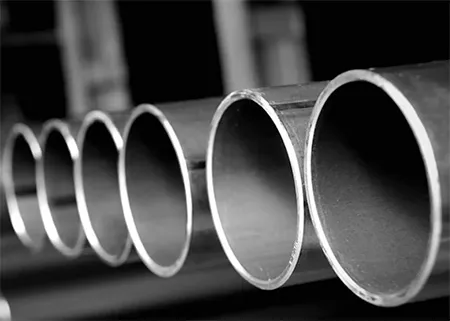
Seamless pipes are cylindrical sections of pipes which have not been joined by welding. This pipe is created with heat and pressure. It is glossy and long lasting.
The metal used is known as 316L stainless steel. They can withstand very high pressure. A billet turns into a pipe via hot extrusion. This method forms the metal. The sizes are specified by ASME B36.10. ASTM checks the quality.
Why Choose Seamless Pipes?
Seamless pipes cannot be easily damaged, are very durable and have high tensile strength. Let me explain why these pipes are suitable for use.
· Durability
This pipe is quite robust. The thickness of the wall is uniform. It deals with stress, pressure and heat. There are fewer joints which have been welded and this is an indication that chances of having weak spots are few. The tensile strength of the material is 350 MPa.
That makes it super tough. They use seamless pipes in big industries. This is because rust cannot form on a smooth surface. ASTM and ANSI rules play a crucial role of maintaining quality. It’s made with care.
· High Pressure
This pipe is for high pressure. The yield strength is 210 MPa. Seam free equals no leakage. They use it for hydraulic systems. This ensures safety. These pipes are used for high stress applications in industries.
Thick walls add strength. ISO and API rules regulate making it. This is because it remains rigid when subjected to high pressure. This makes it reliable.
· Corrosion Resistance
This pipe resists rust. They use it in chemical plants. The chromium is 18%. That helps it stays strong. Continuous design prevents the formation of rust.
The smooth inside does not allow for accumulation of materials. ASTM rules ensure quality. It handles harsh chemicals. This pipe can stay for a long time without being considered bad. Organizations like it for corrosive areas.
· Enhanced Flow
This pipe assists in the enhancement of the flow of things. No seams therefore, no blocks. This reduces friction because of the smoothness of the surface. They utilize it in fluid systems.
The flow rate is higher. Design continuity ensures the diameter is not altered. It lowers pressure drops. The hydraulic work gets easier. That saves money. These pipes are chosen by industries for free flow.
· Long Lifespan
This pipe lasts long. The fatigue strength is 250 MPa. It handles repeated use. Seamless design means fewer points of weakness. Companies employ it for large projects.
This is due to the fact that it is made of a high-quality material that makes it strong. This pipe resists damage. They use it for good performance. ISO rules make sure that it remains relevant for a long time. This makes it a good choice.
How Are Seamless Pipes Manufactured?
Now, let’s discuss how seamless pipes are manufactured. So let me take you through each step from heating to finishing.
· Billet Heating
The billet is reheated in a large furnace. It does reach high temperatures, about 1200 degrees Celsius I believe. They make it ready from a special machine. It turns to become soft that can easily bend.
This heat makes the pipe stronger. A coil assists in making it hot. This is the beginning of making pipes.
· Piercing
A billet enters a special machine. The machine then reformats it into the shape of a pipe.
It has rollers that rotate at high speeds. The smoothness of the pipe is verified by checking the pipe. They use special tools for this. This step is important. This aids in the shaping of the pipe.
· Extrusion Process
The pipe is inserted through a machine. This machine applies a lot of pressure. It elongates the pipe and makes it thinner than its original size. This step is very important.
The pipe is measured to determine its size. They ensure it is neither too hot nor too cold. This makes the pipe strong and useful.

· Stretch Reduction
The pipe passes through another machine. This machine does make it the right size. Rollers spin fast to shape it. They inspect the pipe and ensure that it is free from any imperfection.
This step is important. It makes the pipe to have a smooth and even surface. They measure it carefully.
· Cold Drawing
The pipe is passed through a machine. This makes it very strong. They have equipment that they employ to mold it. The smoothness of the pipe is also checked. This step makes the pipe even better.
It assists in making the pipe to have the right diameter. They examine it to ensure that it is good.
· Heat Treatment
Last of all, the pipe is heated again. It gets very hot. This gives the pipe strength and hardness. They moderate it gradually. This step is very important. Strength of the pipe is ensured. They ensure that everything is in order. This makes the pipe to be ready for use.
What Materials Are Used in Seamless Pipes?
It is important to note that seamless pipes are manufactured using various materials. Here is what each material does:
· Carbon Steel
Carbon steel pipes are durable. They have no seams. The ASTM A106 standard is used. Pipes are heated to 1100. High pressure is applied. This makes them cool evenly. The wall is thick all over. They are versatile and robust. It is used for boilers and oil pipelines.
· Stainless Steel
Stainless steel pipes shine. They have no seams. It conforms to the ASTM A312 standard. Chromium is about 10.5. These pipes cool precisely. They remain clean and muscular. It resists rust. It is applied in food processing factories and chemical industries.
· Alloy Steel
Alloy steel pipes are seamless in nature. It is the ASTM A335 standard which is important. Chromium and molybdenum are added. This makes them strong. Pipes cool uniformly. They work with temperatures above 540. It is used in power plants and refineries.
· Nickel Alloys
Nickel alloy pipes are seamless pipes. ASTM B165 standard is applied. Nickel is about 63. Pipes cool evenly. They resist corrosion. This keeps them strong. They are used in boats and in planes. It performs well under stress.
· Titanium Alloys
Titanium alloy pipes are seamless in nature. The material used is according to the ASTM B861 standard. Titanium is about 99.5. These pipes are light. They are resistant to rust and heat. Pipes cool uniformly. It is used in medical tools, airplanes and so on. This makes them reliable.
| Material | Composition | Tensile Strength (MPa) | Temperature Range (°C) | Corrosion Resistance | Cost |
| Carbon Steel | Fe, C | 400-550 | -29 to 427 | Low | Low |
| Stainless Steel | Fe, Cr, Ni | 500-750 | -196 to 870 | High | Medium-High |
| Alloy Steel | Fe, Cr, Mo, V | 600-850 | -40 to 650 | Medium | Medium |
| Nickel Alloys | Ni, Cr, Mo | 700-1000 | -75 to 1150 | Very High | High |
| Titanium Alloys | Ti, Al, V | 900-1200 | -253 to 600 | Exceptional | Very High |
Table on What Materials Are Used in Seamless Pipes!
How to Identify Quality Seamless Pipes?
Quality control checks that can be used to identify seamless pipes include the following. Now, we will discuss them.
· Visual Inspection
Examine the pipe for defects. Seamless pipe meaning is no weld seams. This ensures high strength. Check for any cracks. Look for uniformity. Check the surface for any flaws.
Check the outer diameter. This makes it safe for the pipe. They should have a smooth finish. Look inside the pipe. This should be clean.
· Dimensional Check
Determine the outer and inner circumference. Seamless pipe meaning refers to the fact that there are no weld joints. This makes the pipe stronger. Check the length.
Compare it to specifications. They must match exactly. Make sure the thickness is uniform. This ensures strength. Measure the roundness. Check with calipers. This confirms uniformity.
· Ultrasonic Testing
Ultrasonic waves check the inside of the pipe for any imperfections. Seamless pipe meaning clarifies that its inner surface should be smooth. This test is used to identify concealed cracks.
It ensures pipe reliability. They use a probe. This sends sound waves. Check for echoes. They indicate defects. Compare the results. Make sure that the pipe does not have any defects. This test is very important for safety.
· Hydrostatic Testing
Take the pipe and pour water in it. Increase the pressure. This test determines whether or not there is leakage. They measure pressure. It must hold without dropping. Ensure no water escapes.
Check the ends. They must stay sealed. This helps to guarantee that the pipe has the capacity to withstand pressure. It’s crucial for performance.
· Certification Marks
Look for certification marks. This ensures quality. They should have a stamp. Check the markings. It confirms specifications. Look for manufacturer details. Ensure it’s clear.
This indicates authenticity. Check for a date. This is seen when it was tested. Certification marks guarantee compliance.
What Are the Common Sizes and Dimensions?
It is now time to discuss the size and shape of pipes with you. We’ll see how wide and thick they are, how long they can be, and so on.
· Nominal Pipe Size
Nominal Pipe Size (NPS) indicates pipe dimension. It means that there are no welds on seamless pipe. It offers strength. They withstand pressure up to 1000 psi.
The internal diameter (ID) guarantees free and unhindered flowing of the material. The thickness of this pipe depends on its schedule (SCH) number. The range of the external diameter (OD) is from 10 to 200. ASTM standards are employed by manufacturers. These pipes are made of stainless steel so they are more durable.
· Outer Diameter
Outer Diameter (OD) refers to the external dimensions of the pipe. Seamless pipe can be described as a pipe that has no welds. It provides uniformity. These pipes can withstand up to temperatures of 400°C.
This is because OD influences the fit of the pipe. This makes them compatible with fittings. The OD ranges from 15 to 300. Manufacturers use ASME codes. Pipes are manufactured from carbon steel to guarantee their performance.

· Wall Thickness
Pipe wall thickness affects pipe carrying capacity. The term seamless pipe implies that it does not have any seam. It provides consistency. The thickness defines the pressure capabilities of the pipe.
This ranges from 1 to 20. These pipes can stand pressure up to 800 psi. The wall thickness also depends on the SCH numbers. Manufacturers adhere to the ANSI standards. These pipes are alloy steel high performance pipes.
· Schedule Numbers
Schedule numbers refer to the thickness of the wall. Seamless pipe is a term that refers to pipes that do not have any seams. This feature ensures reliability. SCH numbers are from 10 to 160.
They determine the pressure bearing capacity of the pipe. SCH increases with thickness of walls. The pressure range is 300 to 1500 psi. ASTM codes are employed by manufacturers. These pipes are made of galvanized steel so they are strong enough to handle the pressure.
· Length Variations
Length variations offer flexibility. Welded joints are prohibited when talking about seamless pipe. This ensures strength. They may vary in length from 1 to 20 feet. They suit different applications.
Smaller lengths suit confined areas. Longer lengths reduce connections. Manufacturers adhere to international standards known as ISO standards.
The pipes are of copper so as to allow for the conductivity of the electricity. This versatility leads to diverse possibilities of integration of the product.
| Parameter | Size (inches) | OD (Outer Diameter) | Wall Thickness | Schedule Numbers | Length |
| Nominal Pipe Size | 1/8 to 36 | Varies by NPS | 0.068 to 0.432 | Sch 5, 10, 40, 80 | 1 ft to 40 ft |
| Outer Diameter | 0.405 to 36 | Matches NPS size | Dependent on schedule | Sch 5, 10, 40, 80 | 1 ft to 40 ft |
| Wall Thickness | 0.068 to 0.500 | Affects strength | Varies by schedule | Sch 5, 10, 40, 80 | Varies |
| Schedule Numbers | 5, 10, 40, 80 | Determines OD | 0.068 to 0.500 | Sch 5, 10, 40, 80 | Standard Lengths |
| Length Variations | 1 ft to 40 ft | Customizable | Standard sizes | Standard schedules | 1 ft to 40 ft |
| Material Grades | Carbon Steel, PVC | Stainless Steel, etc. | Varies | Varies | Varies |
Table on What Are the Common Sizes and Dimensions!
How to Decode Seamless Pipe Specifications?
There are many aspects of seamless pipes that are standard, coded, graded for material, tolerance, pressure, and markings. Let’s dive in!
· ASTM Standards
Pipes have no seams. ASTM A106 and A53 lay the foundation. Carbon, alloy and stainless steel are used. Specifications are essential to guarantee quality in addition to strength.
They withstand high temperatures and pressures. According to ASTM, dimensions and tests are defined. Standards ensure performance. Seamless pipes are strong. They are used in construction and industries.
· API Codes
API 5L concerns petroleum pipes. These grades include X42, X52, and X65. Specifications ensure durability. They withstand extreme conditions. API defines composition and properties.
Codes relate to dimensions and tests. Standards ensure safety. The codes ensure quality. These pipes are used by the oil and gas industries.
· Material Grades
Different grades meet needs. ASTM A106 Grade B is common. Low carbon steel is ductile. High-grade steel is strong. Materials resist corrosion. Compositions vary by grade. Grades determine use. ASTM A333 Grade 6 is for cold. The right grade is important.
· Dimensional Tolerances
Pipes meet tolerances. So, outer diameter, thickness, and length do matter. ASTM specifies dimensions. Tolerances ensure fit. Dimensions reduce leaks. Accurate manufacturing keeps tolerances. Consistent dimensions fit well. Quality control checks size. Tolerances ensure reliability.
· Pressure Ratings
Pipes handle high pressures. Ratings vary by material. Standards define maximums. Boilers need high ratings. Testing makes sure that pipes conformity to lay down standards.
API and ASTM establish ratings. Ratings ensure safety. Proper ratings prevent breaks. Choose the correct ratings.
· Identification Markings
Markings give information. ASTM and API specify them. They include grade and size. Markings ensure quality. Stamps or prints are used. Markings show standards. They help in selection. Clear markings prevent mistakes. Proper markings are critical.
How to Maintain and Inspect Seamless Pipes?
In the following section, you will find out how to maintain seamless pipes. It’s time to explore cleaning, corrosion control, and testing methods.
· Regular Cleaning
It is crucial to understand what the term seamless pipe meaning. Clean pipes with a 24 grit sandpaper. Employ a 3-phase motor and a brush of 14 inches. Non-sparking tools help too. Clean API 5L pipes with N2 gas. The PPI system uses SS304L alloy. Run it with a PT gauge.
· Corrosion Control
Corrosion control is made easier when the meaning of seamless pipe is understood. It is recommended that you use a 78% H2SO4 solution. It is common to use a 2-inch brush when applying primer.
IP155 inhibitor stops rust. Cu-Ni alloy makes it strong enough. O2 analyzer checks levels. A welded 3G joint halts leakage. Examine it with 10x magnifying lens.
· Nondestructive Testing
Seamless pipe meaning entails the use of nondestructive tests. Place the UT probes on the pipe. Please check the 10 MHz frequency. A 5-inch monitor displays the results. A-scan checks the image. It’s important for safety. VT inspection confirms everything.
· Thickness Measurement
Understanding the meaning of seamless pipe can assist in measuring thickness. Immerse a 7 MHz ultrasonic gauge. Measure four points. The gauge is accurate to ±0. 1.
A digital readout helps. A micrometer should be used for the final measurement. This helps in maintaining homogeneity of the pipe.
· Pressure Testing
Pressure tests are also encompassed in the concept of seamless pipe meaning. And, it should be tested with a pump of 2000 psi. Seal ends with 3 inch plugs. The gauge shows pressure. A PVR valve prevents over-pressure. Inspect for drops. Record the data using a DRS.
How to Properly Install Seamless Pipes?
Now let me explain how seamless pipes should be installed. Let me take you through the process. Learning is very simple and enjoyable. Let’s get started!
· Site Preparation
Seamless pipes imply that there are no weld seams. They are strong. A bulldozer prepares the area. Level must read zero degrees. Excavators go down to the blueprint depths.
This keeps pipes stable. A transit level makes an alignment check. Drawings and licenses are reviewed. Safety measures are put in place. This guarantees a safe site.
· Pipe Alignment
Pipes need precise alignment. Levels and lasers help in the proper positioning. This keeps pipes straight. Excavators follow chalk lines. Bolts fasten brackets to frames.
Crews monitor the pitch at every 15-feet interval. Blueprints are referenced. That prevents errors. Gaskets seal connections tightly. This ensures no leaks.
· Welding Procedures
Welding joins pipes together. The arc welders used 120 amps. Rods are used to melt and fuse metals. Weld seams are also examined for defects. Crews wear masks and gloves.
This keeps them safe. Protractors are used to measure joint angles. Specialized work is performed by certified welders. There are check points every 10 feet. This ensures quality work.
· Joint Inspection
Inspecting joints ensures strength. Micrometers measure weld thickness. Ultrasonic testers find flaws. This guarantees durability. Crews document findings. Inspection mirrors help check parts that are not easily accessible. It also helps to identify problems as early as possible.
Flashlights illuminate spots. Inspectors use the chalk to identify the problems. They make sure that repairs are made. This maintains standards.
· Pressure Testing
Testing checks pipe strength. Pumps create high pressure. Gauges monitor PSI levels. This checks for leaks. Valves control pressure flow. Crews watch for drops. Any leaks get fixed. Records log test results. That ensures compliance. Pressure is stable at 120 PSI. This shows that pipes are safe.

What Are the Advantages of Seamless Pipes in Oil & Gas Industry?
Finally, we are going to discuss some advantages of using seamless pipes in the oil and gas sector. Take a look at the several benefits they come with!
· High Pressure
Seamless pipes can be used in high pressure services. They are different from other steel pipes because they do not contain any weld seam. It increases durability. In fact, these pipes can withstand pressures up to 1200 psi without any issue at all. ASTM A106 is one of the most widely used specifications.
Their strength is uniform. The pipes include materials like carbon steel. They have fewer defects. These high-quality pipes can be provided by Chengjiu.
· Corrosion Resistance
Seamless pipes resist corrosion. They have smooth surfaces. This reduces rust. They are suitable for conditions that contain up to 2000 ppm chloride. Nickel Alloy 625 material is used most often.
ASTM B444 is a type of standard specification. They work in marine water conditions. Chengjiu is also involved in new material selection and testing for automotive applications. Tubes are shielded with anti-corrosive substances.
· Enhanced Flow
These pipes improve the flow of fluids. On the inside, they do not possess any weld ridges. This reduces turbulence. The flow rate rises up to 10 m/s. The inner diameter is also constant throughout the pipe’s length. It supports efficient transport. Here, API 5CT standard should be used.
Friction loss is minimal. They carry fluids smoothly. Pipes have precise dimensions. These reliable pipes are stocked by Chengjiu.
· Reliability
Seamless pipes are reliable. They have uniform strength. This ensures steady performance. The ultimate tensile strength is about 485 MPa. The other important specification is the ASTM A53.
Pipes are substantially less susceptible to mechanical failure. They have reasonable fatigue characteristics. Substrate materials such as stainless steel 316L are employed. Seamless design ensures integrity. Metal processing services offered by Chengjiu are of high quality assurance.
· Long Lifespan
These pipes last long. They withstand harsh conditions. They are capable of lasting more than three decades. They do not have tendency to wear out. ASTM A213 is a standard here.
Pipes tolerate extreme temperatures. Such material as Inconel 718 therefore can be easily obtained. They handle thermal cycling. Chengjiu guarantees excellent material recommendations.
· Safety
In the case of seamless pipes, safety is enhanced. They reduce the probability of leakage. The maximum allowable stress is 25,000 psi. ASTM A335 specification applies. They also meet high safety standards.
Pipes are tested rigorously. Burst pressure is high. Weld-free design eliminates vortices which create a few weak points in the structure. This ensures operational safety. Materials used are high-grade. Chengjiu also claims that they deliver products quickly and are of high quality.
Conclusion
Knowing the seamless pipe meaning helps a lot. These pipes are strong, durable and can withstand high pressure as well. ASTM standards ensure quality. Both of them have numerous applications across various industries. Visit ALLOYXPERT to learn more.