
Insulated steel pipes are also known as steel pipe insulation. They ensure efficient fluid transport in various industries. They maintain fluid temperature and protect pipes from external elements.

Why Are Insulated Steel Pipes Important?
Insulated steel pipes minimize heat loss and prevent corrosion. They improve fluid transport system efficiency. These pipes have a steel core and insulating materials. Insulating materials include polyurethane foam, mineral wool, or fiberglass. They provide excellent thermal resistance. Insulation maintains desired temperature and extends pipe lifespan. It protects steel pipes from environmental damage.
Where Are Insulated Steel Pipes Used?
Insulated steel pipes find applications across a wide range of industries, including:
Oil and Gas: Used for transporting oil, gas, and other hydrocarbons while maintaining their temperature and preventing heat loss.
District Heating and Cooling: Essential for urban heating and cooling systems, ensuring efficient energy use.
Chemical Processing: Used to transport chemicals at controlled temperatures, preventing reactions that could occur due to temperature fluctuations.
Water Transportation: Helps in maintaining the temperature of water, especially in cold climates, to prevent freezing.
By ensuring efficient temperature control and protection, insulated steel pipes are indispensable in these fields, contributing significantly to operational efficiency and energy savings.
What Are The Different Types of Insulated Steel Pipes?
Insulated steel pipes come in various types. Each type meets specific requirements and applications. The two most common types are steel-in-steel insulated pipes and 3PE anti-corrosion insulated pipes.
· What are Steel-in-Steel Insulated Pipes?
Steel-in-steel insulated pipes have an inner carrier steel pipe. They also have an insulating layer and an outer protective steel pipe. This design ensures superior thermal insulation and mechanical protection . The main components of steel-in-steel insulated pipes include:
Inner Carrier Pipe: Typically made of high-quality steel, this pipe is responsible for transporting the fluid.
Insulating Layer: This layer is usually made of polyurethane foam, mineral wool, or fiberglass, providing excellent thermal resistance to maintain the temperature of the fluid.
Outer Protective Pipe: An additional steel pipe encases the insulating layer, offering robust protection against mechanical damage and environmental factors.
Advantages of Steel-in-Steel Insulated Pipes:
Exceptional thermal insulation, reducing heat loss
High mechanical strength and durability
Enhanced protection against external damage
Long service life and low maintenance requirements
Steel-in-steel insulated pipes are widely used in district heating and cooling systems, industrial process pipelines, and other applications requiring high-temperature maintenance and robust protection.
· What are 3PE Anti-Corrosion Insulated Pipes?
3PE (Three-layer Polyethylene) anti-corrosion insulated pipes feature a three-layer coating system designed to provide excellent corrosion resistance and thermal insulation. The three layers in the 3PE coating system include:
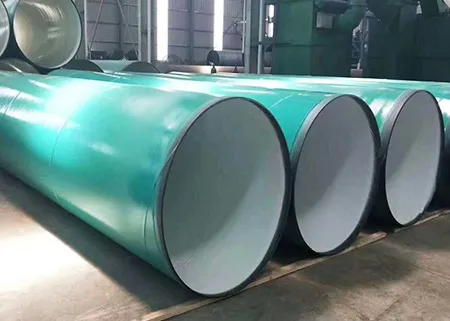
Epoxy Primer Layer: The first layer, made of epoxy resin, provides strong adhesion to the steel surface, ensuring excellent corrosion resistance.
Adhesive Layer: The middle layer is an adhesive that bonds the epoxy primer to the outer polyethylene layer.
Polyethylene Layer: The outermost layer of polyethylene provides additional mechanical protection and resistance to external elements.
Advantages of 3PE Anti-Corrosion Insulated Pipes:
Superior corrosion resistance, extending the service life of the pipes
Excellent thermal insulation properties
High mechanical strength and impact resistance
Effective protection against moisture and chemical exposure
3PE anti-corrosion insulated pipes are widely used in oil and gas. They transport hydrocarbons and are used in water supply systems. These pipes provide crucial corrosion protection and thermal insulation.
· What are Pre-Insulated Steel Pipes?
Pre-insulated steel pipes are factory-fabricated pipe systems that consist of a steel carrier pipe, an insulation layer, and an outer protective jacket. These pipes are designed for high-efficiency thermal insulation and protection against external damage. The main components of pre-insulated steel pipes include:
Carrier Pipe: Made of high-quality steel, this pipe is designed to transport fluids or gases.
Insulation Layer: Typically made of polyurethane foam, this layer provides excellent thermal insulation to maintain the desired temperature of the transported medium.
Outer Jacket: Often made of high-density polyethylene (HDPE), this outer layer protects the insulation and the carrier pipe from environmental damage.
Advantages of Pre-Insulated Steel Pipes:
High thermal efficiency, reducing energy loss
Easy and quick installation
Long service life with minimal maintenance
Effective protection against environmental factors
Pre-insulated steel pipes are commonly used in district heating and cooling systems, as well as in industrial applications requiring precise temperature control.
· What are Foam Glass Insulated Pipes?
Foam glass insulated pipes consist of a steel carrier pipe surrounded by a layer of foam glass insulation and an outer protective jacket. Foam glass is a lightweight, rigid insulation material with excellent thermal and moisture resistance properties. The main components of foam glass insulated pipes include:
Carrier Pipe: Typically made of high-quality steel, this pipe transports the fluid or gas.
Foam Glass Insulation: This layer provides superior thermal insulation and resistance to moisture, ensuring the stability of the transported medium’s temperature.
Outer Jacket: Usually made of stainless steel or aluminum, this layer protects the insulation and the carrier pipe from mechanical and environmental damage.
Advantages of Foam Glass Insulated Pipes:
Exceptional thermal insulation properties
High resistance to moisture and chemical exposure
Non-combustible and fire-resistant
Long service life with low maintenance requirements
Foam glass insulated pipes are ideal for applications in cryogenic systems, chemical processing, and other industries where thermal efficiency and moisture resistance are critical.
What Are The Key Advantages of Insulated Steel Pipes?
Insulated steel pipes offer several key benefits. They are excellent for many industrial applications. Here are the key advantages:
· How Do Insulated Steel Pipes Improve Energy Efficiency?
Insulated steel pipes minimize heat loss during fluid transport. Insulation materials like polyurethane foam provide thermal resistance. They ensure fluid temperature remains stable during transit. This reduces energy consumption for heating or cooling. It leads to substantial energy savings and better efficiency.
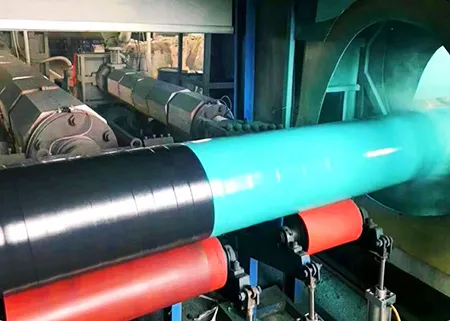
· Why Do Insulated Steel Pipes Offer Superior Corrosion Resistance?
Insulated steel pipes resist corrosion effectively. The insulation protects the inner steel from moisture and chemicals. For example, 3PE pipes have a three-layer coating. This coating offers excellent corrosion protection. It extends the pipe’s lifespan and reduces replacements.
· Can Insulated Steel Pipes Tolerate High Temperatures?
Insulated steel pipes withstand high temperatures well. Materials like fiberglass provide excellent thermal resistance. They allow safe transport of high-temperature fluids. The insulation remains effective even with hot fluids. This makes them suitable for steam, hot water, and similar applications.
· Do Insulated Steel Pipes Have Low Maintenance Costs?
Insulated steel pipes are durable with long service life. They have low maintenance costs due to robust design. High-quality materials withstand harsh conditions and mechanical stress. Insulation layers offer excellent corrosion resistance, reducing maintenance. This makes them cost-effective for long-term use.
Common Insulation Methods for Steel Pipes
· Coating Method
The coating method applies insulation coatings to steel pipes. It enhances thermal resistance and prevents corrosion.
Advantages of Coating Method:
Effective Thermal Insulation: Ensures minimal heat loss during fluid transportation.
Corrosion Protection: Shields against moisture and chemicals, extending pipe lifespan.
Ease of Application: Streamlined process with consistent coverage.
· Wrapping Method
Insulation materials like fiberglass or mineral wool are wrapped around steel pipes and secured with protective layers.
Advantages of Wrapping Method:
Versatility: Fits various pipe sizes and shapes.
Customizable Insulation Thickness: Tailored to specific thermal requirements.
Physical Protection: Guards against mechanical damage.
· Prefabricated Components Method
Utilizes pre-manufactured insulation components fitted around steel pipes for precise insulation.
Advantages of Prefabricated Components Method:
Precision Fit: Ensures accurate insulation thickness and coverage.
Time and Cost Efficiency: Reduces installation time and labor costs.
Consistent Performance: Maintains uniform insulation quality.
· Filling Method
Injection or pouring of insulation material into the space between steel pipe and outer jacket.
Advantages of Filling Method:
Complete Coverage: Fills irregular spaces effectively.
Enhanced Thermal Performance: Improves overall thermal resistance.
Environmental Protection: Resists moisture and corrosion.
What Are The Dimensions of Insulated Steel Pipes?
Insulated steel pipes are crucial for industrial fluid transport. Proper dimensions ensure efficient insulation and performance. Here are some common specifications:
| Pipe Type | Inner Carrier Pipe Diameter | Insulating Layer Thickness | Outer Protective Layer Diameter | Length |
| Steel-in-Steel Insulated | 20 mm to 1,200 mm | 30 mm to 150 mm | 40 mm to 1,400 mm | Typically 6m or 12m, custom lengths available |
| 3PE Anti-Corrosion Insulated | 20 mm to 1,000 mm | Epoxy Primer: 0.2 mm to 0.5 mm
Adhesive: 0.2 mm to 0.4 mm Polyethylene: 1.5 mm to 4 mm |
N/A | |
| Pre-Insulated Steel | 20 mm to 1,200 mm | 20 mm to 150 mm | 40 mm to 1,400 mm | |
| Foam Glass Insulated | 25 mm to 1,000 mm | 20 mm to 100 mm | 45 mm to 1,200 mm |
Dimensions vary by application and industry requirements. District heating systems follow specific standards. These dictate size and insulation thickness for temperature maintenance.
What Are The Design Standards for Insulated Steel Pipes?
The design of insulated steel pipes must comply with several standards to ensure safety, efficiency, and longevity. These standards are often set by international bodies such as the International Organization for Standardization (ISO), the American Society for Testing and Materials (ASTM), and GOST 51164-98. Here are some key standards:
ISO 9001: Quality Management Systems: This standard ensures consistent quality in manufacturing insulated steel pipes.
See more: www.iso.org/iso-9001-quality-management.html
ISO 14001: Environmental Management Systems: This standard focuses on environmental management, minimizing production impact on the environment.
See more: www.iso.org/iso-14001-environmental-management.html
ASTM A106: Specification for Seamless Carbon Steel Pipe for High-Temperature Service: This standard outlines requirements for seamless carbon steel pipes in high-temperature applications.
See more: www.astm.org/Standards/A106.htm
EN 253: District Heating Pipes – Pre-insulated Bonded Pipe Systems for Directly Buried Hot Water Networks: This European standard outlines requirements for pre-insulated bonded pipe systems used in hot water networks.
GOST 51164-98: Pre-Insulated Bonded Pipe Systems for Directly Buried Hot Water Networks:
This Russian standard specifies requirements for pre-insulated bonded pipe systems. It ensures pipes can withstand temperature and pressure in hot water networks.
What Are The Testing Methods for Insulated Steel Pipes?
To ensure the quality and reliability of insulated steel pipes, various testing methods are employed. These tests verify the pipe’s ability to perform under specified conditions and include:
Hydrostatic Testing: This involves filling the pipe with water and pressurizing it to check for leaks and structural integrity. Typical test pressures range from 1.5 to 2 times the maximum operating pressure.
Non-Destructive Testing (NDT): Use ultrasonic, radiographic, magnetic particle testing to detect defects without damage. These tests typically adhere to standards such as ASTM E213 and ASTM E165.
Thermal Conductivity Testing: This test measures the effectiveness of the insulation material used in the pipe. The thermal conductivity should be within specified limits to ensure efficient insulation.
Pressure Testing: This ensures that the pipes can handle the maximum operational pressure without failure. Test pressures are usually set at 1.5 times the design pressure.
Corrosion Resistance Testing: Verify pipe’s corrosion resistance over lifespan, crucial for underground or harsh environments. Methods such as salt spray testing (ASTM B117) are commonly used.
Frequently Asked Questions (FAQs)
- What are the advantages of using insulated steel pipes?
Insulated steel pipes offer benefits: energy efficiency, corrosion resistance, durability. They minimize heat loss, need less maintenance than traditional pipes.
- How do insulated steel pipes improve energy efficiency?
Insulated steel pipes use materials (polyurethane foam, mineral wool) to minimize heat loss. They stabilize fluid temperatures, reduce energy consumption for heating or cooling fluids.
- Are insulated steel pipes suitable for high-temperature applications?
Insulated steel pipes withstand high temperatures with excellent thermal resistance. They transport steam, hot water, and high-temperature fluids effectively.
- What design standards govern insulated steel pipes?
Insulated steel pipes meet design standards for quality and performance. Standards include materials, dimensions, construction, and testing methods.
- How do different insulation methods for steel pipes compare in terms of effectiveness?
Insulation methods vary: coating, wrapping, prefabricated components, filling. They offer thermal insulation and corrosion protection. Choose based on project needs, environment, and budget.
- What factors should be considered when selecting insulated steel pipes for a project?
Consider fluid type, temperature, environment, pipe size, insulation method, standards compliance, maintenance costs.