
Introduction
How do manufacturers turn molten steel into durable, high-performance parts? If you’re looking for a clear, step-by-step breakdown of the 316LN stainless steel casting process, you’ve come to the right place. In this post, we’ll dive into the process, using 316LN stainless steel as an example. From creating molds to CNC machining, we’ll cover it all in simple terms.
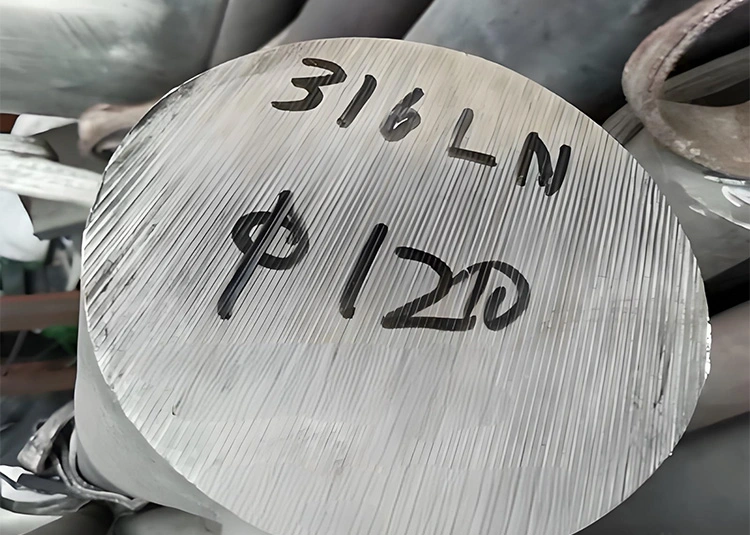
What Is Stainless Steel Casting?
Casting is the process of shaping molten steel into parts. For 316LN stainless steel, casting creates strong, precise components for industries like aerospace, medical, and marine. The process starts with making the right mold, followed by pouring the molten metal into it. After the metal cools, the part is ready for further testing and finishing.
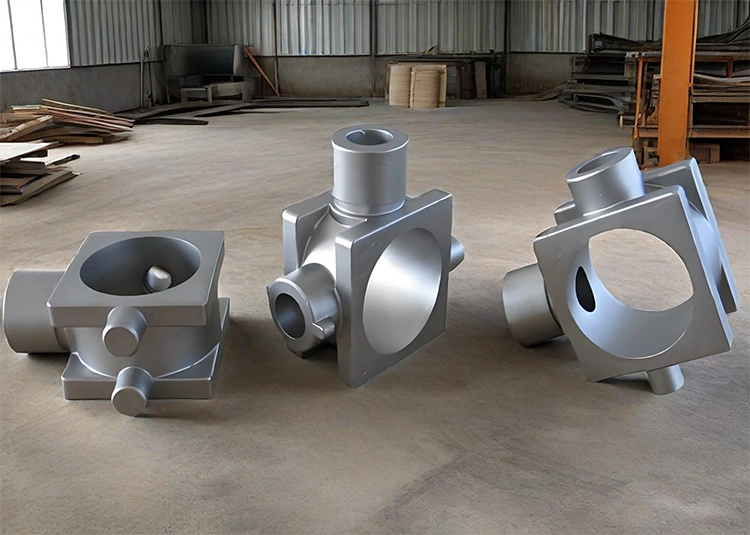
Mold Manufacturing: The First Step in Casting
Creating the Mold for 316LN Steel
The first step in the 316LN stainless steel casting process is creating a mold that can withstand high temperatures. For 316LN stainless steel, the mold is often made from pure aluminium. This aluminum mold features engraved cavities to capture the fine details of the part being cast. These cavities ensure that the part’s shape is replicated accurately.
Programming the Mold Design
Advanced software is used to design the mold. This programming step ensures every detail is perfect before the mold is created. It’s all about precision—no room for mistakes!
Mold Injection: Forming the Resin Mold
Combining Upper and Lower Molds
The next step is to combine the upper and lower molds to form a resin mold. This process shapes the mold that will eventually hold the molten 316LN stainless steel.
Hardening the Resin Mold
The resin mold is hardened 7-8 times. With each hardening cycle, the external dimensions of the mold increase by about 1 cm. This ensures that the final casting fits the mold precisely. The mold is now ready for sand casting.
Preparing the Mold for Sand Casting
The hardened resin mold is placed inside a wooden box. The box is then filled with sand, which is compacted to ensure stability. Importantly, air vents and cooling outlets are left in the sand to ensure proper airflow and prevent defects. A casting channel is also created for the molten steel to flow into the mold.
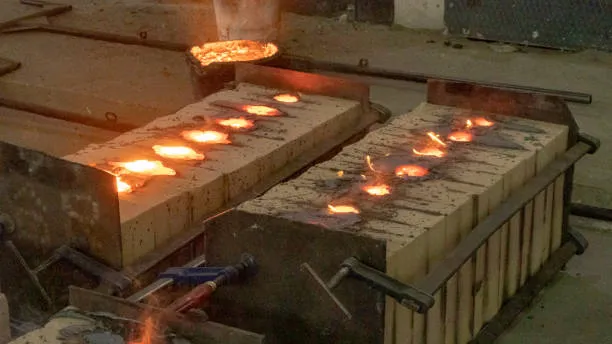
Pouring the Steel: The Heart of the Process
Melting 316LN Stainless Steel
Once the mold is ready, 316LN stainless steel is heated to temperatures between 1375°C and 1450°C. This high temperature melts the steel, turning it into a liquid that can easily fill the mold.
Pouring the Molten Steel into the Mold
The molten 316LN stainless steel is carefully poured into the prepared mold. The steel flows into every cavity of the mold, taking the shape of the part. This step requires precision to avoid any defects or voids in the final product.
Cooling: Letting the Steel Solidify
Slow Cooling to Avoid Defects
Once the molten steel fills the mold, it’s allowed to cool slowly. The cooling process takes about 6 to 12 hours, depending on the size and complexity of the part. Slow cooling prevents cracks and stress concentration, ensuring the steel solidifies evenly and retains its strength.
Post-Cooling: Removing the Resin Shell and Testing
Removing the Resin Shell
After cooling, the resin shell that surrounds the steel casting is removed. This reveals the raw casting, which is now ready for testing and further processing.
Preliminary Chemical Composition Test
Once the shell is removed, the casting undergoes a chemical composition test. This ensures the steel composition is in line with the required specifications for 316LN stainless steel. If the composition is off, adjustments can be made before proceeding to the next steps.
Heat Treatment: Strengthening the Steel
Solution Heat Treatment
Next, the casting undergoes solution heat treatment. The part is heated to temperatures between 800°C and 1100°C and held there for about 12 hours. This treatment refines the grain structure of the steel, making it stronger and more uniform.
Heat treatment ensures the casting is strong, dense, and durable—ideal for high-performance applications.
Inspection: Checking Quality
Non-Destructive Testing (NDT)
After heat treatment, the casting is subjected to several non-destructive tests (NDT) to check for defects without damaging the part.
- X-ray Testing (RT): This is used to check for internal defects like shrinkage cavities or inclusions that might affect the strength of the steel.
- Ultrasonic Testing (UT): This test checks the material density, ensuring the casting is uniform and free from hidden flaws.
Dimensional Inspection
In addition to the NDT, dimensional inspections are carried out. This ensures that the part meets the required size and shape specifications.
Finishing: Shaping the Final Product
CNC Machining
Once the casting has passed the tests, the final step is CNC machining. This is done using a 4-axis CNC machine, which shapes and refines the part to meet the exact specifications. CNC machining ensures the casting is precise, with smooth surfaces and accurate dimensions.
Conclusion
The 316LN stainless steel casting process may seem complex, but it follows a straightforward sequence of steps: creating the mold, melting the steel, pouring it into the mold, cooling, testing, heat treatment, and final finishing. Each stage is designed to ensure that the final part is strong, precise, and meets the high standards needed for demanding applications.
By understanding the steps involved, manufacturers can produce high-quality stainless steel parts that will perform reliably and efficiently.
FAQs
What is 316LN stainless steel?
316LN stainless steel is a high-strength, corrosion-resistant material commonly used in harsh environments like marine, medical, and chemical applications.
What tests are done during the casting process?
Key tests include X-ray testing for internal defects, ultrasonic testing for uniform density, and dimensional inspection to ensure the part meets the required measurements.
How long does the casting process take?
The entire process can take several days, depending on the complexity of the part and the cooling time.
Read More:
Which Is Better: 316 or 904L Stainless Steel?
201 vs 304 vs 316 vs 400 Stainless Steel: Essential Guide
Understanding the Differences Between 304 and 316L Stainless Steel Plates