
Introduction
Inconel 625 and Incoloy 825 are both high-performance alloys, each suited for demanding industrial applications. This article compares their chemical composition, corrosion resistance, mechanical properties, and common uses to help you decide which alloy is best for your specific needs, whether in aerospace, marine, or chemical industries.
What Is Inconel 625?
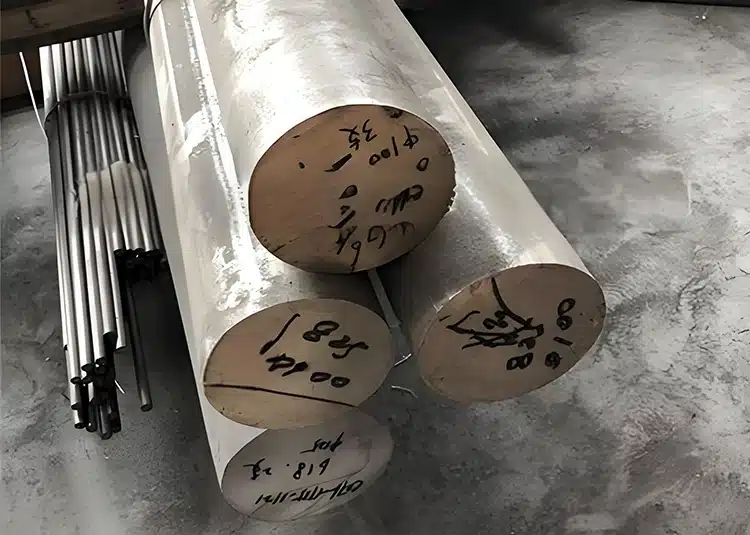
Inconel 625 is a nickel-based superalloy known for its exceptional strength, corrosion resistance, and high-temperature stability. It excels in extreme environments, such as aerospace, marine, and chemical industries, where resistance to oxidation and pitting is essential. Its key features include excellent fatigue and thermal-fatigue strength, making it ideal for high-stress applications.
What Is Incoloy 825?
Incoloy 825 is a nickel-iron-chromium alloy designed for excellent corrosion resistance, particularly in acidic environments. It is known for its ability to withstand sulfuric and phosphoric acids, making it a popular choice in chemical processing and pollution control industries. Incoloy 825 offers good mechanical strength and stability in moderate temperatures.
What Are the Differences Between Inconel 625 and 825?
Chemical Composition
| Element | Inconel 625 (%) | Incoloy 825 (%) |
| Nickel (Ni) | 58.0 min | 38.0-46.0 |
| Chromium (Cr) | 20.0-23.0 | 19.5-23.5 |
| Molybdenum (Mo) | 8.0-10.0 | 2.5-3.5 |
| Iron (Fe) | 5.0 max | 22.0 min |
| Niobium (Nb) | 3.15-4.15 | — |
| Titanium (Ti) | — | 0.6-1.2 |
| Copper (Cu) | — | 1.5-3.0 |
| Cobalt (Co) | 1.0 max | — |
| Aluminum (Al) | 0.40 max | — |
| Silicon (Si) | 0.50 max | 0.5 max |
| Manganese (Mn) | 0.50 max | 1.0 max |
| Carbon (C) | 0.10 max | 0.05 max |
| Phosphorus (P) | 0.015 max | 0.03 max |
| Sulfur (S) | 0.015 max | 0.03 max |
Inconel 625’s higher nickel and molybdenum content provides superior high-temperature and corrosion resistance, ideal for extreme environments. Incoloy 825, with added copper and titanium, excels in acidic corrosion resistance, making it suitable for chemical industries. Niobium in Inconel 625 boosts strength, while iron in Incoloy 825 improves cost-effectiveness. Both alloys offer solid chromium-based oxidation resistance.
Corrosion Resistance
| Property | Inconel 625 | Incoloy 825 |
| Pitting and Crevice Corrosion | Excellent resistance due to high molybdenum and nickel content | Good resistance, especially in reducing acids, but less effective in chloride environments |
| Oxidation Resistance | Superior at high temperatures up to 982°C | Good, but more suited to moderate temperatures |
| Acid Resistance | Resistant to a wide range of acids, including nitric and phosphoric | Highly resistant to sulfuric and phosphoric acids |
| Stress-Corrosion Cracking | Highly resistant | Good resistance, especially in acidic environments |
| Seawater Resistance | Excellent due to high nickel and molybdenum content | Moderate resistance; better suited for less aggressive environments |
Inconel 625 excels in pitting, crevice, and seawater corrosion resistance due to its higher nickel and molybdenum content, making it ideal for harsh environments. Incoloy 825 is best in acidic conditions, particularly with sulfuric and phosphoric acids, but less effective in chloride-rich settings.
Physical Properties
| Property | Inconel 625 | Incoloy 825 |
| Density | 8.44 g/cm³ | 8.14 g/cm³ |
| Melting Point | 1290-1350°C | 1350-1400°C |
| Thermal Conductivity | 9.8 W/m·K | 11.1 W/m·K |
| Specific Heat Capacity | 427 J/kg·K | 460 J/kg·K |
| Electrical Resistivity | 1.30 µΩ·m | 0.99 µΩ·m |
Inconel 625 has a slightly higher density and lower melting point, making it suitable for high-stress, high-temperature environments. Incoloy 825 offers better thermal conductivity and specific heat capacity, which makes it more efficient in heat transfer applications. The lower electrical resistivity of Incoloy 825 also provides better electrical conductivity compared to Inconel 625.
Mechanical Properties
| Property | Inconel 625 | Incoloy 825 |
| Tensile Strength | 830 MPa | 585 MPa |
| Yield Strength | 414 MPa | 241 MPa |
| Elongation at Break | 30-50% | 30% |
| Hardness (Rockwell B) | 95-100 | 80-90 |
Inconel 625 offers superior tensile and yield strength, making it ideal for high-stress environments requiring durability under pressure. Both alloys exhibit similar elongation, providing good formability, but Incoloy 825 is softer, as reflected in its lower hardness, making it easier to machine while still being robust for industrial use.
Thermal Properties
| Property | Inconel 625 | Incoloy 825 |
| Thermal Conductivity | 9.8 W/m·K | 11.1 W/m·K |
| Specific Heat Capacity | 427 J/kg·K | 460 J/kg·K |
| Melting Point | 1290-1350°C | 1350-1400°C |
Incoloy 825 has slightly better thermal conductivity and specific heat capacity, making it more efficient at heat transfer in moderate-temperature applications. Inconel 625 has a lower melting point, which enables it to perform better in high-temperature environments, where heat resistance and stability are critical.
Weldability and Fabrication
| Property | Inconel 625 | Incoloy 825 |
| Weldability | Excellent, minimal risk of cracking | Good, may require post-weld heat treatment |
| Machinability | Fair, tends to work-harden | Good, easier to machine |
| Formability | Good, retains strength after forming | Moderate, more ductile but lower strength |
| Post-Weld Treatment | Not typically required | Often required to enhance corrosion resistance |
Inconel 625 offers excellent weldability with minimal need for post-weld treatments, making it ideal for demanding applications. Incoloy 825, while also weldable, often requires post-weld heat treatment to optimize its corrosion resistance. Incoloy 825 is easier to machine due to its lower hardness, but Inconel 625 is better for applications requiring retention of strength after forming.
Applications
| Industry | Inconel 625 | Incoloy 825 |
| Aerospace | High-stress engine components, exhaust systems | Not commonly used |
| Marine | Seawater components, offshore platforms | Moderate seawater resistance, chemical processing |
| Chemical Processing | High-temperature reactors, heat exchangers | Acid processing, pollution control |
| Oil & Gas | Downhole tubing, piping for corrosive environments | Piping for acidic environments |
| Power Generation | Nuclear reactors, turbines | Pollution control systems |
Inconel 625 excels in aerospace, marine, and high-temperature chemical processing applications due to its superior strength and corrosion resistance. Incoloy 825 is better suited for chemical processing involving acids and pollution control due to its resistance to sulfuric and phosphoric acids. While both alloys are used in oil & gas, Inconel 625 is preferred for harsher, high-stress environments.
Price
Inconel 625 is generally more expensive than Incoloy 825 due to its higher nickel and molybdenum content, which provides superior performance in extreme environments. Incoloy 825, on the other hand, is a more cost-effective option for applications in moderate environments, particularly those involving acidic corrosion. The choice between the two alloys often comes down to the specific performance requirements and budget considerations of the project.
Conclusion
Both Inconel 625 and Incoloy 825 offer excellent performance in challenging environments, but they excel in different areas. Inconel 625 is best for high-stress, high-temperature applications, while Incoloy 825 is ideal for acidic environments and cost-sensitive projects. Contact AlloyXpert for competitive pricing and fast delivery. Let us support your next project with our premium materials!
FAQs
What is the main difference between Inconel 625 and Incoloy 825?
Inconel 625 offers higher strength and resistance to extreme temperatures, while Incoloy 825 is optimized for corrosion resistance in acidic environments like sulfuric and phosphoric acids.
Which alloy performs better at high temperatures?
Inconel 625 is better for high-temperature applications, handling temperatures up to 982°C, compared to Incoloy 825, which is more suitable for moderate temperatures up to 900°C.
Is Incoloy 825 more cost-effective than Inconel 625?
Yes, Incoloy 825 is generally cheaper, making it a more economical choice for moderate environments, while Inconel 625 is more costly due to its high nickel and molybdenum content, ideal for extreme conditions.
Can Inconel 625 be used in marine applications?
Yes, Inconel 625 provides excellent resistance to seawater corrosion, making it ideal for offshore platforms and marine components.
What are the common uses of Incoloy 825?
Incoloy 825 is widely used in chemical processing, pollution control, and oil & gas industries, particularly where exposure to corrosive acids is frequent.
Read More:
What is Inconel 625 (UNS N06625)?
Inconel Alloy 600 VS Inconel Alloy 601: the Key Differences You Should Know