
Introduction
Inconel 600 and Incoloy 800 are two widely used nickel-based alloys, known for their excellent heat and corrosion resistance. While both are ideal for demanding environments, they differ in composition and performance. This article compares their key features and applications to help you choose the right alloy for your specific needs.
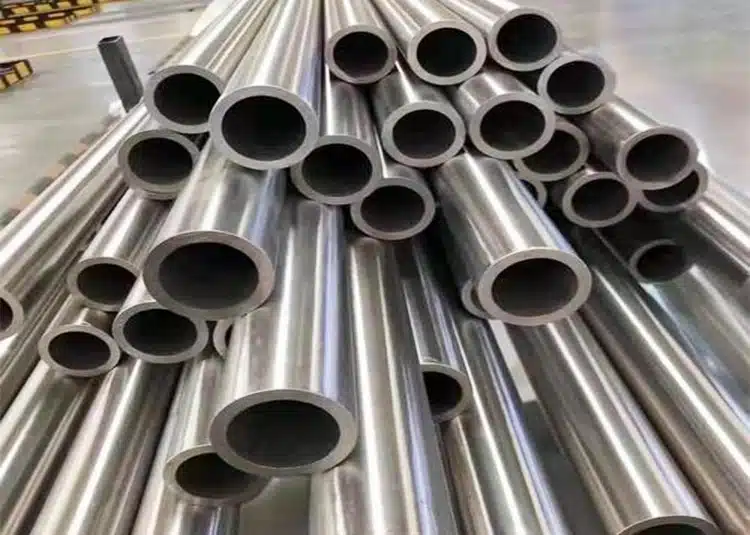
What Is Inconel 600?
Inconel 600 is a nickel-chromium alloy known for its excellent corrosion and oxidation resistance. With high nickel (up to 72%) and chromium content, it performs well in high-temperature environments (up to 1093°C), making it ideal for chemical processing, aerospace, and power generation.
What Is Incoloy 800?
Incoloy 800 is a nickel-iron-chromium alloy known for its strength and resistance to oxidation, carburization, and corrosion in high-temperature environments up to 816°C. Its stability makes it ideal for applications like heat exchangers, pressure vessels, and furnace components, especially where long-term exposure to high heat is required.
What Are the Differences Between Inconel 600 and Incoloy 800?
Chemical Composition
| Element | Inconel 600 (%) | Incoloy 800 (%) |
| Nickel (Ni) | 72.0 min | 30.0-35.0 |
| Chromium (Cr) | 14.0-17.0 | 19.0-23.0 |
| Iron (Fe) | 6.0-10.0 | 39.5 min |
| Carbon (C) | 0.15 max | 0.10 max |
| Manganese (Mn) | 1.0 max | 1.5 max |
| Silicon (Si) | 0.5 max | 1.0 max |
| Copper (Cu) | 0.5 max | 0.75 max |
| Aluminum (Al) | — | — |
| Titanium (Ti) | — | 0.15-0.60 |
| Sulfur (S) | 0.015 max | 0.015 max |
Inconel 600 has a higher nickel content, giving it superior corrosion resistance, while Incoloy 800’s higher iron and chromium levels enhance its thermal stability and oxidation resistance. The addition of titanium in Incoloy 800 improves its strength at high temperatures, making it more suitable for prolonged heat exposure.
Corrosion Resistance
| Corrosion Factor | Inconel 600 | Incoloy 800 |
| General Corrosion Resistance | Excellent | Good |
| Oxidation Resistance | Up to 1093°C | Up to 816°C |
| Resistance to Acids | Good in acids like sulfuric and nitric | Moderate in acidic environments |
| Resistance to Chloride Stress-Corrosion Cracking | Highly resistant | Resistant |
| Pitting and Crevice Corrosion Resistance | Moderate | Limited |
Inconel 600 offers superior corrosion resistance, especially in high-temperature environments and acidic conditions, making it highly suitable for aggressive environments. Incoloy 800 performs well in oxidation but has more limited resistance to pitting and acidic corrosion. Its strength lies in moderate corrosion resistance and stability at slightly lower temperatures.
Physical Properties
| Physical Property | Inconel 600 | Incoloy 800 |
| Density | 8.47 g/cm³ | 7.94 g/cm³ |
| Melting Point | 1370-1425°C | 1357-1385°C |
| Thermal Conductivity (at 200°C) | 14.9 W/m·K | 11.3 W/m·K |
| Specific Heat Capacity | 427 J/kg·K | 502 J/kg·K |
| Tensile Strength | 550 MPa | 450 MPa |
| Yield Strength | 240 MPa | 170 MPa |
| Elongation | 40% | 30% |
Inconel 600 has a higher density and tensile strength than Incoloy 800, making it more robust for high-stress applications. Its superior thermal conductivity also allows better heat transfer, while Incoloy 800 offers slightly better specific heat capacity, which enhances thermal stability. Incoloy 800’s lower yield strength and elongation make it less ductile compared to Inconel 600.
Mechanical Properties
| Mechanical Property | Inconel 600 | Incoloy 800 |
| Tensile Strength | 550 MPa | 450 MPa |
| Yield Strength | 240 MPa | 170 MPa |
| Elongation | 40% | 30% |
| Hardness (Rockwell B) | 95 | 85 |
| Modulus of Elasticity | 206 GPa | 196 GPa |
Inconel 600 offers higher tensile and yield strength, making it better suited for applications requiring greater mechanical durability. It also exhibits higher hardness and elasticity compared to Incoloy 800, which provides slightly lower strength and ductility. This makes Inconel 600 more favorable for high-stress environments.
Thermal Properties
| Thermal Property | Inconel 600 | Incoloy 800 |
| Melting Point | 1370-1425°C | 1357-1385°C |
| Thermal Conductivity (at 200°C) | 14.9 W/m·K | 11.3 W/m·K |
| Specific Heat Capacity | 427 J/kg·K | 502 J/kg·K |
| Coefficient of Thermal Expansion | 13.3 µm/m·K | 14.4 µm/m·K |
Inconel 600 has a higher melting point and better thermal conductivity, making it suitable for high-temperature applications requiring efficient heat transfer. Incoloy 800, while having a lower thermal conductivity, offers a higher specific heat capacity, making it better at absorbing heat without temperature spikes. Its higher thermal expansion coefficient also means it expands more with heat.
Weldability and Fabrication
| Weldability and Fabrication | Inconel 600 | Incoloy 800 |
| Weldability | Excellent, easily weldable | Good, requires pre-heating |
| Post-Weld Heat Treatment | Not required | Recommended for stress relief |
| Machinability | Moderate, work hardens quickly | Moderate, responds well to tooling |
| Formability | Good, can be cold-formed | Fair, more rigid than Inconel 600 |
| Hot Working | Excellent at high temperatures | Good, but limited at lower temps |
Inconel 600 offers excellent weldability without the need for post-weld heat treatment, making it ideal for demanding welding applications. Incoloy 800, though weldable, benefits from pre-heating and post-weld heat treatment to relieve stress. Both alloys have moderate machinability, but Inconel 600 has better formability and hot working properties, making it more versatile for fabrication.
Applications
| Application | Inconel 600 | Incoloy 800 |
| Chemical Processing | Heat exchangers, reactors, evaporators | Heat exchangers, piping, vessels |
| Aerospace | Turbine blades, jet engines, exhaust systems | Heat shields, furnace components |
| Power Generation | Steam generators, nuclear reactors | Superheaters, steam pipes |
| Heat Treatment Equipment | Furnace components, retorts | Annealing tubes, heat-treating baskets |
| Petrochemical | Catalytic cracking units, flares | Reforming equipment, heating coils |
Inconel 600 excels in extreme conditions, while Incoloy 800 is preferred for long-term thermal stability. Both are used in high-temperature industries, but Inconel 600 is favored for more corrosive environments.
Price
Inconel 600 is generally more expensive than Incoloy 800 due to its higher nickel content and limited availability. Incoloy 800, with more iron, is more cost-effective, especially for applications requiring thermal stability rather than extreme corrosion resistance. Both alloys have moderate fabrication costs, but Inconel 600 commands a higher price overall.
Conclusion
Inconel 600 and Incoloy 800 are both excellent for high-temperature and corrosive environments, but they serve different needs. Inconel 600 offers superior corrosion resistance and strength, while Incoloy 800 excels in thermal stability at a more cost-effective price. Choosing the right alloy depends on your specific requirements. At AlloyXpert, we provide high-quality Inconel 600 and Incoloy 800 products tailored to your needs. Contact us today for a personalized quote and expert guidance to find the perfect alloy for your application.
FAQs
What is Inconel 600 equivalent material?
Inconel 600’s equivalents include UNS N06600, DIN 2.4816, and Alloy 600, which provide similar high-temperature and corrosion resistance. These equivalents are used in industries that demand reliable performance under extreme conditions.
What are the advantages of Inconel 600?
Inconel 600 offers exceptional resistance to corrosion and oxidation, especially in extreme temperatures up to 1093°C. It maintains strong mechanical properties, making it ideal for chemical processing, aerospace, and nuclear applications.
Can Inconel 600 be welded?
Yes, Inconel 600 can be welded using standard methods like TIG and MIG. It resists cracking during welding, and filler metals such as Inconel 82 or 182 are typically recommended. Post-weld heat treatment may be applied in high-stress applications.
Is Incoloy 800 magnetic?
No, Incoloy 800 is non-magnetic due to its nickel-iron-chromium composition. This non-magnetic property, combined with excellent oxidation and corrosion resistance, makes it well-suited for high-temperature applications.
What is the difference between Inconel 800 and Incoloy 800?
Incoloy 800 is a nickel-iron-chromium alloy with good resistance to oxidation and carburization at high temperatures. Inconel alloys typically have higher nickel content, offering superior corrosion resistance in more extreme environments.
Read More:
Inconel 625 VS Incoloy 825: The Key Differences You Should Know
Inconel Alloy 600 VS Inconel Alloy 601: the Key Differences You Should Know