
Introduction
Inconel 718 and Incoloy 825 are nickel-based alloys known for their outstanding performance in demanding environments. While both alloys offer corrosion resistance and durability, they differ in terms of mechanical strength and temperature tolerance. In this article, we will provide a concise comparison of their chemical compositions, properties, and applications, helping you determine which material is best suited for your specific needs. Whether your focus is on high-temperature performance or corrosion resistance, understanding these differences will guide your material selection.
What is Inconel 718?
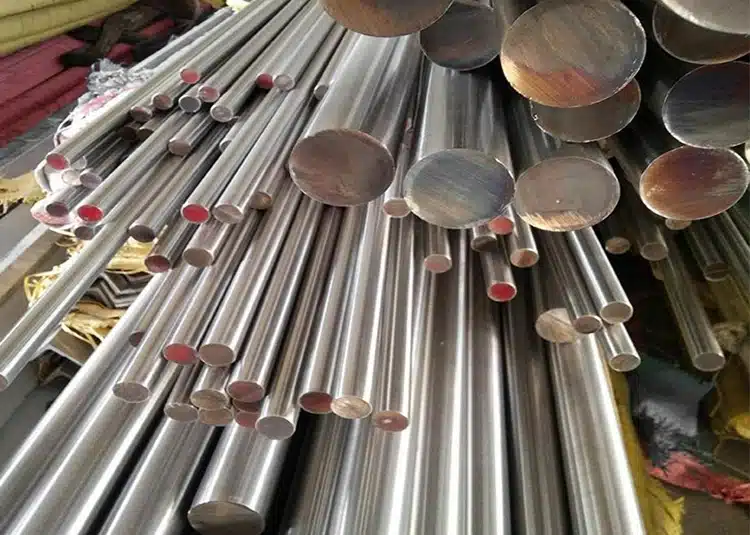
Inconel 718 is a high-strength, nickel-based superalloy known for its excellent resistance to corrosion and heat. It performs well in extreme environments, maintaining its mechanical properties at both low and high temperatures. Inconel 718 is widely used in aerospace, gas turbines, and nuclear applications due to its durability and weldability, especially under high-stress conditions. Its ability to withstand oxidation and corrosion makes it ideal for demanding industries.
What is Incoloy 825?
Incoloy 825 is a nickel-iron-chromium alloy designed for excellent corrosion resistance, especially in acidic environments. It contains molybdenum and copper, which enhance its resistance to pitting and crevice corrosion. Known for its durability in reducing acids like sulfuric and phosphoric acid, Incoloy 825 is widely used in chemical processing, pollution control, and oil & gas industries. Its ability to withstand both oxidation and reducing conditions makes it ideal for applications that require strong protection in corrosive environments.
What are the Differences Between Inconel 718 and Incoloy 825?
Inconel 718 vs. Incoloy 825 ASTM Standards
| Product Forms | Inconel 718 ASTM Standards | Incoloy 825 ASTM Standards |
| Sheet, Plate | ASTM B670, ASTM B168 | ASTM B424 |
| Seamless Pipe, Tubes | ASTM B163, ASTM B167 | ASTM B163, ASTM B423 |
| Strip | ASTM B168 | – |
Inconel 718 vs. Incoloy 825 Chemical Composition
| Element | Inconel 718 (%) | Incoloy 825 (%) |
| Nickel (Ni) | 50-55 | 38-46 |
| Chromium (Cr) | 17-21 | 19.5-23.5 |
| Molybdenum (Mo) | 2.8-3.3 | 2.5-3.5 |
| Iron (Fe) | Balance | Balance |
| Titanium (Ti) | 0.65-1.15 | 0.6-1.2 |
| Copper (Cu) | – | 1.5-3.0 |
| Niobium (Nb) | 4.75-5.5 | – |
| Aluminum (Al) | 0.2-0.8 | – |
| Cobalt (Co) | 1.0 max | – |
| Manganese (Mn) | 0.35 max | 1.0 max |
| Silicon (Si) | 0.35 max | 0.5 max |
| Carbon (C) | 0.08 max | 0.05 max |
| Sulfur (S) | 0.015 max | 0.03 max |
Inconel 718’s higher nickel and niobium content provide superior strength at elevated temperatures, while Incoloy 825’s higher iron and copper content enhances its corrosion resistance in acidic environments. The differences in chromium and molybdenum levels also influence their resistance to oxidation and reducing environments.
Inconel 718 vs. Incoloy 825 Corrosion Resistance
| Property | Inconel 718 | Incoloy 825 |
| Resistance to Oxidizing Acids | Excellent up to 1300°F (704°C) | Moderate, suitable up to 1000°F (538°C) |
| Resistance to Reducing Acids | Moderate, limited to mild acidic environments | Excellent in sulfuric, phosphoric, and nitric acids |
| Chloride Ion Stress-Corrosion | Very high resistance (1.5% chloride solutions) | Good, suitable for chloride-rich environments |
| Pitting and Crevice Corrosion | Moderate, limited in chloride solutions | High, especially in marine and acidic conditions |
Inconel 718 is highly effective in high-temperature, oxidizing conditions, making it ideal for aerospace applications. In contrast, Incoloy 825 offers superior corrosion resistance in reducing acids like sulfuric and phosphoric, making it more suitable for chemical processing environments. Both alloys resist chloride stress-corrosion, but Incoloy 825 outperforms Inconel 718 in pitting and crevice corrosion, particularly in marine and acidic settings.
Inconel 718 vs. Incoloy 825 Physical Properties
| Property | Inconel 718 | Incoloy 825 |
| Density (g/cm³) | 8.19 | 8.14 |
| Melting Point (°C) | 1290-1350 | 1370-1400 |
| Tensile Strength (MPa) | 965-1103 | 585-880 |
| Yield Strength (MPa) | 550 | 220-450 |
| Thermal Conductivity (W/m·K) | 11.4 | 10.1 |
Inconel 718 has a higher tensile and yield strength, making it more suited for high-stress environments. Incoloy 825’s slightly lower density and higher melting point offer better resistance in lower-stress, corrosive conditions.
Inconel 718 vs. Incoloy 825 Mechanical Properties
| Property | Inconel 718 | Incoloy 825 |
| Tensile Strength (MPa) | 965-1103 | 585-880 |
| Yield Strength (MPa) | 550 | 220-450 |
| Elongation (%) | 12-15 | 30-40 |
| Hardness (Rockwell C) | 30-40 | 20-30 |
Inconel 718 has higher tensile and yield strength, making it ideal for high-stress, high-temperature applications. Incoloy 825 offers greater elongation, which enhances its flexibility in corrosive environments.
Inconel 718 vs. Incoloy 825 Thermal Properties
| Property | Inconel 718 | Incoloy 825 |
| Thermal Conductivity (W/m·K) | 11.4 | 10.1 |
| Specific Heat (J/kg·K) | 435 | 460 |
| Melting Point (°C) | 1290-1350 | 1370-1400 |
| Coefficient of Thermal Expansion (µm/m·°C) | 13.0 | 14.1 |
Inconel 718 has a slightly lower thermal conductivity and melting point than Incoloy 825, but it performs better under high-stress, high-temperature applications. Incoloy 825’s higher specific heat and thermal expansion make it ideal for environments requiring high corrosion resistance.
Inconel 718 vs. Incoloy 825 Weldability and Fabrication
| Property | Inconel 718 | Incoloy 825 |
| Weldability | Excellent, minimal post-weld cracking | Good, requires proper heat treatment |
| Machinability | Moderate, harder to machine due to strength | Easier, more ductile and softer |
| Post-Weld Heat Treatment | Required for optimal properties | Often required to stabilize alloy |
| Fabrication Complexity | High, especially for complex parts | Lower, easier to form and fabricate |
Inconel 718 offers excellent weldability with strong resistance to cracking, making it ideal for high-stress applications. Incoloy 825 is easier to machine and fabricate but requires heat treatment for maximum performance in corrosive environments.
Inconel 718 vs. Incoloy 825 Applications
| Industry | Inconel 718 | Incoloy 825 |
| Aerospace | Widely used in turbine engines and aerospace components due to its high strength and temperature resistance. | Rarely used due to lower high-temperature capabilities. |
| Chemical Processing | Limited use, primarily in high-temperature environments. | Ideal for handling corrosive acids and aggressive environments. |
| Oil & Gas | Suitable for high-pressure, high-temperature environments. | Used in pipelines, pollution control, and oil refinery applications. |
| Marine | Performs well in saltwater environments. | Preferred for marine applications requiring resistance to pitting and crevice corrosion. |
Inconel 718 is ideal for high-stress, high-temperature industries like aerospace and gas turbines, while Incoloy 825 excels in corrosive environments such as chemical processing and marine applications.
Inconel 718 vs. Incoloy 825 Price
Inconel 718 is significantly more expensive, typically 30-40% higher, due to its superior performance in high-temperature environments and complex alloying. In contrast, Incoloy 825 is more affordable, offering excellent corrosion resistance at a lower cost, making it ideal for less demanding applications in chemical and marine industries.
Conclusion
Inconel 718 and Incoloy 825 are both excellent alloys, but their strengths differ. Inconel 718 excels in high-temperature and high-stress environments like aerospace and gas turbines, while Incoloy 825 shines in highly corrosive environments, particularly in chemical processing and marine applications. Your choice depends on the specific demands of your project. For top-quality Inconel 718 and Incoloy 825 materials, visit AlloyXpert. Get a quote today and find the right alloy for your specific requirements!
Read More:
Inconel Alloy 625 VS Incoloy Alloy 825: The Key Differences You Should Know
Inconel Alloy 600 VS Inconel Alloy 601: the Key Differences You Should Know
Inconel 600 VS Incoloy 800: The Key Differences You Should Know