
Introduction
Cemented carbide is known for its impressive hardness, strength, wear resistance, and corrosion resistance, making it a key material in various industries. Commonly referred to as the “industrial tooth,” it plays a critical role in many manufacturing processes. This composite material is made from hard metal carbides combined with a binder metal through powder metallurgy. Let’s break down the types and applications of cemented carbide, and help you decide which one suits your project.
Types of Cemented Carbide
Cemented carbide comes in different types, each designed for specific uses. Here are the main categories:
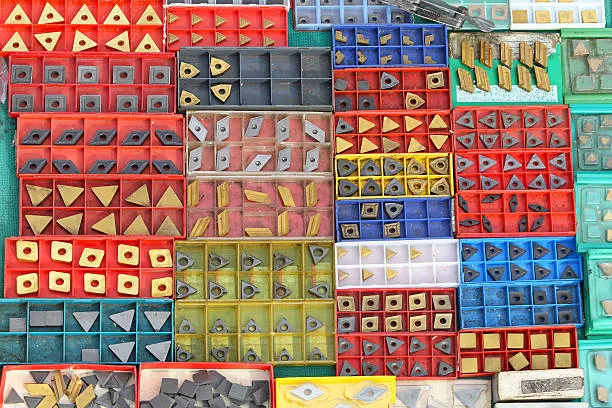
Tungsten-Cobalt Cemented Carbide (WC+Co, YG Series)
This type combines tungsten carbide (WC) and cobalt (Co), offering good bending strength and toughness. It’s perfect for machining materials like cast iron and non-ferrous metals. While it has less heat resistance compared to others, it’s a reliable choice for everyday machining needs.
Best for: Cast iron, non-ferrous metals, and general steel.
Tungsten-Titanium-Cobalt Cemented Carbide (WC+TiC+Co, YT Series)
Adding titanium carbide (TiC) improves this alloy’s hardness, wear resistance, and red hardness. It also has better oxidation resistance compared to the YG series, although it performs less well at high temperatures. This type is ideal for machining steel and tough materials, where cutting efficiency is key.
Best for: Steel and tough materials.
Tungsten-Titanium-Tantalum (Niobium) Cemented Carbide (YW Series)
Tungsten-titanium-tantalum cemented carbide is more resistant to wear and harder than other types. It’s suitable for challenging materials like stainless steel. This versatile alloy is used in a wide range of applications.
Best for: Stainless steel and tough cutting tasks.
Titanium Carbide-Based Cemented Carbide
Made with titanium carbide, this type offers high red hardness and resistance to magnetic fields, making it ideal for high-temperature and high-magnetic environments.
Best for: High-temperature and high-magnetic field applications.
Ultra-Fine Grain Cemented Carbide
With finer WC powder, this material offers high wear resistance and bending strength. It’s used in applications where precision and durability are essential.
Best for: High-precision, wear-resistant applications.
Surface-Coated Cemented Carbide
Surface-coated cemented carbide features a hard, wear-resistant coating that enhances the tool’s lifespan. This coating improves performance when cutting tough materials or in high-speed cutting situations.
Best for: Cutting difficult-to-machine materials.
Steel-Bonded Cemented Carbide
Steel-bonded carbide combines WC or TiC with high-speed tool steel for a tough, versatile material. It is ideal for tools that handle high-impact loads.
Best for: High-impact tools like punching and stamping dies.
Applications of Cemented Carbide
Cemented carbide is used across many industries, thanks to its exceptional performance. Below are some of the key applications:
Cutting Tools
Cemented carbide is widely used in cutting tools such as turning tools, milling cutters, and drill bits. It is ideal for machining a wide range of materials, from cast iron to stainless steel and other hard-to-machine substances. The hardness and wear resistance of cemented carbide tools significantly improve cutting efficiency.
Common uses: Turning, milling, and drilling operations.
Mining Tools
In the mining industry, cemented carbide is a key component of tools like rock drill bits and geological exploration equipment. Its high hardness and wear resistance make it suitable for challenging mining conditions, ensuring tools last longer and work more effectively.
Common uses: Rock drilling, geological exploration, and oil field equipment.
Medical Instruments
Cemented carbide is also used in medical instruments, especially in surgical and dental tools. Its biocompatibility and corrosion resistance are essential for these precise instruments.
Common uses: Surgical tools and dental instruments.

Aerospace
In aerospace, the material’s high temperature stability and resistance to fatigue make it essential for manufacturing critical components like turbine blades and engine parts.
Common uses: Turbine blades, engine components, and aerospace tools.
New Energy Sector
With the growth of electric vehicles, cemented carbide is increasingly used in the production of electric motor parts, battery components, and tools for precision machining. It is also used in additive manufacturing (3D printing) for producing high-precision parts.
Common uses: Electric vehicle parts, battery components, and 3D printing applications.
Wear-Resistant Parts
Cemented carbide is used to make wear-resistant parts such as nozzles, guide rails, and plungers. These components enhance the reliability and longevity of machinery.
Common uses: Nozzles, guide rails, and other wear-resistant parts.
Conclusion
Cemented carbide is a critical material in modern industry. Its ability to handle tough tasks, from cutting and mining to aerospace and medical applications, makes it indispensable. As industries evolve, cemented carbide will continue to play a significant role in providing reliable, durable solutions across various fields.
FAQs
What is cemented carbide used for?
Cemented carbide is used in cutting tools, mining equipment, wear-resistant parts, and aerospace components due to its hardness, wear resistance, and ability to withstand high temperatures.
Is cemented carbide the same as tungsten carbide?
No, cemented carbide refers to a composite material made of tungsten carbide (WC) and a binder metal, usually cobalt. Tungsten carbide is the carbide component in cemented carbide.
What is the difference between cemented carbide and cermet?
Cemented carbide is made of tungsten carbide and a binder metal, offering high hardness, while cermet combines ceramic materials and metal for balanced hardness and toughness.
Read More:
201 vs 304 vs 316 vs 400 Stainless Steel: Essential Guide