
Introduction
This blog talks about stainless steel bar. Learn how strong they are. Find out about rust resistance. Cr and Ni make bars better. This helps you choose the best ones. It will be easy to understand.
What Are the Key Properties of High-Quality Stainless Steel Bars?

The stainless steel bars are great! They do not corrode and remain bright. Their properties make them very special. It is time to learn more about their magic!
Corrosion Resistance
Stainless steel bars do not rust. This feature can be attributed to chromium (Cr) content. It creates a barrier. That layer prevents oxygen (O₂) from coming into contact with iron (Fe).
They are applied in marine conditions. This oxide layer is very thin and cannot be seen. Nickel (Ni) improves stability. Molybdenum (Mo) provides additional safeguard. It is critical in such an environment. Austenitic steel types are most resistant.
Tensile Strength
It is important to note that strong stainless steel bars do not easily break. They have high tensile strength, which is about 520MPa. This property is useful in construction.
Yield strength is approximately 210 MPa. It is used in bridges. Before breaking, they spend much of their time stretching. The elongation is approximately 40 percent. Martensitic steel is a very strong type of steel. It’s ideal for tools. Chromium and nickel improve strength.
Hardness
Stainless steel bars are hard. Their hardness varies from 200 to 600 HV. This is due to carbon (C) content. Martensitic steel is the hardest of all the types of steel. It’s used in knives.
Another type of steel that is very hard is the precipitation hardening steel. It’s ideal for gears. Nitrogen (N) can also enhance hardness.
Ductility
Malleable stainless steel bars can be bent without causing any fractures. Their elongation is high, of the order of 40%. This property is essential in the manufacture of wire.
Austenitic steel is a very ductile material. It’s used in springs. Increased Mn content increases ductility. Nickel also helps. It is useful for forming processes. The bars can be drawn out into thin wires.
Magnetic Properties
Not all stainless steel bars are non-magnetic; some of them are magnetic. Ferritic steel is attracted to magnet. They include iron (Fe) and chromium (Cr). This makes them stick to magnets.
It is also important to note that martensitic steel is magnetic. It’s used in cutlery. Austenitic steel is non-magnetic. This type is used in MRI machines. Decreasing magnetism is obtained by the addition of nickel (Ni).
Thermal Conductivity
Stainless steel bars are heat conductors. Their thermal conductivity is approximately 16 W/m.K.
This property is very useful in cookware. Ferritic steel has also better conductivity as compared to austenitic steel. It is used in heat exchangers. Austenitic steel is more suitable for cryogenic services. Another reason is thermal expansion. The coefficient is approximately equal to 17×10⁻⁶/K.
Weldability
Stainless steel bars are easily welded together. Austenitic steel is the easiest to weld. It’s used in pipelines. Ferritic steel is also easily weldable. Preheating is sometimes needed.
The shielding gas helps to cover the weld area. There is one main problem that needs to be addressed – the heat affected zone. Nickel (Ni) improves weldability. Appropriate methods guarantee good connections.
Machinability
The stainless steel bars can be machined. Their machinability index is approximately around 50%. This means they can be cut and shaped. Free-machining grades contain sulfur (S).
This improves cutting. Ferritic steel is relatively easier to machine. It is applied in automotive components. Feed rates and cutting speeds are critical. They affect tool life.
| Property | Corrosion Resistance | Hardness (HRB) | Tensile Strength (MPa) | Ductility (%) | Magnetic Properties | Thermal Conductivity (W/m·K) | Weldability | Machinability |
| 304 Stainless Steel | Excellent, 20-23% Cr, 8-10.5% Ni | 70-80 | 515-720 | High, 40% elongation | Non-magnetic | 16.2 | Good | Good |
| 316 Stainless Steel | Superior, 16-18% Cr, 10-14% Ni | 80-90 | 620-870 | High, 50% elongation | Non-magnetic | 13.0 | Excellent | Fair |
| 430 Stainless Steel | Moderate, 16-18% Cr | 65-85 | 450-680 | Moderate, 25% elongation | Magnetic | 23.9 | Poor | Good |
| 2205 Duplex Steel | High, 22-23% Cr, 4.5-6.5% Ni | 90-100 | 620-850 | Moderate, 25-30% elongation | Slightly magnetic | 14.0 | Fair | Moderate |
| 410 Stainless Steel | Fair, 11.5-13.5% Cr | 88-93 | 480-650 | Low, 15-20% elongation | Magnetic | 24.9 | Poor | Excellent |
| 304L Stainless Steel | Excellent, 18-20% Cr, 8-12% Ni | 65-80 | 485-680 | High, 45% elongation | Non-magnetic | 16.3 | Excellent | Good |
Table on the Key Properties of High-Quality Stainless Steel Bars!
How Do You Assess the Surface Finish of Stainless Steel Bars?
Do you know how to determine whether a bar is smooth or not? This is easy and fun! Take a look and touch it. Shiny bars are the best. Let’s find them together! Also, here’s a handy video for you!
Visual Inspection
Examine the bar of stainless steel. To observe the scratches when they are very small one can use a magnifying glass such as a 10x lens. Ensure that the surface of the bar is smooth.
Inspect each inch carefully. Compare with a perfect 304-grade bar. This check guards against a large problem. Bars are strong and ready.
Surface Roughness
Surface roughness refers to how rough the bar’s texture is. It should be measured using a profilometer such as Mitutoyo SJ-210. Check the Rz value. High Rz means rough.
Low Rz shows smoothness. Compare with standards. Bars with low Rz are smooth. This test ensures that the bar is strong and has a smooth surface.
Gloss Measurement
Gloss is how shiny the bar is. To measure, use a glossmeter, for example BYK-Gardner. Check at 60°. High gloss means high shine. Low gloss shows dullness.
Make comparisons with the readings to 70 GU standards. Shiny bars look nice. This test determines whether the bar is shiny or not.
Surface Defects
Bad spots are those surface defects. They should use a defectoscope such as Olympus OmniScan to look for defects like cracks. One should look for small fissures, pitting, or dimples.
These make the bar weak. Check each inch. Zero defects imply better and stronger bars. This test maintains the bar safe and on par.
What Are Common Testing Methods for Stainless Steel Bars?

How can we ensure that bars are strong? We use sound and magnets. That’s cool, right? It aids in identifying cracks and maintaining the bars in the best condition possible.
Ultrasonic Testing
Sound waves check cracks. The probe sends waves. If waves impact cracks, they are reflected. The screen shows results. It’s fast. This method identifies very small defects. Frequency is 2.5 MHz. Use a transducer. Pulse-echo technique is key. Contact testing uses gel. Data is clear. Results are accurate.
X-ray Diffraction
X-rays look inside. The beam strikes the bar. It scatters. Diffraction patterns form. Use a diffractometer. The detector catches patterns. It shows crystal structures.
Peaks indicate phases. Crystallographic data is vital. They ensure quality. It’s precise. This method shows stress. Lab tools are needed.
Magnetic Particle Inspection
Magnets find surface cracks. Apply magnetic field. Sprinkle iron particles. They gather at cracks. The bar is magnetized. This method shows defects. Direct current (DC) is used.
One of the most used methods is the yoke method. Particles emit light when exposed to ultraviolet radiation. It’s fast. Surface defects are clear. Safety checks matter.
Tensile Testing
Pull to check strength. The machine stretches it. A load cell is used to measure force. Stress-strain curves form. Therefore, the ultimate tensile strength (UTS) is important.
The gauge records elongation. The grip holds tight. Yield strength matters. The bar breaks. Test ends. Data shows performance. Engineers check results. Ensure reliability.
Hardness Testing
Press to test hardness. Indenter makes a dent. The machine applies force. Measure the dent size. Hardness numbers form. Rockwell scale is used. Indenter types vary. Diamonds test hardest bars. The result is quick. The method is simple. Data shows durability. Machines are precise.
Impact Testing
Hit to test toughness. The hammer swings. It strikes the bar. Energy absorbs. Charpy test is common. Notched bars are used. The pendulum measures impact.
Results show brittleness. It’s cold or at room temperature. Data is clear. The method is fast. Engineers check quality.
How Does Manufacturing Process Affect Stainless Steel Bar Quality?
People love to make bars strong and shiny! This employs heat, cold, and quick cooling stunts. It makes the bars hard and smooth to the touch. Here is how it is done:
Hot Rolling
Hot rolling heats bars to 1200°C. Rollers squish them. Bars get strong and bendy. This process makes tiny grains. Furnace gets very hot. Slow cooling happens next. Engineers check grain size.
They use ASTM rules. Tools measure bars. Heating makes bars less breakable. Final bars are smooth. Hot rolling makes bars tough.
Cold Rolling
Cold rolling works below 500°C. Bars get harder. Rollers press them. This makes bars thin. Engineers use micrometers. Rolling speed matters. Bars get denser. Strain hardening happens.
This refines microstructure. Bars resist rust better. Final check is done. Cold rolling makes bars shiny and strong.
Annealing
Annealing heats bars to 1000°C. Bars cool slowly. This makes them soft. Engineers watch the process. They use tools to check hardness. Bars don’t crack. They get bendy.
This refines grain size. Annealing makes bars easier to cut. Final bars are uniform. Annealing makes bars durable.
Quenching
Quenching cools bars fast in water. Bars heat to 800°C first. Engineers use thermocouples to watch temperature. Fast cooling keeps shape. Bars get super hard. Final check is for toughness.
Quenching stops brittleness. Bars become wear-resistant. Engineers ensure even cooling. Quenching makes strong bars.
Tempering
Tempering heats the bars to 600°C. They cool in air. This stops brittleness. Engineers use ovens. Bars get tough. Final check looks at hardness. Bars get flexible.
Tempering can change microstructure. Engineers watch temperature. Bars don’t crack. Tempering makes bars just right. They balance hard and bendy.
Machining
Machining shapes bars. Tools like lathes and mills cut them. Engineers control speed. Bars get exact shapes. CNC machines help. They use CAD software. Engineers check size with calipers.
Machining makes smooth surfaces. Bars get custom shapes. Final check is for quality. Machining makes bars ready to use.
| Process | Temperature (°C) | Hardness | Strength (MPa) | Surface Finish | Dimensional Accuracy |
| Hot Rolling | 1200 – 1300 | Medium | 450 – 750 | Rough | Low |
| Cold Rolling | 20 – 100 | High | 600 – 1000 | Smooth | High |
| Annealing | 800 – 1100 | Soft | 200 – 400 | Oxidized | Moderate |
| Quenching | -196 – 1000 | Very Hard | 900 – 1200 | Scale formation | Moderate |
| Tempering | 200 – 700 | Adjustable | 300 – 800 | Slightly oxidized | Moderate |
| Machining | Room Temp | N/A | N/A | Machined | High |
Table on How Manufacturing Process Affects Stainless Steel Bar Quality!
What Are the Differences Between Various Stainless Steel Grades?
Different types of steel bars are available. All of them have unique abilities. That is why they are used in many places. Let’s learn about these awesome types!
Grade 304 vs. Grade 316
Chengjiu Metal has Grade 304 and Grade 316 steel. 304 has 18% Cr and 8% Ni. 316 has 16% Cr, 10% Ni, and Mo. That makes it very strong. It resists chemicals.
The steel is great for boats and medical tools. 316 is best for harsh places. They work well in many places. The numbers and letters matter a lot.
Grade 410 vs. Grade 420
Grade 410 has less C than 420. This makes it easier to weld. 420 has more C, so it’s harder. The bar is good for knives. It’s best for cutlery. The 410 has 11.5% Cr. The 420 has 13% Cr. Both can be heated. They are both magnetic. Chengjiu Metal gives great steel for your needs.
Grade 316 vs. Grade 430
Grade 316 has 16% Cr, 10% Ni, and 2% Mo. This resists rust well. The 430 has no Ni. It’s cheaper. The steel is used in kitchens. It’s good for trim work. The 430 is magnetic. 316 is for tough places. They both have special uses.
Duplex vs. Austenitic
Chengjiu Metal offers Duplex and Austenitic steel. Duplex is strong with ferritic and austenitic mix. The Austenitic has high Ni. This makes it non-magnetic. The steel is used for building.
Duplex resists stress cracks. It’s great for bridges. 304 and 316 are Austenitic grades. Their use is versatile. They work well in many situations.
Austenitic vs. Martensitic
Austenitic has high Ni. It’s not magnetic. Martensitic has high C. It is magnetic. The steel is used for tools. They are used in different ways. Martensitic can be heated to get harder. The steel is great for cutting tools. Austenitic welds well. They have many uses.
Martensitic vs. Ferritic
Chengjiu Metal offers Martensitic and Ferritic steel. Martensitic has high C. This makes it hard. Ferritic has low C. This makes it form easily. The steel is used in cars. It’s good for car parts.
The Ferritic has 17% Cr. This makes it resist rust. The steel is great for mufflers. Martensitic is stronger. They have many uses.
304 vs. Duplex
304 is Austenitic with high Ni. Duplex has both austenitic and ferritic. It is very strong. The steel is used in oil rigs. Duplex resists stress cracks. The steel is good for pipes. 304 is versatile. Their uses are specific. They cannot be swapped.
430 vs. Ferritic
Chengjiu Metal has Grade 430 and Ferritic steel. 430 is Ferritic with 17% Cr. It has low C. This makes it form easily. The steel is used in appliances. They’re both magnetic. The Ferritic resists stress cracks. The steel is good for exhausts. 430 is used in kitchens.
How Do You Check for Defects in Stainless Steel Bars?

We seek hole areas on bars. This is very important. We use smart machines and our eyes in order to locate them. I am sure the bars should be perfect!
Cracks
Cracks can make metal weak. We use machines with 20 kHz sound to find them. They scan and show cracks inside the bar. We also use our eyes to spot cracks on the outside.
Eddy Current Testing (ECT) uses electromagnetic fields to check for cracks. We use Magnetic Particle Testing (MPT) with iron particles to find cracks on the surface. Each test helps keep metal bars safe and strong.
Inclusions
Inclusions are tiny bad bits in metal. They have things like sulfur. We use eyes to spot them. Scanning Electron Microscopy (SEM) can magnify inclusions up to 500,000x.
Energy Dispersive X-ray Spectroscopy (EDS) helps see what these bits are made of. Ultrasonic Testing (UT) finds hidden inclusions using sound waves. All these tests help make metal bars strong and good.
Voids
Voids are tiny air holes in metal. They make metal bars weak. We use eyes to see them outside. Radiography uses X-rays to find them inside. Ultrasound Testing uses high-frequency sound waves to find voids. Every scan helps us see gaps. Voids are bad. Vacuum casting helps to make bars without voids. We need solid metal bars.
Surface Defects
Surface defects make metal bad. We use eyes to find scratches. Magnetic Particle Testing (MPT) helps find cracks. Eddy Current Testing (ECT) uses electricity to find surface problems.
Microscopy helps see tiny scratches up to 1000x. Surface grinding makes the metal smooth and strong. Many tests help make sure the metal bar is perfect.
Corrosion Spots
Corrosion spots are rust on metal. Rust makes metal weak. We use eyes to find rust. Electrochemical Testing (ET) measures how metal reacts to water. This test is very exact.
Ultrasonic Testing (UT) finds deep rust with sound waves. Protective coatings stop rust. Each test keeps metal bars strong and rust-free.
Why Is Traceability Important in Stainless Steel Bars?
One must follow the tracking bars from the beginning to the end. This keeps them top quality. Each bar is assigned a special tag. Well, let’s see how we manage to keep track of all that!
Batch Tracking
Every batch has a special ID number. Every piece meets the standard set by ISO 9001.
Quality Assurance
A spectrometer checks the steel bar. It looks for 18% chromium, 8% nickel, and 2% molybdenum. A gauge measures 20 mm diameter. Data is stored in the QC system. Ultrasonic tests look for defects inside. This ensures the bars are strong. No bad pieces reach customers.
Documentation
Each bar has a barcode. ERP software tracks production details. The specs are 304 and lot number 1234. Mill certificate shows 250 MPa strength. Lab tests check for rust at 24 hours. Photos are taken of the bars. Records help in case of recalls. Proper paperwork shows the process is clear.
Consistency
A hardness tester checks each bar. X-rays look for cracks. Automated systems keep things the same. The process follows ISO 14001. OD micrometer measures 20 mm width. Every batch is made the same way. This makes sure every bar is good. Same properties make them reliable.
Supplier Verification
Suppliers give mill test reports. Spectrometer checks for 18% chromium. Vendor audits check their work. Hardness is double-checked at 200 HB. Supplier info is saved in the database. This makes sure bars are right. Good suppliers mean good materials. Reliable suppliers keep quality high.
Production Records
CNC machine logs each step. PLC systems watch the process. Records show the bar’s 20 mm size. Automated reports track 1000 pieces. LIMS keeps lab results. Barcodes link records to each bar. Every detail is saved. Good records help with quality.
How Do Environmental Conditions Affect Stainless Steel Bars?
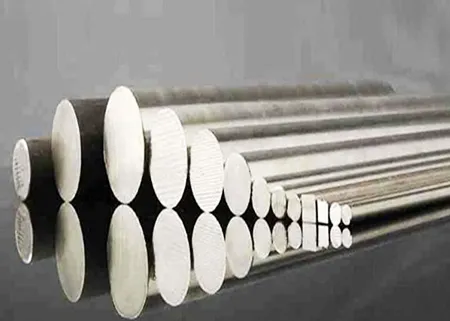
There are various ways through which environmental conditions influence stainless steel bars. That is why weather, temperature, and even sunlight can cause changes. I invite you to discover along with me how this occurs!
Corrosion
Stainless steel is not immune to corrosion and it can negatively affect a stainless steel bar. Rust is formed by the reaction between Fe and H₂O. Cr in steel also aids in preventing rusting.
This layer serves as a barrier. Ni adds strength. In some cases, NaCl accelerates the corrosion process. Type 304 and Type 316 are good. They resist rust better. It is useful in areas that experience a lot of precipitation. The steel must remain in a clean environment.
Dirt causes rust spots. Cleaning keeps it shiny. Do not use Cl. That can damage the surface. Daily checks are important to avoid the formation of rust.
Oxidation
Oxidation changes the surface. Air makes contact with the stainless steel bar. It forms an oxide layer. This layer protects it. Cr and Ni facilitate this process. Oxide prevents deep rust.
O is important here. Type 304 and Type 316 are good for this. This is not entirely true as NaCl can still be problematic. Clean the bar to minimize issues. This helps keep it shiny. Acid damages the surface. Avoid spills. Oxidation is well tended by frequent care.
Temperature Fluctuations
Heat and cold influence the stainless steel bar. One factor that can alter it is high temperatures. Type 304 and Type 316 are good at handling heat. They can be enlarged and diminished.
Sudden changes cause cracks. This is avoided by uniform heating. Stainless steel resists heat. Ni and Cr assist this. Cold can make it brittle Cold can make it brittle.
Methods of heating are crucial. Problems that may have occurred are checked from time to time. Proper care makes it to last long. That keeps it strong.
Humidity
Humidity causes changes in the stainless steel bar. This is so because moisture in the air can lead to formation of rust. Cr protects it. Type 304 and Type 316 do not rust easily.
High humidity needs care. Clean the bar often. This removes dirt. NaCl in the air can affect it. Ni adds protection. Humidity control helps. Use dehumidifiers if needed. Keep the area dry.
Regular checks are important. This prevents rust spots. Taking good care of it makes it shiny and hard.
Chemical Exposure
These chemicals are dangerous to the stainless steel bar. Acid and Cl are toxic. For safety purposes, use Type 304 and Type 316. They resist chemicals better. It is protected by Cr and Ni.
Transactions can harm the surface. Clean quickly. Avoid harsh cleaners. Use mild soaps. This aids in preserving its appearance. Proactive inspections identify the problems on time.
Long life is therefore achieved through good care. Chemicals need careful handling. This protects the steel.
UV Radiation
UV rays act on the surface of the stainless steel bar. It can also change its color with sunlight. The Type 304 and Type 316 are resistant to UV. It is protected by Cr and Ni. UV causes surface changes. Keep the bar covered. This assists in avoiding direct sunlight.
Schedules identify issues at a young stage. Wash it in order to maintain the shine. UV exposure needs attention. It preserves its appearance when given proper care. This causes it to be stronger. It is safe when well tended.
What Role Does Supplier Reputation Play in Ensuring Quality?
Supplier reliability can be thought of as a big promise. If they stick to their commitments, then they can be relied on. Let’s see how this works!
Past Performance
It is useful to have suppliers with good credit. ASTM standards verify structural and endurance parameters. The 304-grade bars are robust. This metal doesn’t rust. It holds heavy things.
It remains rigid in hot conditions. Tensile strength is what it can be pulled while yield strength is how strong it is. AISI means good quality. ISO 9001 means it is always good. AISI-SAE shows grades. These bars make buildings. They help build bridges. The 303-grade is very easy to shape.
Certifications
Certifications ensure that things run properly. ASTM F138 is an implant. AISI 304L contains less carbon than AISI 304. It stops rust. These grades meet certain requirements. It matches FDA rules. ISO 9001 represents good quality. ASME is used for pressure related things.
UNS shows alloy types. EN is for Europe. This makes trust worldwide. Certifications are very important. They ensure good performance.
Client Reviews
Client reviews assist in the selection of good things. Satisfied customers equal positive things. The 316L grade stands up to chemicals. Duplex grades are highly resistant. It is beneficial for boats. According to this review, it is good. Designers appreciate 17-4 PH grades.
It is very hard. Reviews show trust. ASTM A276 checks sizes. Peer reviews are important. They help choose well. Reviews make things better.
Quality Control
Quality control checks everything. ASTM A484 defines right sizes. AISI 303 shapes easily. This keeps sizes right. Assurances make sure it’s good. ISO 9001 provides quality guidelines.
This is so because regular check ensures that it is in good condition. Hardness tests check strength. Exact sizes are important. Visual checks find mistakes. This makes it reliable. Every bar is checked. Controls keep things excellent.
Delivery Reliability
Reliable delivery is key. ASTM A479 shapes bars. JIT means quick delivery. The 321 grade is amenable to heat. It’s good for planes. This means fast delivery. FIFO keeps things fresh.
Steady supplies help work. ASTM A582 shapes easily. This saves time. Reliable delivery is important. On-time delivery builds trust.
Compliance
Compliance keeps things safe. ASTM F899 is for tools. The 440C grade is said to be very hard. It’s good for cutting. This meets strict rules. REACH stops bad stuff.
This makes the earth safe. RoHS stops dangerous things. UNS demonstrates what UNS is. This helps track it. Compliance builds trust. It keeps to rules. Reliable compliance is key.
Conclusion
Look at strength and Cr when buying a stainless steel bar. It should be hard. Ni and Cr make it better. Visit ALLOYXPERT for help. Find the best bars. They should have good numbers. This makes them last long.
Read More:
How to Cut and Shape Stainless Steel Bars?