
Introduction
Aircraft carriers, as symbols of modern naval power, represent not only a country’s military strength but also the pinnacle of advanced equipment manufacturing and materials engineering. Among the many critical materials used in their construction, deck steel plays a key role. The material selection and heat treatment process for deck steel directly affect the carrier’s performance, safety, and service life. This article delves into the materials and heat treatment techniques for aircraft carrier deck steel.
Materials for Aircraft Carrier Deck Steel
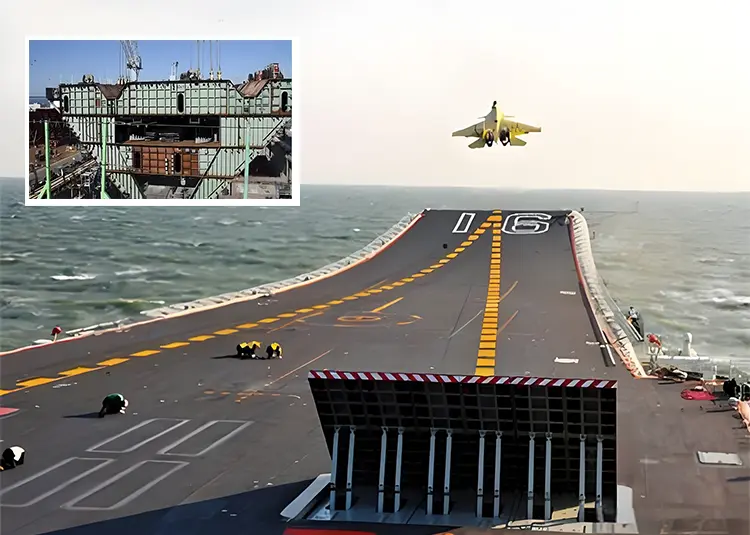
Aircraft carrier deck steel is a specialized material characterized by high strength, toughness, corrosion resistance, low-temperature resilience, heat resistance, and non-magnetic properties. These features enable the deck to endure the intense impact and friction from aircraft takeoffs and landings while resisting the extreme heat from jet exhaust flames. Additionally, to prevent detection and attacks from magnetic mines, deck steel must exhibit low magnetic properties.
High Strength and Toughness
Deck steel must withstand the significant impact from carrier-based aircraft operations. This requires the material to have both high strength, to resist deformation and fracture, and high toughness, to absorb energy during impact without breaking.
Corrosion Resistance and Low-Temperature Resilience
Operating in harsh marine environments, the deck steel must resist seawater-induced corrosion to maintain its integrity. It must also perform well in low temperatures to ensure functionality during operations in extreme climates.
Heat Resistance and Non-Magnetic Properties
During aircraft takeoffs, jet exhaust flames expose the deck to extreme heat, demanding excellent heat resistance. To evade magnetic mine attacks and detection by magnetic sensors, deck steel must also be non-magnetic.
Current Steel Choices
- High-Strength Low-Alloy (HSLA) Steel: Achieves high strength and toughness with elements like copper, nickel, and chromium, using controlled rolling and cooling processes.
- Ni-Co Ultra-High-Strength Steel: Evolved from 9% nickel low-temperature steel by adding cobalt for improved strength and toughness, along with superior welding properties.

Heat Treatment Techniques for Deck Steel
The heat treatment process for aircraft carrier deck steel typically involves quenching and tempering, surface treatment, and other methods. These enhance the steel’s mechanical properties, structural stability, and overall performance.
Quenching and Tempering
Quenching heats the steel to the austenitic phase before rapidly cooling it, forming martensite for high hardness. Tempering reduces brittleness while increasing toughness and ductility, optimizing the steel’s mechanical properties.
Surface Treatment
- Sandblasting and Shot Peening: Remove impurities like scale and rust, enhancing surface roughness for better coating adhesion.
- Pickling and Passivation: Clean residual contaminants and form a protective passive film to improve corrosion resistance.
Production and Quality Control of Deck Steel
The production of deck steel includes smelting, rolling, and heat treatment. Strict control is applied throughout:
- Smelting: Ensures a clean chemical composition.
- Rolling: Delivers the required thickness and shape.
- Heat Treatment: Optimizes microstructure and mechanical properties through precise temperature and time control.
Quality Checks Include:
- Chemical Analysis: Verifies composition consistency.
- Mechanical Testing: Evaluates tensile strength, impact resistance, and hardness.
- Corrosion Resistance Testing: Ensures durability in marine environments.
Conclusion
Aircraft carrier deck steel is a critical material that directly impacts the carrier’s performance and service life. By using high-strength low-alloy and ultra-high-strength steels, combined with advanced heat treatment methods such as quenching, tempering, and surface treatment, the material achieves enhanced mechanical and corrosion resistance properties. Strict quality control throughout production ensures the steel meets the demanding requirements of aircraft carriers. With continuous advancements in technology, deck steel materials and treatments will continue to evolve, driving improvements in naval engineering and carrier construction.
FAQs
How much does producing aircraft carrier deck steel cost compared to other specialty steels?
Aircraft carrier deck steel is more expensive than other specialty steels due to its unique requirements. It must withstand high impacts, extreme temperatures, and resist corrosion while being non-magnetic. These properties demand precise manufacturing and rigorous testing, making it 2–3 times more expensive than standard high-strength steels.
How long does deck steel typically last before needing replacement or repair?
With proper maintenance, deck steel can last 40–50 years. Regular inspections, recoating, and minor repairs are essential to prevent deterioration. The lifespan also depends on environmental conditions and the operational demands placed on the carrier.
Are there alternative materials being explored for future aircraft carriers?
Yes, researchers are investigating advanced composites and hybrid materials as potential alternatives. These materials aim to reduce weight while offering comparable strength and durability. However, challenges like cost, scalability, and long-term performance currently limit their use, making steel the preferred material for now.
How does deck steel influence the design and weight distribution of an aircraft carrier?
Deck steel plays a critical role in maintaining the carrier’s balance. Its high strength-to-weight ratio allows engineers to use thinner plates without sacrificing durability. This optimization frees up weight for other critical components like aircraft, fuel, and weapons, enhancing the carrier’s overall efficiency.
How sustainable is the production process for deck steel?
The production of deck steel involves energy-intensive processes and the use of premium raw materials, making it less sustainable. However, advancements in recycling and energy-efficient technologies are improving the environmental footprint. Many manufacturers are also incorporating recycled steel into production to promote sustainability.
Read More:
Decoding and Naming Conventions of Steel Grades like Q345B and 304
Oxide Coating on Steel: Protection, Removal & Key Applications
Martensite Strengthening Mechanism: How Does It Enhance Steel’s Properties?