
Introduction
Steel serves as a foundational material in modern society, utilized widely in construction, machinery, transportation, and numerous other fields. To efficiently identify and apply various steel materials, standards organizations have assigned specific grade designations, such as Q345B and 304 stainless steel. These grades carry essential information that requires an understanding of naming conventions for accurate interpretation.
Understanding Steel Grade Naming Conventions
Steel grades are categorized and named through different methods, commonly including characteristic-based naming, rule-based naming, or a mix of both. These methods make it easier to identify suitable materials for various applications, whether for high-stress environments, corrosion resistance, or specific chemical compositions.
Characteristic-Based Naming of Steel Grades
Characteristic-based naming conventions are frequently used for grades that need to highlight certain properties, such as composition, strength, or specific applications.
Grades Indicating Composition
Example: 50CrMo4
- 50: Indicates a nominal carbon content of 0.50% (multiplied by 100).
- Cr: Presence of chromium.
- Mo: Presence of molybdenum.
- 4: Represents the chromium content.
Use: Grades like 50CrMo4 are often selected for components requiring durability and strength, such as gears and shafts in automotive applications.
Grades Indicating Strength
Example: Q345B
- Q: Stands for “yield” (from the Chinese pinyin “qufu”).
- 345: Minimum yield strength, in MPa.
- B: Quality grade, indicating a minimum longitudinal impact energy of 27J at 20°C.
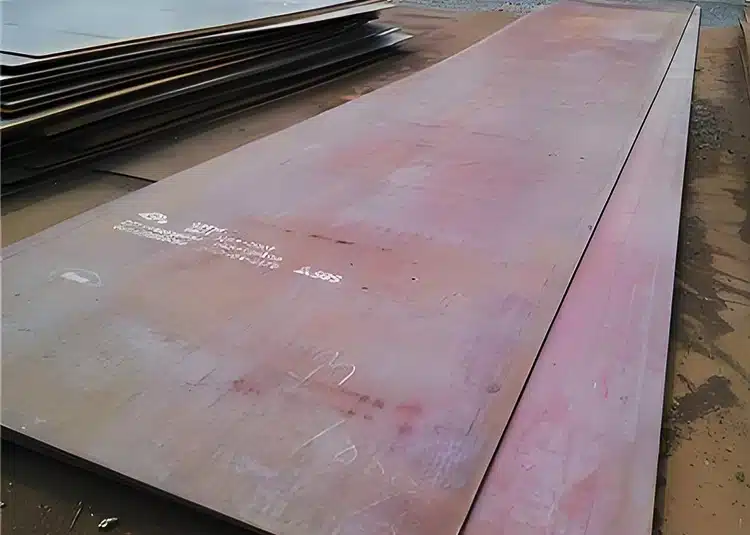
Use: Commonly used in construction projects, Q345B steel is known for its balance of strength and ductility, making it ideal for heavy-duty frames, bridges, and buildings.
Grades with Specific Applications or Features
Example: HP235
- HP: Stands for “welded cylinder” (pinyin abbreviation for “han ping”).
- 235: Minimum yield strength in MPa.
Use: The HP235 grade is ideal for gas cylinders, thanks to its strength and reliability in high-stress conditions.
Rule-Based Naming of Steel Grades
In rule-based naming conventions, the letters and numbers follow a standard that often conveys essential details about composition or intended applications. This approach is particularly common for well-known stainless steel grades.
Meaningful Letter and Number Combinations Defined by Standards
Example: Stainless Steel 304
- 3: Indicates chromium-nickel stainless steel with high chromium and nickel content.
- 04: Sequence number, no specific meaning.
Note: For those unfamiliar with stainless steel, “304” alone does not provide much information without consulting the standards.
Use: Known for its corrosion resistance, 304 stainless steel is popular in environments requiring longevity and minimal maintenance, such as kitchens, chemical processing plants, and medical equipment.
Trademarked Names
Example: COR-TEN®
- COR-TEN® is a weather-resistant steel developed in the 1930s by U.S. Steel, originally designed for railroad coal cars. The name combines “corrosion resistance” and “tensile strength.”
Note: Trademarked names are chosen by the owner, and product details are typically available in product manuals.
Use: COR-TEN® steel’s weathering properties make it ideal for bridges, outdoor sculptures, and architectural facades where reduced maintenance is crucial.
Common Steel Grades and Their Applications
Understanding how common steel grades are named and their applications can help you choose the right material for your projects. Below are a few widely used grades with explanations and practical uses.
European Standard Cold-Rolled Sheet DC04
- D: Indicates flat products for cold forming.
- C: Cold rolled.
- 04: Sequence number for deep drawing application.
Note: Naming based on form + category + sequence number doesn’t convey much information.
Use: Often chosen for applications requiring high formability, like automotive body parts and home appliances.
Japanese Standard Hot-Rolled Sheet SPHC
- S: Steel.
- P: Plate.
- H: Hot rolled.
- C: Commercial use.
Note: Naming based on form + category + grade generally indicates a standard material, often referred to as “C material” in the industry.
Use: Widely utilized for general fabrication and structural components in construction.
Baosteel Standard Electrical Steel B50A800
- B: Baosteel.
- 50: Thickness (in mm) multiplied by 100.
- A: Non-oriented.
- 800: Core loss value (P15/50) multiplied by 100.
Note: Electrical steel has a distinctive naming method. Thickness, orientation (or lack thereof), and core loss are key indicators for electrical steel, and these can be identified at a glance from the grade designation. The national standard is simpler: 50W800, where “W” is the first letter of “wu” (non-oriented) in pinyin.
Use: Preferred for electrical applications like transformers and motors due to its stable magnetic properties.
Chinese National Standard Stainless Steel 06Cr19Ni10
- 06: Nominal carbon content of 0.06%.
- Cr19: Nominal chromium content of 19%.
- Ni10: Nominal nickel content of 10%.
Note: This grade is similar to 304 stainless steel, with a clearer focus on key elements in the national standard designation.
Use: This grade, similar to 304, is highly corrosion-resistant, making it suitable for environments exposed to moisture or chemicals.
INCOLOY® Alloy 800
- Standard: UNS N08800.
- Known as Incoloy, this Ni-Cr alloy offers high strength, oxidation resistance, and carburization resistance at high temperatures.
Note: This is a trademarked name, offering no performance information directly in the name itself. Trademarked alloys typically utilize such naming for information asymmetry and premium pricing.
Use: Proprietary naming often signifies unique properties, positioning the material for high-performance applications in the energy and chemical industries.
Conclusion
Understanding these naming conventions and examples provides insight into steel materials, enabling the quick establishment of knowledge frameworks and better comprehension of standards and grade classifications.
For a deeper dive into steel grades, composition, and material applications, head to AlloyXpert. Our experts are here to support your next project.
Read More:
Essential Material Properties in Engineering and the Steel Industry
Analysis and Handling of Transverse Ridges on Steel Coils
Case Study: Why Super Duplex Stainless Steel is the Most Economical Choice for Chimney Construction