
Introduction
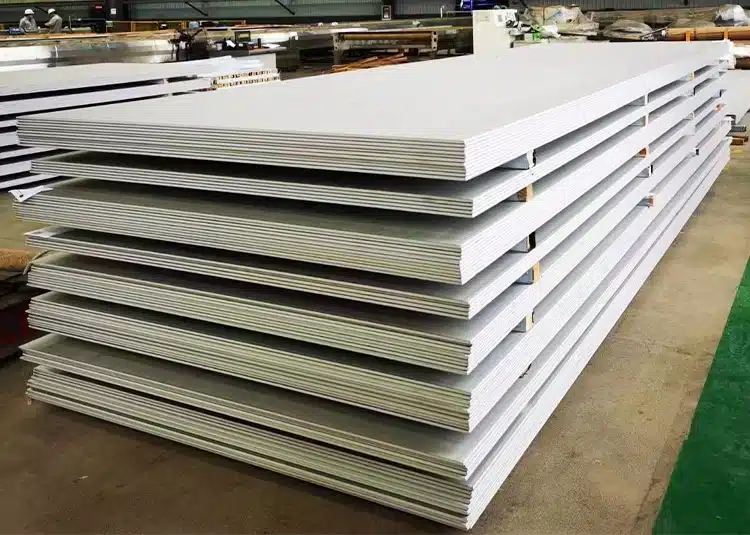
Calculating the weight of a stainless steel (SS) plate is a straightforward process that involves a few basic measurements. Whether you’re working with 304, 316, or another grade of stainless steel, this formula provides an accurate method for determining the weight based on the plate’s dimensions and the density of the specific stainless steel grade.
Explanation of the SS Plate Weight Formula
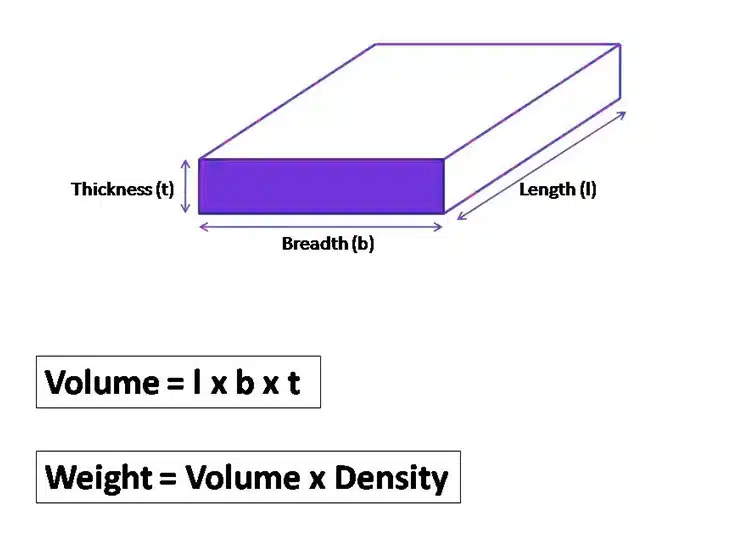
The formula for calculating the weight of a stainless steel plate is:
Weight = Length x Width x Thickness x Density
Let’s break down each component:
- Length (L): This is the measurement of the plate’s longer side, usually recorded in meters (m)or feet (ft).
- Width (W): The width of the plate is the shorter side, also measured in meters (m)or feet (ft).
- Thickness (T): The thickness refers to how thick the plate is, typically measured in millimeters (mm)or inches (in).
- Density (D): The density is a constant that depends on the type of stainless steel being used. It is measured in kilograms per cubic meter (kg/m³)or pounds per cubic inch (lb/in³). Stainless steel grades have slightly different densities, which need to be considered in the calculation.
The units for length, width, and thickness must all be in the same measurement system (metric or imperial) for the formula to work correctly. If needed, you can convert between metric and imperial units using the conversion factors below.
| Metric | Imperial |
| 1 kg | 2.20462 lbs |
| 1 m | 3.28084 ft |
| 1 mm | 0.03937 in |
| 1 cm³ | 0.0610237 in³ |
| 1 kg/m³ | 0.06243 lb/ft³ |
Common Densities of Stainless Steel Grades
The density of stainless steel varies by grade. While the density for stainless steel generally hovers around 7,850 kg/m³, different grades exhibit slight variations in density due to their specific chemical composition.
Below is a table showing the typical densities of common stainless steel grades:
| Stainless Steel Grade | Density (kg/m³) | Density (lb/in³) |
| 304 Stainless Steel | 7,850 | 0.284 |
| 316 Stainless Steel | 7,990 | 0.289 |
| 430 Stainless Steel | 7,700 | 0.278 |
| 409 Stainless Steel | 7,750 | 0.280 |
| 321 Stainless Steel | 7,920 | 0.286 |
How Do You Use the SS Plate Weight Formula?
Calculating the weight of a stainless steel (SS) plate is simple if you know the length, width, thickness, and density of the specific SS grade. By plugging these values into the formula, you can easily determine the weight, which is crucial for estimating material costs and logistics.
Formula: Weight = Length x Width x Thickness x Density
Below are two examples using 304 and 316 stainless steel to show how the formula works in practice.
Example Calculation for 304 Stainless Steel
Let’s calculate the weight of a 304 stainless steel plate with the following dimensions:
- Length: 1000 mm (1 meter)
- Width: 2000 mm (2 meters)
- Thickness: 3 mm
- Density: 7,850 kg/m³ (for 304 stainless steel)
Now, convert all the dimensions to meters (if needed):
- Thickness: 3 mm = 0.003 meters
Now, plug the values into the formula:
Weight = Length x Width x Thickness x Density
Weight = 1m x 2m x 0.003m x 7,850 kg/m³
Weight = 47.1 kg
So, the weight of this 304 stainless steel plate is 47.1 kg.
Example Calculation for 316 Stainless Steel
Now, let’s calculate the weight of a 316 stainless steel plate with different dimensions:
- Length: 1500 mm (1.5 meters)
- Width: 3000 mm (3 meters)
- Thickness: 5 mm
- Density: 7,990 kg/m³ (for 316 stainless steel)
First, convert the thickness to meters:
- Thickness: 5 mm = 0.005 meters
Now, apply the formula:
Weight = Length x Width x Thickness x Density
Weight = 1.5m x 3m x 0.005m x 7,990 kg/m³
Weight = 179.8 kg
Therefore, the weight of this 316 stainless steel plate is 179.8 kg.
What Factors Influence the Weight of a Stainless Steel Plate?
The weight of a stainless steel (SS) plate is determined by several factors:
- Thickness: Thicker plates weigh more due to the increased material. Even small changes in thickness can significantly impact the final weight.
- Size (Length and Width): Larger plates cover more surface area, resulting in a higher weight.
- Stainless Steel Grade (Density): Different SS grades have varying densities, so the same-sized plates can have different weights depending on the grade.
Accurate measurements of length, width, and thickness are essential for precise weight calculations. Small errors can lead to significant discrepancies, affecting material costs and logistics.
To help ensure accuracy and streamline the calculation process, you can use trusted online weight calculators.Some trusted calculators include:
- AlloyXpert – Metal Weight Calculator: A powerful tool for calculating the weight of various metals, including stainless steel, with options for multiple dimensions and grades. It supports both metric and imperial measurements.
- Omni Calculator – Steel Plate Weight: A user-friendly calculator that quickly computes plate weight, with the flexibility to select different units.
- The World Material – Steel Plate Weight Calculator: An easy-to-navigate tool that helps users calculate weight based on material type and dimensions.
- Calculator Ultra – Stainless Steel Sheet Weight Calculator: A simple tool for calculating sheet weight across various stainless steel grades, perfect for quick assessments.
How Does Accurate SS Plate Weight Calculation Impact Cost and Efficiency?
Accurate stainless steel (SS) plate weight calculations are critical for optimizing costs and operational efficiency in projects. Here’s how they affect pricing, logistics, and material management:
Pricing and Material Costs
SS plates are priced by weight, so accurate calculations help avoid overbuying or underbuying materials. Overestimation leads to unnecessary expenses, while underestimation can cause delays and the need for additional orders.
Logistics and Transportation
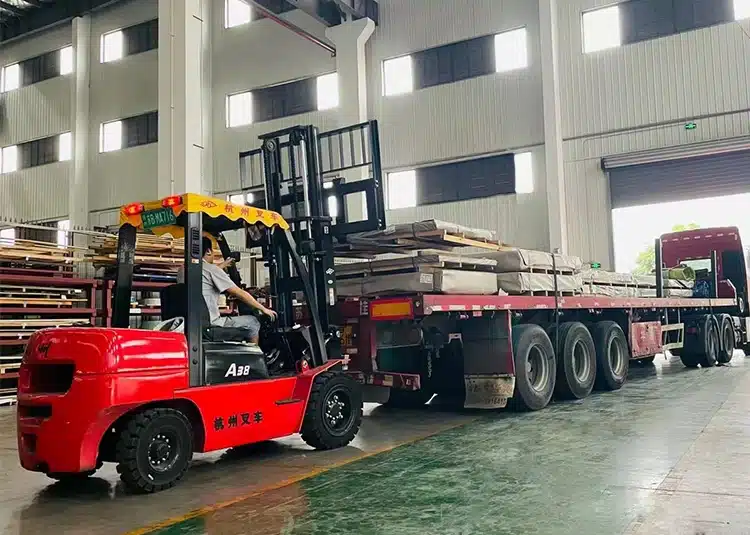
Freight and shipping costs are based on weight. Accurate weight calculations prevent unexpected transport fees and ensure proper load management, avoiding safety issues or logistical problems during transit.
Material Efficiency
Precise weight estimates ensure efficient material use, reducing waste and minimizing production costs. Accurate measurements contribute to sustainable practices by preventing overproduction.
Cost Implications
Misestimating the SS plate weight can have significant cost implications. Overestimating the weight results in higher material and storage costs, while underestimating it can lead to project delays, additional orders, and increased shipping expenses.
Conclusion
The formula for calculating stainless steel (SS) plate weight—Weight = Length x Width x Thickness x Density—is crucial for accurately estimating material costs, managing logistics, and ensuring efficient material usage. Understanding how factors like thickness, size, and SS grade affect weight helps optimize projects across various industries.
By using the formula and trusted online tools, such as the AlloyXpert Metal Weight Calculator, you can simplify the process and achieve precise results. For all your stainless steel needs, trust AlloyXpert for high-quality materials and accurate calculations.
Read More:
Everything You Should Know About Pipeline Pressure Rating and Ways to Calculate It!
Comprehensive Guide to Schedule 10 Steel Pipe: Dimensions, Thickness, and Applications