
Introduction
Looking for an alloy that won’t crack under high heat or corrosive conditions? That’s where Inconel 690 steps in. This nickel-chromium alloy is built to withstand extreme temperatures and intense chemical environments, like nuclear reactors and petrochemical plants. It’s a go-to for industries where reliable performance in harsh conditions matters. In this guide, we’ll dig into what makes Inconel Alloy 690 unique, why it’s a top pick in the field, and how it stacks up against other alloys like Inconel 600 and Inconel 625.
What is Inconel 690?
Inconel 690 (UNS N06690) is a high-chromium, nickel-based alloy designed for high-temperature, high-corrosion environments. Its high chromium content boosts resistance to oxidation and hot corrosion, even in sulphur-bearing atmospheres. This makes it a powerful choice for nuclear reactors, chemical processing, and thermal applications. It’s not just about heat. 690 Inconel’s composition also resists cracking and oxidation, allowing it to endure where other materials might fail.
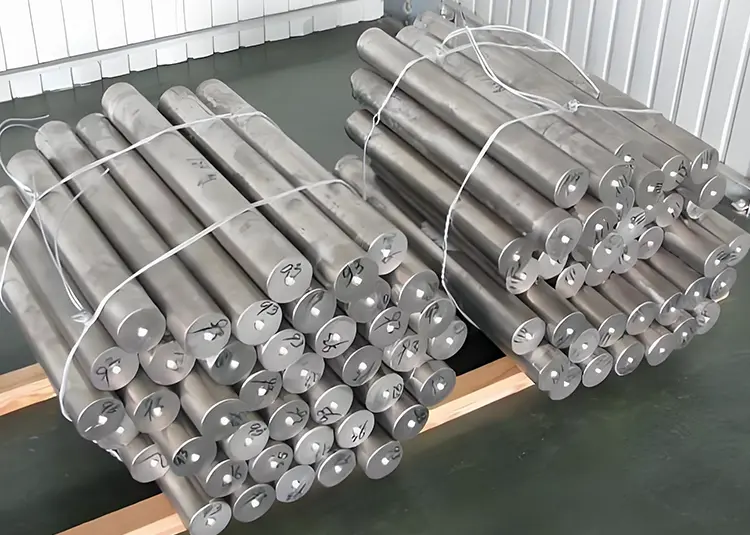
What Are the Specifications of Inconel Alloy 690?
690 Inconel Equivalent
| Specification | Equivalent |
| UNS | N06690 |
| AMS | 5589 |
| ASTM | B163, B167, B168 |
| DIN | W.Nr. 2.4642 |
| EN | 2.4642 |
| JIS | NCF 690 |
Inconel 690 ASTM Standard
| Shape | ASTM Standard |
| Bars | ASTM B166 |
| Plates, Sheets | ASTM B168 |
| Pipes, Tubes | ASTM B163, B167 |
Inconel 690 Chemical Composition
| Element | Composition (%) |
| Nickel (Ni) | Balance |
| Chromium (Cr) | 27.0 – 31.0 |
| Iron (Fe) | 7.0 – 11.0 |
| Carbon (C) | Max 0.05 |
| Manganese (Mn) | Max 0.5 |
| Silicon (Si) | Max 0.5 |
| Sulfur (S) | Max 0.015 |
| Phosphorus (P) | Max 0.015 |
| Aluminum (Al) | 0.2 – 0.6 |
| Titanium (Ti) | Max 0.5 |
| Cobalt (Co) | Max 1.0 |
Inconel Metal 690 Mechanical Properties
| Property | Value |
| Tensile Strength | 100 ksi (min) |
| Yield Strength | 40 ksi (min) |
| Elongation | 30% (min) |
| Hardness (Rockwell B) | 90 HRB |
Inconel Metal 690 Physical Properties
| Property | Value |
| Density | 8.19 g/cm³ |
| Melting Point | 1343-1377°C |
| Thermal Conductivity | 12.6 W/m·K (at 20°C) |
| Specific Heat | 0.102 cal/g°C |
Nickel Alloy 690 Corrosion Resistance
| Environment | Corrosion Resistance Performance |
| Oxidizing Atmospheres | Excellent resistance up to 1800°F (982°C) |
| Sulfur-bearing Environments | High resistance at 1650°F (899°C) |
| Aqueous Environments | Moderate resistance to corrosion up to 400°F (204°C) |
| Carburizing Atmospheres | Good resistance to carburization up to 1700°F (927°C) |
Inconel 690 Heat Treatment
| Heat Treatment Process | Temperature Range |
| Annealing | 1700°F – 1900°F (927°C – 1038°C) |
| Solution Treatment | 1800°F – 1900°F (982°C – 1038°C) |
| Stress Relieving | 1200°F – 1600°F (649°C – 871°C) |
What Are the Advantages of Inconel Alloy 690?
Looking for a material that won’t break down under extreme heat or corrosive conditions? That’s where 690 Inconel shines. This alloy is built to last where others fail.
Here’s why Inconel Alloy 690 is a game-changer for high-stakes applications:
- Outstanding Oxidation Resistance: It’s not just heat-resistant; 690 Inconel holds strong against oxidation up to 1800°F. Perfect for setups where materials get roasted daily.
- Unmatched Corrosion Defense: Sulfur-rich environments? No problem. Alloy 690’s high chromium content means it resists aggressive corrosion, especially in harsh chemical and nuclear applications.
- Thermal Stability Under Pressure: Nickle Alloy690’s structure stays stable under extreme heat, so it’s an asset in nuclear reactors and chemical plants where strength under fire is non-negotiable.
- Durable in Aqueous Environments: Even in wet and mildly corrosive conditions, this alloy holds its own, adding versatility to its list of perks.
- Built for the Long Run: The alloy’s unique balance of nickel, chromium, and iron delivers durability across intense cycles of heating and cooling. Think of it as a tough, all-weather option.
What is Inconel 690 Used For?
You’ve got a job that’s too hot, too corrosive, or just too intense for ordinary materials. What’s next? Inconel Alloy 690 might be your answer.
Here’s how industries are making the most of it:
- Nuclear Reactors: Steam generator tubing, reactor components, heat exchangers.
- Chemical Processing: Piping systems, heat exchangers, sulfuric acid production, waste treatment equipment.
- Power Generation: Boiler tubes, combustion systems, high-temperature power plant components.
- Thermal Processing Equipment: Furnace parts, annealing equipment, heat-treating fixtures.
- Petrochemical Industry: Flue gas desulfurization units, petrochemical reactors.
- Marine Environments: Seawater handling systems, desalination plant equipment.
How Does Inconel Alloy 690 Compare to Other Alloys?
Inconel 690 vs 600
Inconel 690 and Inconel 600 both handle high temperatures, but Inconel Alloy 690’s higher chromium content gives it superior oxidation resistance. This makes it better suited for extreme, oxidising environments like those found in nuclear reactors and chemical processing, where sulphur-bearing atmospheres are common. For projects that demand top oxidation and corrosion resistance, 690 Inconel stands out as the stronger choice.
Inconel 690 vs. Inconel 625
Both two alloys are corrosion-resistant, but they excel in different settings. Inconel 690 withstands high temperatures up to 1800°F and resists oxidation and sulphur-bearing gases, making it ideal for nuclear and chemical applications. Inconel 625, with added molybdenum and niobium, provides better pitting and crevice corrosion resistance in marine environments. For high-heat and oxidising conditions, go with Inconel Metal 690; for marine or saltwater settings, choose Inconel 625.
Conclusion
Inconel 690 is the alloy to beat for high-temperature and corrosive applications. From nuclear reactors to chemical plants, Inconel 690 delivers strength and reliability. Its high resistance to oxidation and corrosion makes it an industry favourite for demanding conditions. If you’re up against extreme temperatures or tough environments, Nickle Alloy 690 is a solid choice.
For more information on the benefits of Inconel Alloy 690 for your industry, contact Alloyxpert today!
FAQs
Is there a problem with nickel alloy 690 under stress?
Nickel alloy 690 performs well under stress, especially in high-temperature environments. It offers excellent resistance to stress corrosion cracking, particularly in oxidizing and sulfur-rich conditions, making it suitable for demanding applications like nuclear and chemical processing.
What is the microstructure of alloy 690?
Alloy 690 typically has a face-centered cubic (FCC) crystal structure, which gives it high stability and strength at elevated temperatures. This microstructure, combined with its high chromium content, enhances its resistance to oxidation and corrosion in extreme environments.
What industries commonly use Inconel 690?
Industries such as nuclear power, chemical processing, and power generation frequently use Inconel 690 for its durability and stability in extreme conditions.
Read More:
What is Inconel X-750 (UNS N07750)?