
Introduction
Pipelines are a series of connected pipes for moving liquids and gases. These pipelines must tolerate high pressures to push through liquids and gasses. But pipes can’t control their internal pressure. It is where pipeline pressure ratings suffice.
Pipeline pressure rating means the maximum pressure a pipeline can withstand during operation. It is usually the internal pressure. The rating is determined by factors like material, wall thickness, and design standards. It ensures safe transportation of fluids or gases and prevents failures.
Pipeline pressure rating is an important safety measure. It ensures that pipelines can work consistently without breaking or failing. This article extensively covers pipeline pressure rating. It details its units, types, rating classifications, and more.
Image Source: Unsplash
Key Takeaways
- Pressure rating is the maximum pressure a pipeline can withstand before failure. Thus, it is crucial for safe pipeline operations.
- Pressure ratings are used for various purposes.
- Different methods are used to assess the condition and integrity of pipelines. It helps ensure compliance with pressure rating requirements.
- Consult qualified engineers from companies like Alloyxpert. They have the expertise to determine pipeline pressure ratings accurately.
What Is Pipeline Pressure Rating?
Image Source: Unsplash
It is the highest amount of pressure that a pipeline can handle before it breaks or fails. It is an essential factor to consider when planning and building pipes.
To keep these substances moving, they must often be pushed through the pipeline with force. If the pressure inside the pipe rises too high, it could crack, leak, or even burst.
With this in mind, each pipeline has a pressure rating. You will find this term mostly used when buying stainless steel pipes.
It tells the highest pressure it can safely hold without breaking. Several things affect the pressure rating. These factors include material properties, pipe diameter, and temperature. Also, the pipe’s age affects it as it may become weaker and less able to handle high pressures.
Operators must know the pressure rating for the pipeline to work safely. If the pressure inside a pipeline exceeds its handle, it can leak or explode. Such situations are risky and harmful to the environment.
Pipeline workers control and keep an eye on pressure in different ways. Pressure escape valves let the pressure go away if it gets too high. It keeps the pipes from breaking.
The pipeline’s length and compressor stations help regulate pressure. The pressure monitors often check the pressure inside the duct. It reveals if it gets too high or too low.
Operators can make sure that gases and liquids move through safely and efficiently. They follow the pressure rating and use the proper measures to control the pressure.
As a result, workers need to know the pressure number and stick to it. It could be dangerous if the tube pressure exceeds what it should be.
What Are the Units of Pipeline Pressure Rating?
Pipeline pressure rating units reveal pipelines’ maximum allowed operating pressure (MAOP). They tell how much pressure the pipe can handle before it gets stressed and bursts.
It’s like knowing how much weight a bridge can hold before it breaks. The most common units for pipeline pressure rating are:
| Unit | Description |
| Pounds per Square Inch (psi) | It displays force per unit area. It tells how many pounds of force are acting on each square inch of the pipe wall. |
| Kilopascals (kPa) | It shows how much pressure applies to one square meter. Metric countries use it a lot. Also, other international standards choose it as the best unit. |
| Bar | One bar equals 100,000 pascals (Pa). It is another metric unit of pressure. One bar is about the same as the atmospheric pressure at sea level. That makes it a valuable measure for expressing pressures in pipelines. |
| Megapascals (MPa) | The metric system prefers this unit. One million pascals is one megapascal. It is a more significant amount of pressure. Heavy-duty systems like those in the oil and gas often use it. |
There are industries where pressures can reach several thousands of psi or kPa. Millions of Newtons of force work on a square meter of the pipeline’s wall. A Newton is the metric unit of force. So, one MPa is equal to roughly 145 psi.
Many things can affect the choice of pressure units. These include industry standards, regional preferences, and individual needs.
We have already discussed the types of pipelines used in the oil and gas industry. In the oil and gas industry, psi and kPa are commonly used. But, bars can be more prevalent in water distribution systems.
Most importantly, units alone cannot define pipeline pressure ratings. Along with the pressure rating, there should be other details. These comprise the temperature range, fluid composition, and other design factors. So, things like fluid, weather, and corrosion affect the allowed pressure.
Also, it is common for pipeline pressure ratings to be set by industry codes and standards. Such standards include those made by the ISO, API, or ASME. These standards specify how to plan, build, and run pipelines safely.
What Are the Types of Pressure Ratings?
There are various types of pressure ratings used for pipelines. They are crucial in ensuring their safe operation and integrity.
It’s important to remember that these pressure rates are linked. They must be carefully thought through during pipeline planning, construction, and usage. Here’s a detailed explanation of each type:
Maximum Operating Pressure (MOP)
The MOP is the maximum pipeline pressure allowed under normal conditions. It varies on pipeline design, materials, construction, and use. The pipeline company or the government usually sets the MOP. It is lower than the MAOP to give extra safety.
Maximum Allowable Operating Pressure (MAOP)
Considering all parameters, the MAOP is a pipeline’s maximum pressure. This crucial measure evaluates pipeline design, construction, and materials. Also, it considers working conditions and any possible flaws or problems.
The ASME or API provides industry codes and guidelines for determining the MAOP. Infringing upon the MAOP can damage the pipeline’s integrity and cause catastrophic breakdowns.
Design Pressure
It is the highest pressure a pipeline can handle during its service life. The design must consider pipeline wall thickness, working temperatures, and safety.
The Design Pressure is usually higher than the MAOP. It provides added protection and accounts for pressure variations and transients.
Test Pressure
Higher pressure is put on a pipeline before it is put into service. It’s also done during regular tests to ensure it is structurally sound and doesn’t leak. Test pressure is generally higher than the Design Pressure and MAOP.
It determines that the pipeline can handle more pressure. Usually, water or a harmless gas is used for testing. Then, the test pressure is carefully controlled and watched. The pipeline can safely operate at the planned MAOP if the tests pass at the test pressure.
Burst Pressure
It is the pressure a pipeline will fail or rupture. It is much higher than the MAOP, Design, and Test Pressure. Its primary function is to test and qualify materials. The Burst Pressure tells how strong the pipeline will be at its weakest point.
Then, it’s used to set safety concerns and design gaps. Yet, it is not something that should ever be approached during routine operations. That’s because it is the point at which everything will fail.
What Factors Affect the Pipeline Pressure Rating?
Image Source: Pixabay
Several things affect the pipeline pressure rating. They guarantee that the process is safe. Below are some of the factors affecting pipeline pressure rating:
Material Properties
The pipe’s material is like its backbone. Steel is strong and bends less, making it perfect for high-pressure pipelines. Plastic pipes, while flexible, might be better for lower-pressure jobs.
Pipe Wall Thickness
Imagine a pipe with a thicker wall – it’s like a thicker coat protecting it from pressure. So, thicker walls can handle more pressure without getting stressed. Thinner walls might limit the operating pressure. It is to keep the structure from getting out of shape or breaking.
Pipe Diameter
Think of a wide river – the water pressure spreads out more evenly. It’s the same with pipelines. Wider pipes can handle more pressure when made of similar material wall thickness.
That’s because the stress is spread over a larger area. The pressure in a smaller diameter pipe must push against a smaller area. Thereby, it creates a higher concentration of stress.
Temperature
Temperature plays a role, too. High temperatures can weaken pipes. But at low temperatures, pipelines can be more robust. Thus, it allows them to handle more pressure.
It’s crucial to consider how temperature changes can affect the pipe. Like how it expands or shrinks, which adds extra stress.
External Loads Affect Pipeline Pressure Rating
Pipelines aren’t alone – they face challenges from the outside world, too. Things like water pressure or traffic can put extra stress on the pipe. It can affect the pressure it can handle safely.
How deep the pipe is buried and what kind of material surrounds it also matters. Even nearby buildings can be a factor.
Installation Methods and Techniques
How pipelines are installed is essential. Using the proper welding techniques and field joint coatings is crucial. Also, careful handling is vital. They keep the pipe strong and prevent any weak spots from forming.
Something that goes wrong during installation can create stress points or dents. These could lead to problems and might even need fixing.
Engineers can figure out the perfect pipeline pressure rating by considering these factors. Thus, it will help you keep them strong and safe in the long term.
Above all these points, the manufacturer must follow quality control measures for making stainless steel pipes.
What Are the Common Pressure Rating Classifications?
We all know that there are different stainless steel grades for varying applications. The pipeline industry follows various pressure rating classifications. These classifications standardize the design, construction, and pipeline operations.
Well-known groups and bodies like the ASME set them. It makes sure that production is safe and consistent. Here are the standard pressure rating classifications:
Nominal Pressure (Class) System (ANSI/ASME B16.5)
The ANSI and ASME have set up a nominal pressure or class ratings system for piping components. They comprise valves, flanges, and fittings. ANSI/ASME B16.5 describes this system. The US and other nations apply it often.
This system uses a Class number to show the pressure ratings. The class number indicates the maximum allowed working pressure (MAWP). It is shown in psi at a specific temperature. The average class temperature is 100°F. The pressure level goes up as the class number goes up.
The ANSI/ASME B16.5 standard has thorough tables and formulas. These help in figuring out the pressure-temperature ratings for each class. They consider material properties, wall thickness, and temperature derating factors.
Pressure Rating Numbers (PN) System (ISO)
The PN system was created by the International Organization for Standardization (ISO). It is found in many metric countries and international norms.
This system assigns pressure values based on the highest bar working pressure. One bar = 100 kilopascals, or about 14.5 psi. It is usually at a specific temperature, typically 20°C (68°F).
The ISO standards, like the ANSI/ASME system, give thorough tables and formulas. These help determine the pressure-temperature ratings for each PN rating.
How to Calculate Pipeline Pressure Rating?
Image source: Pexels
It is easy to calculate the pressure rating of a pipeline. You can use the following formula based on the Barlow equation. Note that this is a simplified calculation. In practice, other factors may be considered, such as temperature.
Formula:
P = (2 × S × t) / D
Here:
- P is the Pressure rating (psi or bar)
- S shows the allowable stress of the pipe material (psi or bar)
- t denotes the wall thickness of the pipe (inches or mm)
- D is the outside diameter of the pipe (inches or mm)
Now, we will calculate the pressure rating of a steel pipeline. Suppose it has an allowable stress of 35,000 psi, a wall thickness of 0.25 inches, and an outside diameter of 8 inches.
So, we have the following values;
- S = 35,000 psi
- t = 0.25 inches
- D = 8 inches
We will put them into the formula to calculate the pressure rating.
- P = (2 × 35,000 psi × 0.25 inches) / 8 inches
- So, P = 17,500 / 8
- P = 2,187.5 psi
Thus, the pressure rating of this steel pipeline is approximately 2,188 psi.
| ASTM Standard Dimensions | ||||||||||||||||
| Denomination | Outer Wall | Wall Thickness | ||||||||||||||
| Sch/5s | Sch/10s | Sch/20s | Sch/40 | Sch/80 | Sch/120 | Sch/160 | ||||||||||
| DN | Nps | ASTM M/M | Thickness mm | Weight Kg/m | Thickness mm | Weight Kg/m | Thickness mm | Weight Kg/m | Thickness mm | Weight Kg/m | Thickness mm | Weight Kg/m | Thickness mm | Weight Kg/m | Thickness mm | Weight Kg/m |
| 6 | 1/8 | 10.3 | 1 | 0.234 | 1.24 | 0.286 | 1.5 | 0.333 | 1.73 | 0.369 | 2.41 | 0.479 | ||||
| 8 | 1/4 | 13.7 | 1.2 | 0.373 | 1.65 | 0.499 | 2 | 0.582 | 2.24 | 0.639 | 3.02 | 0.788 | ||||
| 10 | 3/8 | 17.2 | 1.2 | 0.476 | 1.65 | 0.643 | 2 | 0.755 | 2.31 | 0.856 | 3.2 | 1.11 | ||||
| 15 | 1/2 | 21.3 | 1.65 | 0.816 | 2.11 | 1.029 | 2.5 | 1.18 | 2.77 | 1.278 | 3.73 | 1.64 | 4.7 | 1.97 | ||
| 20 | 3/4 | 26.7 | 1.65 | 1.04 | 2.11 | 1.319 | 2.5 | 1.52 | 2.87 | 1.703 | 3.91 | 2.24 | 5.5 | 2.94 | ||
| 25 | 1 | 33.4 | 1.65 | 1.32 | 2.77 | 2.155 | 3 | 2.29 | 3.38 | 2.527 | 4.55 | 3.27 | 6.4 | 4.36 | ||
| 32 | 11/4 | 42.2 | 1.65 | 1.87 | 2.77 | 2.755 | 3 | 2.94 | 3.56 | 3.426 | 4.85 | 4.57 | 6.4 | 5.73 | ||
| 40 | 11/2 | 48.3 | 1.65 | 1.91 | 2.77 | 3.162 | 3 | 3.37 | 3.68 | 4.09 | 5.08 | 5.47 | 7.1 | 7.29 | ||
| 50 | 2 | 60.3 | 1.65 | 2.39 | 2.77 | 3.983 | 3.5 | 4.92 | 3.91 | 5.492 | 5.54 | 7.46 | 8.7 | 11.1 | ||
| 65 | 21/2 | 73 | 2.11 | 3.84 | 3.05 | 5.565 | 3.5 | 6.28 | 5.16 | 8.719 | 7.01 | 12 | 9.5 | 15.6 | ||
| 80 | 3 | 88.9 | 2.11 | 4.51 | 3.05 | 6.537 | 4 | 8.39 | 5.49 | 11.406 | 7.62 | 15.3 | 11.1 | 21.4 | ||
| 90 | 31/2 | 101.6 | 2.11 | 5.15 | 3.05 | 7.487 | 4 | 8.63 | 5.74 | 13.706 | 8.08 | 18.7 | 12.7 | 21.8 | ||
| 100 | 4 | 114.3 | 2.11 | 5.81 | 3.05 | 8.452 | 4 | 10.9 | 6.02 | 17.58 | 8.56 | 22.54 | 11.1 | 28.2 | 13.5 | 33.6 |
| 125 | 5 | 141.3 | 2.77 | 9.48 | 3.4 | 11.4 | 5 | 16.6 | 6.55 | 21.985 | 9.52 | 31.25 | 12.7 | 39.8 | 15.9 | 48.6 |
| 150 | 6 | 168.3 | 2.77 | 11.2 | 3.4 | 13.6 | 5 | 19.8 | 7.11 | 28.548 | 10.97 | 43 | 14.3 | 53.2 | 18.2 | 66 |
| 200 | 8 | 219.1 | 2.77 | 14.7 | 3.76 | 20.169 | 6.5 | 33.6 | 8.18 | 42.977 | 12.7 | 65.296 | 18.2 | 88.9 | 23 | 110 |
| 250 | 10 | 273.1 | 3.4 | 22.1 | 4.19 | 28.066 | 6.5 | 41.8 | 9.27 | 60.922 | 12.7 | 82.379 | 21.4 | 130 | 28.6 | 168 |
| 300 | 12 | 323.9 | 3.96 | 31 | 4.57 | 36.34 | 6.5 | 50 | 9.52 | 74.529 | 12.7 | 98.418 | 25.4 | 184 | 33.3 | 224 |
| 350 | 14 | 355.6 | 3.96 | 34.69 | 4.78 | 41.722 | 7.92 | 68.59 | 11.13 | 95.503 | 19.05 | 159.71 | 27.79 | 266.93 | 35.71 | 284.55 |
| 400 | 16 | 406.4 | 4.19 | 41.98 | 4.78 | 47.821 | 7.92 | 78.62 | 12.7 | 124.55 | 21.44 | 205.6 | 30.96 | 289.54 | 40.49 | 369.06 |
| 450 | 18 | 457.2 | 4.19 | 47.28 | 4.78 | 53.87 | 7.92 | 88.64 | 14.27 | 157.45 | 23.83 | 257.25 | 34.93 | 367.42 | 45.24 | 464.25 |
| 500 | 20 | 508 | 4.78 | 59.92 | 5.54 | 69.34 | 9.53 | 118.33 | 15.09 | 185.28 | 26.19 | 314.33 | 38.1 | 445.97 | 50 | 570.44 |
The pressure grade of pipe systems is crucial for safety and reliability. It includes calculations for wall thickness and strength. This section covers how to calculate piping pressure rating:
Calculation Method of Piping Pressure Rating
A pipe’s pressure rating is its highest capacity without breaking. This number is calculated using many factors. Many factors determine this rating. It comprises the pipe’s material, size, and intended usage.
Operators have to figure out how much stress is safe in the pipe wall. Then, use that number to determine how much pressure the pipe can handle.
Wall Thickness Calculation
The pipe’s wall width is critical in figuring out how much pressure it can hold. A wide wall can handle more pressure. A thin wall limits the most applicable pressure so it doesn’t fail or deform much.
This measurement accounts for pipe diameter, material properties, and design pressure. Operators can determine the most minor wall thickness needed to handle pressure. They do so by entering the desired pressure rating and other values.
Strength Calculation
Engineers also do strength calculations. It ensures plan pressure does not exceed material stress limits in the pipeline.
Several factors come into consideration during these estimates. It includes things like internal pressure, external loads, and temperature changes.
It’s important to remember that these figures are simplified versions. Engineers also pay attention to safety factors based on industry standards and codes.
It is crucial to use experienced professionals for this process. It is vital to follow the rules when determining pressure ratings for pipe systems.
You can also read – How To Calculate The Pressure Rating Of Stainless Steel Pipes?
What Are the Applications of Pipeline Pressure Ratings?
There are different applications of pipeline pressure ratings. Find the explanation of these in the following texts:
Application in Engineering Design

Image Source: Pexels
Let’s break this down into two categories for a clear explanation. It’ll cover piping system design and material selection.
Piping System Design
This pipe can handle a safe range of pressure before it breaks. Pressure values help engineers pick pipe widths, wall thicknesses, and materials.
Flow rate, fluid characteristics, and operating circumstances are considered. It makes the piping system leak-free and strong enough for the pressures.
Material Selection
Pressure ratings are also crucial when choosing pipe materials. How effectively materials handle internal stresses depends on their strength. Engineers choose more robust materials like carbon steel or alloys for high-pressure systems.
For lower-pressure systems, they might choose cheaper materials, like plastics or non-ferrous metals. Knowing how much pressure each material can handle helps in decision-making. The decision must balance efficiency, safety, and cost-effectiveness.
Considerations in Construction and Installation
It considers piping connection methods and pipe support and fixing. See a breakdown of these considerations below:
Piping Connection Methods
Pipeline joints and fittings must match the system’s pressure rating. Welding, flanging, and threading are some of the bonding methods.
Each has its pressure limits. Joints must be able to withstand expected pressures without compromising system integrity. So, engineers and installers must choose the correct connection methods. Also, they must follow the proper installation procedures.
Pipe Support and Fixing
It is essential to support and fix pipelines correctly. Doing this guarantees they don’t bend or stress much under working pressure. Pipes can move, vibrate, or slide without adequate support or anchor.
Thereby making failures or leaks more likely to occur. Engineers consider pipeline pressure rating when building support structures and choosing pipe hangers.
These steps help spread the pressure loads inside the system more evenly. It lowers the risk of damage or too much stress on the pipes.
Engineers and contractors can make sure that piping systems work safely and reliably. It is essential to follow these ratings. The reason is that they help lower risks and stop failures.
They also protect people and the environment. Furthermore, it safeguards the environment from the possible dangers of high-pressure fluids.
What Are Different Pressure Testing Methods?
Different pressure testing methods for pipelines exist. They include hydrostatic, pneumatic, and NDT methods. These testing methods offer helpful insights into the condition of pipelines.
It doesn’t compromise their structural integrity. Hence, it allows for timely maintenance, repairs, or replacements. The following are explanations of these pressure testing methods:
Hydrostatic Testing
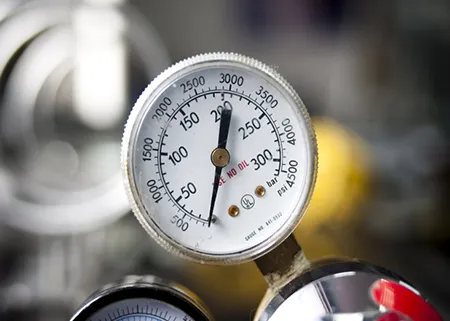
Image Source: Pixabay
Hydrostatic testing requires careful pressure control and pipeline monitoring. The pipeline is filled with water or another liquid.
Slowly, the pressure is increased until it exceeds the pipeline’s highest operating pressure. Under close observation, high pressure detects holes, weak spots, and other flaws.
Usually, the pipeline is kept at the test pressure for a specific time. Doing this ensures that it can handle the load without problems. This method is widely used for new pipeline installations. It also works for regular testing of existing systems.
Pneumatic Testing
Compressed gases are used in pneumatic testing. This method is often better for pipes that carry gases. Liquids might not be appropriate or helpful in this case.
The gas is pumped into the pipeline until it exceeds its highest pressure. Technicians check the pipeline for leaks, bending, and pressure drops.
Any fault could suggest the system is defective or malfunctioning. The compressed gas can be safely let out, so there is no need to drain the pipes after the test. However, working with high-pressure gases requires severe safety measures.
Ultrasonic Testing (UT)
It is a non-destructive testing method. It is a vital test used in determining the pressure rating of pipelines.
During this process, high-frequency sound waves are used. They are generated by a transducer and sent through the pipeline wall. These waves get reflected back from the opposite surface. They also reflect from internal defects, such as cracks, corrosion, or wall thinning.
Operators analyze the reflected signals to identify the presence of flaws. The signal’s severity can compromise the pipeline’s pressure rating.
Thus, companies add Ultrasonic Testing into the pipeline pressure rating assessment. With this, engineers can make decisions about the maximum allowable operating pressure. It helps maintain a safe and reliable pipeline system.
Moreover, It also reduces the risk of leaks or other pressure-related failures.
Case Studies on the Pipeline Pressure Rating
Here is a case study related to pipeline pressure ratings:
In San Bruno, the PG&E natural gas pipeline burst in September 2010. The disaster occurred on 30-inch-diameter intrastate gas transfer Line 132. The blast destroyed 70 dwellings and killed eight.
The National Transportation Safety Board found pipeline pressure above MAOP.
The NTSB reported that some problems brought on the San Bruno mishap. Three of these were particularly important.
To begin with, PG&E’s control of the 1956 relocation of Line 132 wasn’t good enough. They put in a pipe that didn’t meet established standards.
It had a long seam weld defect that could have been seen while it was being built. Over time, this flaw got worse. Pipeline pressure rose slightly during upstream terminal work, causing the break.
Second, the Board decided that PG&E’s integrity management program wasn’t good enough. This was because it didn’t find or fix the broken pipe.
The third thing the NTSB found was that the rules and oversight were issues. The regulatory agencies missed PG&E’s integrity management program’s failure.
This case study shows the importance of calculating and following pipeline pressure rates. It also shows how far things could go wrong without checks.
Thus, proactive pipeline pressure rating management and analysis are essential. Following best practices also guarantees safe operations.
What Are the Best Practices to Determine Pipeline Pressure Rating?
Finding correct pipeline pressure ratings is significant. Here are some of the best practices for determining pressure rating:
Follow Industry Codes and Standards
There are different industry standards for determining pressure ratings. The bodies include the ASME, ISO, and API. To accurately assess pressure rating, follow the specifications of these groups.
Look up pipeline design, construction, testing, and material codes. Also, consider the instructions for figuring out pressure ratings.
Gather Comprehensive Data
Get as much information as possible about the pipeline. These comprise its material specifications, dimensions, and building methods. Also, check out installation records, history of use, and previous tests.
Engineers must gather accurate information on the properties of flexibility, yield, and tensile strength. It can be done by testing the material or looking at records kept by the manufacturer.
Conduct Engineering Analyses
Run stress analysis calculations taking into account different loading conditions. These involve internal pressure and external loads (soil, water, traffic). It also requires heat expansion, contraction, and any possible problems.
Advanced computer methods can create models of complicated pipeline shapes and terrain factors.
Involve Qualified Personnel
Hiring experienced engineers and subject matter experts is essential. These people must know about pipeline construction, materials, and pressure ratings.
Ensuring everyone knows the industry’s rules, codes, and best practices is ideal. You should learn more about industry experts and seek guidance.
Conduct Pressure Testing
Hydrostatic or pneumatic pressure testing should be done during commissioning or regular inspections. It ensures the pipeline’s integrity and validates the pressure rating calculations.
It is recommended that test pressures are higher than the MAOP. Furthermore, testing methods should be done in a way that meets industry standards.
Adopt Safety Factors
Always use the proper safety factors to look for flaws, wear and tear, and other risk factors. Safety factors should be based on industry standards and risk assessments. It should also account for the following line of action if something goes wrong.
Consider Temperature Effects
Determine how temperature affects material qualities and pipeline stability. Use temperature derating factors when figuring out pressure ratings. That’s because materials may become less potent at high temperatures.
Documentation and Record Keeping
Keep detailed records of all the information, calculations, and assumptions. Maintain good records of supporting documents used to figure out the pressure grade.
Also, a central database or management system should be set up. It should be easy to use and look up during operations, maintenance, or future reviews.
Reevaluate and Update Pressure Ratings
Set up a program to reevaluate pressure ratings regularly. Consider changes in working conditions, material degradation, or new industry standards.
Regular reassessments should be done. Also, significant events or changes in the pipeline system could trigger evaluation.
Set up Monitoring Programs
Create and use monitoring programs to keep an eye on pipeline conditions. It will help look for possible problems or strange things. Monitoring programs will make sure that operators meet pressure ratings.
Set up preventative maintenance programs to tackle issues that could affect pressure ratings. It can comprise stopping corrosion, fixing problems, and managing integrity.
Why Is It Important to Consult Qualified Engineers for Pipeline Pressure Rating?

Image Source: Unsplash
Getting pressure ratings from competent engineers ensures pipeline safety and reliability. Here is why consulting qualified engineers is critical:
Technical Know-how and Expertise
Pipeline pressure rating is a complicated process that includes many factors. Qualified engineers are technically knowledgeable in determining the correct pipeline pressure values.
From experience, they know their field’s rules, codes, and best practices. It guarantees that the pressure ratings are calculated and used correctly.
Risk Assessment
Pipelines are important. Yet, they can also be dangerous if something goes wrong. A wrong pressure rating can cause a big mess. It can endanger people, the environment, and even buildings.
That’s why engineers check for pressure problems. Then, materials or special features should be used to reduce dangers.
Compliance with Regulations and Standards
Various regulations and standards govern pipeline pressure rating. Industry organizations set these rules to ensure smooth operations. Engineers know these rules inside and out.
Thus, they can design pressure ratings that follow them perfectly. Ignoring these rules can lead to operational issues and fines.
Complex Design Issues
Pipelines travel through many places, like water bodies and even underground ones. This means that engineers need to consider other things when designing the pipeline.
They have to consider how much weight it will carry and more. It helps them figure out the perfect pressure rating for any situation. You can also use the metal weight calculator before buying.
Life Cycle Planning and Maintenance
Pipelines have a limited useful life. Their pressure rates may need change or evaluation over time. That’s because of things like material wear and tear or operational changes.
Qualified engineers can conduct life cycle planning, repair schedules, and regular inspections. Doing these determines that the pipeline keeps working within its pressure limits.
Cost Optimization
Pipelines that are overdesigned or underdesigned can fail or cost more. Qualified engineers can balance safety and cost-effectiveness.
They can determine pressure ratings that fulfill operational needs and minimize hazards. Likewise, it can help you optimize resource allocation.
Final Thoughts!
Pipeline pressure rating is essential for safe and reliable pipeline operations. It requires considering the material’s properties, pipe size, and temperature. To find the correct pressure rating, engineers must adhere to industry standards.
Hence, it’s vital to consult qualified engineers for pipeline pressure rating. Alloyxpert has a team of professionals that can help in this regard. These professionals have the skills, knowledge, and experience to handle the process.
Running operations under the best practices lowers the risk of failure. It guarantees safe and reliable transportation of liquids and gases.
Read More:
Common Oil and Gas Pipeline Issues and How Our Steel Pipes Can Help
High-Temperature Pipeline Solutions: The Role of Stainless Steel
Understanding Corrosion Resistant Alloys (CRAs) in Pipelines