
Introduction
We will see how strong a stainless steel bar is. This blog will show you different tools. Use UTM, extensometer, and more. They help find the strength. Engineers need these results. It helps keep things safe.

What Tools Are Needed for Measuring Stainless Steel Bar Strength?
The level of strength in a stainless steel bar can only be determined with specific testing equipment. Now, it is time to take a closer look at these tools!
Universal Testing Machine
The UTM is used to determine how powerful a stainless steel bar is. It has a load frame and cross head. This machine exerts force up to 5000N and comes with hydraulic grips and strain gauges. The load cell is used for measurement of stress.
They clamp specimens tightly. Tests are smooth. A computer supervises it all. Testing speed adjusts easily. Results are accurate. Engineers trust UTMs. It ensures safety.
Micrometer
A micrometer exemplarily measures some features of a stainless steel bar. It has a spindle and anvil. As for the screw gauge, it can measure to the nearest 0.01 mm.
This tool has a thimble that can be turned. Engineers read the scale. They use carbide faces. The frame is strong. Calibrated micrometers ensure accuracy. Zeroing is important. The locking device helps. Micrometers are very simple to use.
Extensometer
An extensometer determines how a stainless steel bar elongates. It employs a clip gauge. Engineers fix it to specimens. With this tool, you can get very accurate results.
It can measure up to 50 mm. The range of strain varies. Data collected is crucial. They ensure testing quality. Extensometers have high resolution. Readings are clear. It’s trusted in labs.
Caliper
A caliper measures the width and depth of a stainless steel bar. It has jaws and a sliding scale. The Vernier scale is accurate. Engineers measure upto 150 mm, and this tool has a depth rod for holes. It is helpful when one wants to make a rough calculation. The locking screw helps. Calipers are light. The thumb wheel is smooth. Every reading is reliable.
Hardness Tester
Hardness in a stainless steel bar is measured by a hardness tester. It uses an indenter. The carrying capacity of this tool is up to 500 kgf. Hardness testers operate to determine resistance to deformation. Scientists employ them to get exact measurements. The sensing element is robust. Calibration is important. They have high precision. Readings stay stable. This tool is versatile.
| Tool | Purpose | Range (mm) | Accuracy | Measurement Type |
| Universal Testing Machine | Test tensile/compressive strength | 0-1500 | ±0.5% | Tensile/Compression |
| Micrometer | Measure diameter/thickness | 0-25 | ±0.01mm | Linear |
| Extensometer | Gauge deformation | 0-50 | ±0.001mm | Axial/Transverse |
| Caliper | Measure internal/external dimensions | 0-300 | ±0.02mm | Linear |
| Hardness Tester | Measure hardness/resistance to deformation | 0-500 kgf | ±1% | Hardness |
Table on the Tools Needed for Measuring Stainless Steel Bar Strength!
What Is Tensile Strength and How Is It Measured?
The act of determining how strong a bar is when pulled is referred to as tensile strength. It is now time to see how it is done. Let’s check how the material behaves under stress until failure!
Tensile Testing
The bar is constructed of steel. It is pulled hard. The bar stretches. This test shows strength. Engineers measure force. UTS is 500 MPa. Strain gauge checks stretch. Yield strength is 250 MPa. The bar breaks at UTS. The bar breaks at UTS. ASTM E8 gives rules.
They use machines to pull. Elongation is 50%. Load cell shows force. Test speed remains constant at 10 mm/min. The gauge length is 100 mm that is how they measure.
Stress-Strain Curve
The bar extends and calibrated. It demonstrates pressure and tension. Graph marks the first point of the elastic region first. Young’s modulus is 200 gigapascal. Stress means force on area. Yield point is start. This curve helps engineers. Tension indicates how much it pulls.
The bar’s ultimate strength is last. It has a tensile strength of 500 MPa. ASTM E6 provides guidelines. They plot the graph. This helps make strong things. This curve is used by the engineers.
Ultimate Strength
The bar holds tight. Its strength is tested. This is ultimate strength. Engineers pull it. They use machines. UTS is 500 MPa. Elongation is 50%. It shows ductility. Here the bar holds more force.
They measure strain. Cross-sectional area is 10 mm; this assists engineers in knowing. Yield strength is 250 Mpa. The bar proves it is hard. ASTM E8 gives rules. Engineers use this data. That’s how it’s done.
Load Application
The bar takes load. This is important test. Engineers apply force on it. They measure stress. Load cells check force. The bar stretches. Strain gauge measures change. It stays strong.
UTS is 500 MPa. The elastic limit of the bar is determined. Load increases slowly. The machine grips it. ASTM E4 provides the guidelines. Engineers watch closely. The bar shows strength. They record data. This helps make safe things.
Elastic Deformation
The bar bends but goes back. It’s elastic. Tensile modulus of elasticity is 200 GPa. This shows stiffness. Engineers pull it. The bar extends slightly. It returns to shape.
The first region is the elastic region. Strain gauge measures change. Stress is force per area. ASTM E111 tells how. The bar stays strong. Elastic limit is found. It’s 250 MPa. The properties of a bar are useful to engineers. They use this for safe designs.
How Is Yield Strength Determined in Stainless Steel Bars?
Yield strength on the other hand informs us of when a bar begins to flex. Now let us discover how it is measured.

Yield Point
Yield point is also observed in the stainless steel bars. It is when they begin to yield but not snap. It is found by engineers with the help of machines. They apply force, F. When F is big enough, bars bend. The formula, σ = F/A, assists. A is the area of the bar.
This spot is critical. Yield point is important. It tells when bars are bent until they can never unbend again. They have to know this for safety. Testing leads to the creation of sound structures.
Stress Measurement
Stainless steel bars have to undergo stress checks. It informs how much they weigh. Engineers use special machines. They use force, F, and area, A, and the formula used is σ = F/A.
Stress is measured in pascals, Pa. This helps in building safe structures. They have to understand boundaries. Stress tests ensure that bars are strong. Accurate checks are important. Engineers seek out precise values.
Strain Limit
Strain limit is about stretching. Engineers determine the amount of stretch in bars prior to their breaking point. They use ΔL, change in length. L is the initial length. Formula is ε = ΔL/L. Strain is measured without units. Engineers test in labs. They need to know boundaries.
Failure is the result of excessive stretching. Strain limit plays a very crucial role in ensuring safety measures are met in bars. It reveals just how elastic bars are. Engineers use this info for safety.
Plastic Deformation
Plastic deformation means permanent bending. Bars flex and do not spring back. Engineers measure this change. They use strain gauges. Formula is ε = ΔL/L. ΔL stands for change in length, L for original length. The bars look flexible when you bend them too much.
That’s why engineers test to see limits. This info is useful in developing structures with appropriate bearing capacities. Plastic deformation indicates when bars remain bent. They use this for safety checks.
Elastic Limit
Elastic limit is important. Bars return to shape if stress is below this. In engineering, force is represented by F and area by A. The formula of stress is σ = F/A.
Stress is in pascal, Pa Beyond the elastic limit the bars remain bent. Engineers test in order to know this point. This assists in construction of safe buildings. Elastic limit is checked with machines. They need to know when bars bend back. This limit determines safety.
How Do You Measure Hardness in Stainless Steel Bars?
Measuring hardness is what is involved when one wants to check how tough a bar is. Now let us see how it is done.
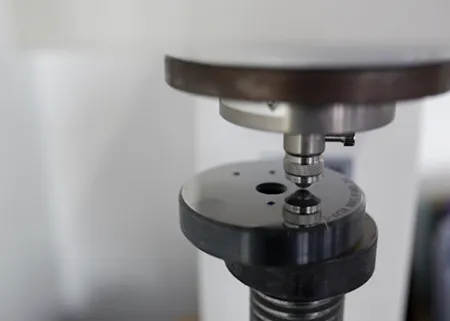
Hardness Scale
Machines check how hard a stainless steel bar is. A durometer tool presses into the metal. Numbers show how hard it is. They use small numbers for soft metal and big ones for hard metal. ASTM sets rules for this test. A special tool makes a dent.
This dent helps tell how strong the metal is. Technicians look at the dent size. Hardness scales use numbers like HRC and HRB.
Indentation
Indentation tests measure hardness. A special indenter tool presses into the metal. Technicians check how deep the dent is. Numbers show the hardness level. ISO sets the standards.
They use machines to read the results. Hard metals like a stainless steel bar have shallow dents. Soft metals have deep dents. Technicians look at digital displays. This test is fast and accurate.
Rockwell Test
The Rockwell test checks hardness. A diamond indenter presses into the metal. This method uses depth to find hardness. The machine shows numbers like HRB and HRC.
ASTM sets the rules. They use this test for a stainless steel bar. High numbers mean the metal is hard. The dial shows the hardness level. This test is quick and common. Different scales work for different metals.
Brinell Test
Brinell tests measure metal hardness. A hard ball presses into the metal. Technicians check the dent size with a microscope. ASTM E10 guides the process.
Numbers show how hard the metal is. A stainless steel bar might have small dents, meaning it’s hard. Big dents mean the metal is soft. This test uses a heavy load. Machines help record accurate results.
Vickers Test
The Vickers test measures hardness. A diamond pyramid presses into the metal. Technicians use a microscope to see the dent. This test works for tiny parts. Numbers like HV show hardness.
ASTM E92 sets the rules. They use this test on a stainless steel bar. High HV means the metal is hard. Machines give clear readings. This method is precise and reliable.
| Aspect | Rockwell Test | Brinell Test | Vickers Test |
| Hardness Scale | Rockwell (HRB, HRC) | Brinell (HB) | Vickers (HV) |
| Indentation Type | Conical, Spherical | Spherical (10mm) | Pyramidal (136°) |
| Load Range | 60-150 kgf | 500-3000 kgf | 1-100 kgf |
| Precision | Moderate | Low | High |
| Test Speed | Fast | Slow | Moderate |
| Surface Finish | Smooth | Rough | Smooth |
| Common Usage | Wide | Limited | Lab, Research |
Table on How Do You Measure Hardness in Stainless Steel Bars!
How Is Impact Strength Assessed in Stainless Steel Bars?
Impact strength defines how much a bar can withstand a hit. This is how this test is done:
Impact Test
For strength, the pendulum strikes the stainless steel bar. This is called an impact test. The bar sits horizontally. Engineers make use of a 20 kg pendulum. It drops from 2 meters high.
They possess 25 J energy. Pressure is put on the bar. Impact energy is recorded. Engineers verify that the bar fails. The test is important. It helps improve safety. Engineers need precise data.
Charpy Method
Charpy method uses a V-notch on the stainless steel bar. The notch is in the middle of the groove. A pendulum of mass 15 kg swings through an arc of 1.5 meters.
This test measures ductility. Engineers achieve 30 J energy. The toughness of the bar is discussed. Charpy is an important test. They depend on it for reliability. Engineers use special machines. The data ensures quality. They trust Charpy results.
Izod Method
A vertical stainless steel bar is tested using the Izod method. It has a cutting on the end of it. Engineers use a pendulum of 10 kg mass. It oscillates 1 meter up and down.
They possess 20 J energy. The load bearing capacity of the bar is determined. Engineers compare results. Izod provides reliable data. This test enhances materials in this way. Izod method is essential. It is used by engineers for different substances.
Energy Absorption
Energy absorption tests how strong a stainless steel bar is. Engineers utilize a 25 kg pendulum. It strikes from 2.5 meters high. They release 35 J energy.
The bar is subjected to energy impact tests. Engineers need this data. It helps improve materials. They make sure the bar can take impacts. One of the tests is energy absorption. Engineers trust these results.
Fracture Analysis
Fracture analysis is the examination of how a stainless steel bar fails. Engineers use microscopes. They examine the fracture surface. It proves the kind of bar this is. Engineers find weak spots.
They use 50x magnification. Fracture analysis is detailed. Engineers know how the breaking process occurs. They improve the material. This test is critical. Safety and quality are maintained by engineers. Fracture analysis is useful in design.
Notch Sensitivity
Notch sensitivity tests a stainless steel bar’s ability to resist crack formation and propagation. Engineers cut a notch. They employ a 20 kg pendulum. It rains from a height of 1.5 meters.
Engineers use 28 J energy. This shows how sensitive the bar is to cracks. Notch sensitivity is vital. Engineers find potential failures. They improve bar design. This test ensures reliability. Engineers rely on notch sensitivity results.
What Is the Role of Elongation Testing?
Elongation testing informs about how stretchy a bar is. Now, let us learn why this is significant.
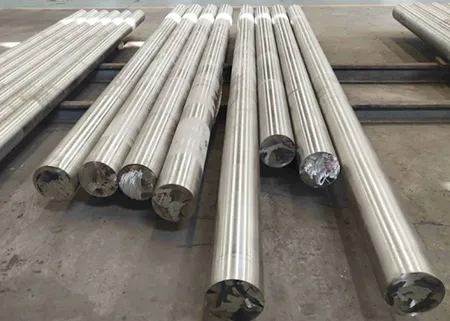
Ductility
Elongation testing checks how bendy a stainless steel bar is. This uses a 1018 tensile tester. They pull the bar until it snaps. The test shows how much the bar can stretch.
That tells us if it is strong and bendy. It is important for making sure bars work well. Engineers use 303, 316, or 431 steel. Ductility matters in many things.
Gauge Length
Gauge length is the part of the bar we test. This part is marked first. It shows how much the bar stretches. Different bars, like 304L, 316L, or 410, are tested.
They use a 1045 extensometer to measure changes. The marked length helps us compare. Gauge length is very important. Engineers need it for good results.
Percentage Elongation
Percentage elongation shows how much the bar stretches. It is calculated after the test. This is very important. Different bars, like 440C, 416, or 303, stretch differently. They use a 2019 extensometer for accuracy. High elongation means the bar is stretchy. This helps pick the right steel. Engineers need these numbers.
Tensile Test
Tensile tests measure strength. A 2205 tensile machine pulls the bar until it breaks. Different bars, like 304, 316, or 430, are tested. This test shows the breaking point.
It also checks how elastic the bar is. Results help pick the best steel. Tensile strength is key for safety.
Necking
Necking happens during a tensile test. This is when the bar gets thinner. Engineers watch this change. They use a 2025 micrometer to measure it. Different bars, like 17-4PH, 15-5PH, or 2205, neck differently. Necking shows ductility and strength. It helps pick materials.
How Do Temperature Variations Affect Strength Measurements?
Heat and cold alter the elasticity of a bar. It is time to find out how temperature does make a difference.
Thermal Effects
A stainless steel bar transforms at 20°C & 700°C. Heat makes it stronger. This affects yield strength. The atoms are more active at high temperatures. Elastic modulus is important.
It depends on the heat. It is influenced by manganese, nickel, and chromium as well. That changes tensile strength. They have different coefficient of thermal expansion. Fluctuations in temperature result in changes in strength. The bar is safe to use in construction.
Expansion
Heat causes the expansion of the stainless steel bar. At high temperature, it increases in length by 2.4%. Thermal expansion coefficient quantifies growth.
Stability is enhanced by Mn, Cr, and Ni alloys. Grades such as 6000 series and 7000 series do not behave in the same way. It changes stress resistance. ASTM standards ensure quality. This assists in construction of buildings. The bars are used in all the places.
Contraction
Cold makes the stainless steel bar to decrease in size. At 10°C, it decreases in size. Contraction results in changes in density and strength. In this case, the contraction coefficient quantifies the change. Cold makes it brittle. High carbon content makes it worse.
This is important in the regions with low temperatures. It is important to understand that 3000 series and 4000 series act differently. They show unique contraction. It is useful for the design of buildings.
Stress Variation
Stress is well handled by a bar of stainless steel. It is strong at a pressure of 500 MPa. Yield strength varies with stress. Cold working improves it. Hardness is important too.
ASTM tests measure it. Residual stress is key. Hot-rolled and cold-rolled bars behave differently. For tests, standards of AISI are used. They ensure safety. Stress variation assists in choosing the right bar.
Creep Test
A stainless steel bar is subjected to creep test at 600°C. Creep happens under stress. It shows long-term strength. The creep rate determines the rate at which it deforms.
High-temperature alloys work better. Ni, Cr, and Mn aid in preventing creep. The figure also depicts three creep stages. ASTM E139 tests this. Tests can take up to 1000 hours. This is for hot places. Creep tests make certain that it is strong enough.
Temperature Cycling
Temperature fluctuation challenges the stainless steel bar. It is tested from 0°C to 800°C. This makes thermal fatigue. Exposure to high and low temperatures affects it.
8000 cycles show changes. Cr, Ni, and Mo based alloys are resistant to fatigue. The low-carbon grades are better able to handle it. ASTM E606 tests this. Outcomes assist in planes and automobiles. The tests ensure that it is valid.
What Are the Common Standards for Stainless Steel Bar Strength?
Standards also ensure that the bars that are installed meet the recommended strength and are safe to use. Now let’s analyze which of the rules are being followed.
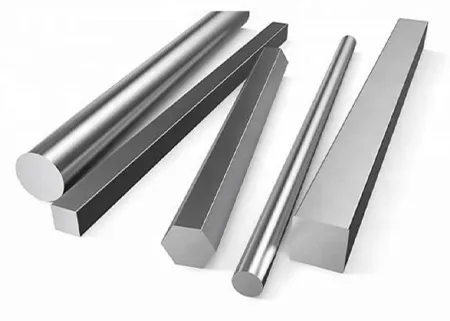
ASTM Standards
ASTM measures the toughness of a stainless steel bar. ASTM A276 evaluates tensile stress and elongation. Such numbers as 304 and 316 are used.
The hardness and the toughness of each bar are significant. Other properties that are tested include cutting and bending properties. Our company sells strong bars. ASTM standards ensure that the bars function appropriately. It ensures that metal can take stress.
ISO Standards
ISO checks the tensile strength of stainless steel bars. ISO 15510 identifies various grades such as 201 and 321. In each bar tensile strength and hardness are examined.
The hardness of the bar is also checked. Thus, Wuxi Chengjiu Metal guarantees quality. ISO standards ensure that bars cater for the international requirements of consumers. It guarantees the bars’ strength and thickness.
DIN Standards
DIN measures how strong stainless steel bars are. The standard used is DIN EN 10088-3. Bars, for instance, are classified by Werkstoffnummer 1.4301.
The tensile strength and yield point of each bar are determined. Our products are tested well. Durability and strength are crucial. Thus, DIN standards guarantee that bars can perform various functions. Its cutting and forming properties are also verified.
JIS Standards
JIS measures the toughness of stainless steel bars. JIS G4303 is used for testing. Numbers like SUS304 and SUS316 are important. Tensile strength, hardness and yield strength are tested.
These are the standards followed by our company. Every bar must be long-lasting. Strength and ductility are also significant. The JIS standards maintain stability in bars. It ensures that the metal is strong.
Compliance
Compliance means meeting standards. ASTM, ISO, DIN, and JIS guarantee quality. The tensile strength, yield point and hardness of the material are measured.
Wuxi Chengjiu Metal abides by all standards. Different grades get tested. In addition, every bar produced from stainless steel must undergo toughness and elongation tests. This would mean that compliance guarantees that the bars are indeed strong. It ensures that the metal is dependable.
How Is Data Interpreted from Strength Testing?
Interpreting test results also assists in ensuring that things remain safe. Here is how the engineers read data.
Result Analysis
A stainless steel bar has strength 550. The bar is tested. It shows strain. Elongation is 20. Yield strength is 240. Elasticity is 200. Hardness is 50. These results show toughness and durability. This helps keep things safe.
Graph Interpretation
A graph shows a stainless steel bar bending. Elongation is 25. Strength is 500. Strain is 0.002. Yield point is 245. Different curves show elasticity and resilience. This checks quality.
Statistical Methods
Stainless steel bar data is checked. Mean (µ), median, and mode are used. Outliers show defects. Regression predicts behavior. Probability helps reliability. This ensures standards are met.
Strength Calculation
Strength of a stainless steel bar is found. UTS is 550. Formula is σ=F/A. Yield strength is 240. Area is 50. Elongation and stress are measured. This ensures safety and strength.
Report Generation
Stainless steel bar tests make reports. Graphs show strain. Tables list data. Hardness is 50. Reports show results. They guide future tests. This helps improve quality.
Conclusion
Learning about a stainless steel bar’s strength is fun. Use tools like UTM and extensometer. They make sure bars are strong. Visit ALLOYXPERT for good bars. It keeps buildings safe. This helps make strong things.
Read More:
How to Cut and Shape Stainless Steel Bars?