
Introduction
Hastelloy B is a nickel-molybdenum superalloy designed for extreme corrosion resistance in harsh chemical environments. Known for its durability and strength, it is widely used in industries requiring high resistance to hydrochloric acid and other reducing agents.
In this guide, we’ll explore its composition, properties, applications, and comparisons with other superalloys.
What Is Hastelloy B?
Hastelloy B (UNS N10001) is a corrosion-resistant superalloy primarily composed of nickel and molybdenum. It is engineered to withstand hydrochloric acid and other strong reducing agents. The alloy is available in different grades, including Hastelloy B-2 and Hastelloy B-3, each with slight variations in corrosion resistance and fabrication properties.
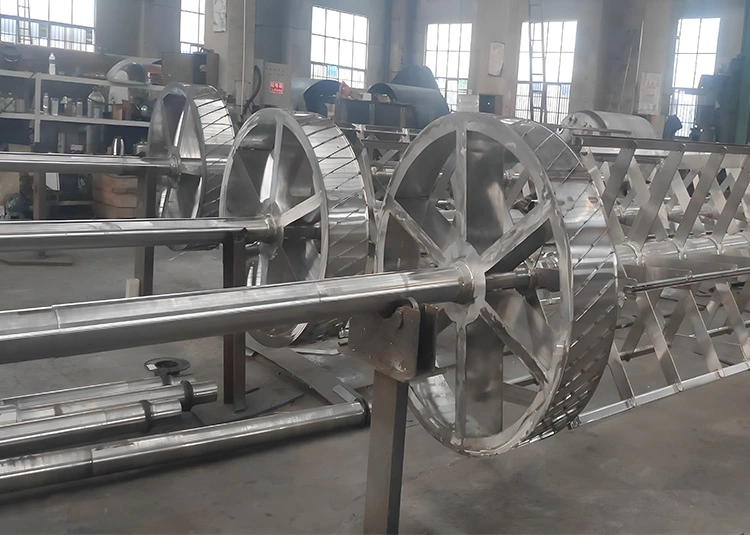
Hastelloy Alloy B Datasheet
Hastelloy B Chemical Composition
| Element | Composition (Weight %) |
| Nickel (Ni) | 58.0% ~ 64.2% |
| Molybdenum (Mo) | 26.0% ~ 30.0% |
| Iron (Fe) | 4.0% ~ 6.0% |
| Cobalt (Co) | ≤ 2.50% |
| Vanadium (V) | 0.20% ~ 0.40% |
| Chromium (Cr) | ≤ 1.0% |
| Silicon (Si) | ≤ 1.0% |
| Manganese (Mn) | ≤ 1.0% |
| Sulfur (S) | ≤ 0.030% |
| Carbon (C) | ≤ 0.05% |
| Phosphorus (P) | ≤ 0.040% |
Hastelloy Alloy B ASTM Specification
| Standard | Description |
| ASTM B622 | Seamless Pipe & Tube |
| ASTM B619 | Welded Pipe |
| ASTM B626 | Welded Tube |
| ASTM B335 | Rod and Bar |
| ASTM B333 | Plate and Sheet |
Hastelloy B Mechanical Properties
| Property | Value Range (Typical at Room Temperature) |
| Tensile Strength (MPa) | 760 – 860 |
| Yield Strength (MPa) | 350 – 450 |
| Elongation (%) | 40 – 60 |
| Hardness (Rockwell B) | 75 – 85 |
Hastelloy Alloy B Physical Properties
| Property | Value |
| Density (g/cm³) | 9.24 |
| Melting Point (°C) | 1330 – 1380 |
| Thermal Conductivity (W/m·K) | 10 – 13 (at room temperature) |
| Coefficient of Thermal Expansion (μm/m·°C) | 11 – 13 (from 20 – 100°C) |
| Specific Heat Capacity (J/kg·K) | Varies with temperature, approximately 420 – 440 (in a typical temperature range) |
| Electrical Resistivity (μΩ·m) | Around 1.3 – 1.4 |
Hastelloy Alloy B Corrosion Resistance
| Corrosive Environment | Resistance & Performance |
| Hydrochloric Acid (HCl) | Excellent resistance at all concentrations and temperatures; prevents pitting, crevice corrosion, and stress corrosion cracking. |
| Sulfuric Acid (H₂SO₄) | Highly resistant to various concentrations and temperatures, making it ideal for chemical processing. |
| Phosphoric & Acetic Acids | Strong protection against acid corrosion, widely used in industrial processing. |
| Stress Corrosion Cracking (SCC) | Low carbon and silicon content reduces grain boundary precipitation, enhancing resistance to SCC. |
| Reducing Environments | High molybdenum (26-30%) content enhances performance in hydrogen chloride gas and reducing acids. |
| Oxidizing Environments | Not suitable for oxidizing acids (e.g., nitric acid, ferric salts) due to lower chromium content. |
Hastelloy Alloy B Fabrication and Machining
| Process | Details |
| Forming | It can be cold-formed but requires more force. The maximum cold-working strain should be 20-30% area reduction. Hot-forming should be done at 900-1200°C, ensuring proper heating and cooling rates to maintain ductility and prevent issues. |
| Welding | Can be welded using TIG, and shielded metal arc welding; ERNiMo-1 filler metal is recommended for welding. |
| Heat Treatment | Solution heat-treated at 1065-1120°C (1950-2050°F), followed by rapid quenching to maintain corrosion resistance. |
| Machining | Difficult to machine due to work hardening; requires low cutting speeds, rigid tooling, and coolant. |
| Annealing | Annealed to remove residual stress and improve ductility, typically performed after cold working. |
| Cutting | Plasma cutting, water jet, and laser cutting are preferred for precision; avoid overheating during mechanical cutting. |
| Grinding & Finishing | Requires abrasive grinding with proper lubrication to prevent galling and surface defects. |
What Are the Key Characteristics of Hastelloy Alloy B?
- Exceptional Corrosion Resistance: Highly resistant to hydrochloric acid and other strong reducing agents, making it ideal for chemical processing and harsh industrial environments.
- High Mechanical Strength: Offers excellent tensile strength and durability, maintaining structural integrity under extreme conditions.
- Good Weldability: Can be welded effectively with controlled heat input to prevent phase formation that could impact corrosion resistance.
Applications of Hastelloy Alloy B in Industry
- Chemical Processing: Acid storage tanks, reactors, and chemical pipelines.
- Aerospace: High-temperature structural components and exhaust ducts.
- Marine Engineering: Corrosion-resistant marine parts such as seawater handling systems.
- Power Plants: Heat exchangers and piping systems requiring high resistance.
- Pharmaceuticals: Reaction vessels and processing equipment for corrosive substances.
How Does Hastelloy Alloy B Compare to Other Superalloys?
Hastelloy B vs C
Hastelloy B is ideal for reducing environments such as hydrochloric acid, whereas Hastelloy C is more versatile, offering superior performance in both oxidizing and reducing conditions. Hastelloy C also provides better resistance to localized corrosion, such as pitting and crevice corrosion, making it preferable for broader industrial applications.
Hastelloy B vs C276
Hastelloy B excels in reducing environments, particularly in hydrochloric acid, whereas Hastelloy C-276 is more versatile, offering strong resistance to both oxidizing and reducing agents. C-276 also provides superior resistance to pitting and crevice corrosion, making it a preferred choice for broader industrial applications, including marine and chemical processing.
Conclusion
Hastelloy B is a high-performance nickel-molybdenum alloy with excellent corrosion resistance, high strength, and reliable performance in harsh chemical environments. If you’re looking for a durable, corrosion-resistant alloy for extreme environments, Hastelloy alloy B is a top choice. For more details, explore Alloyxpert or request a material data sheet today!
FAQs
What industries commonly use Hastelloy B?
Hastelloy B is primarily used in industries requiring exceptional corrosion resistance, such as chemical processing, aerospace, marine engineering, power plants, and pharmaceuticals. It is commonly found in acid storage tanks, heat exchangers, pressure vessels, and high-temperature structural components, ensuring durability in aggressive environments.
Is Hastelloy B suitable for high-temperature applications?
Yes. It has a 1330 – 1380°C melting point. Room temp tensile strength is 760 – 860 MPa. Strength remains useful up to several hundred °C. But for temps near or over melting point, extra thought and possible alternatives are needed.
How does Hastelloy B compare to stainless steel in corrosion resistance?
Hastelloy B significantly outperforms stainless steel in aggressive reducing environments, particularly in hydrochloric acid, sulfuric acid, and phosphoric acid applications. Unlike stainless steel, which can suffer from pitting and stress corrosion cracking, Hastelloy B maintains its structural integrity and corrosion resistance, making it the superior choice for extreme chemical processing conditions.
Read More:
What is Hastelloy C4 (UNS N06455)?