
Introduction
Hastelloy C2000 is a high-performance, nickel-based alloy designed for extreme conditions. Known for its superior resistance to corrosion, it performs well in a wide range of industries, particularly in chemical processing, aerospace, and energy sectors.
In this article, we’ll examine the alloy’s properties, applications, advantages and how it compares to other high-performance alloys.
What is Hastelloy C2000?
Hastelloy C2000 (UNS N06200), also known as Alloy C2000, is a corrosion-resistant, nickel-chromium-molybdenum alloy. It is specifically designed to perform well in aggressive chemical environments and at high temperatures. The alloy is widely used in applications where standard materials would fail due to corrosion or oxidation.
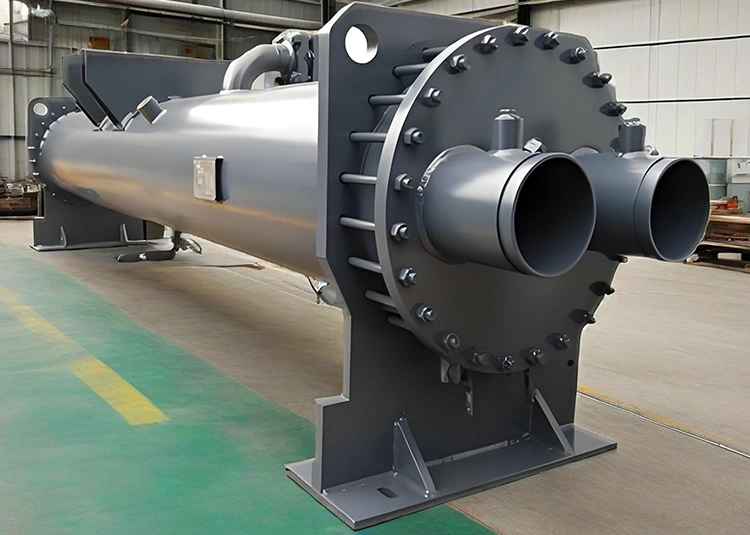
Hastelloy C-2000 Data Sheet
Hastelloy C2000 Chemical Composition
| Element | Content |
| Nickel (Ni) | Balance (≥ 59%) |
| Chromium (Cr) | ≥ 23% |
| Molybdenum (Mo) | ≥ 16% |
| Copper (Cu) | ≤ 1.6% |
| Cobalt (Co) | ≤ 2.5% |
| Iron (Fe) | ≤ 5% |
| Manganese (Mn) | ≤ 0.5% |
| Silicon (Si) | ≤ 0.08% |
| Carbon (C) | ≤ 0.01% |
| Phosphorus (P) | ≤ 0.02% |
| Sulfur (S) | ≤ 0.01% |
| Aluminum (Al) | ≤ 0.2% |
| Titanium (Ti) | ≤ 0.2% |
Alloy C2000 ASTM Specification
| Product Type | ASTM Specification |
| Sheet & Plate | ASTM B575 |
| Rod & Bar | ASTM B574 |
| Seamless Pipe & Tube | ASTM B622 |
| Welded Pipe & Tube | ASTM B619/B626 |
Alloy C2000 Physical Properties
| Property | Value |
| Density | 8.5 g/cm³ |
| Melting Range | 1325 – 1370 °C |
| Thermal Expansion Coefficient | 12.8 x 10⁻⁶/°C (20 – 100 °C) |
| Thermal Conductivity | 10 – 13 W/(m·K) |
| Electrical Resistivity | 1.12 x 10⁻⁶ Ω·m |
| Specific Heat Capacity | 420 – 460 J/(kg·K) |
Hastelloy C-2000 Mechanical Properties
| Property | Value |
| Tensile Strength (annealed) | 690 MPa min |
| Yield Strength | 310 MPa min |
| Elongation | 45% min |
| Hardness (Rockwell B) | 90 – 100 HRB |
| Modulus of Elasticity | 205 – 210 GPa |
C2000 Corrosion Resistance
| Property | Details |
| Resistance to Sulfuric Acid | High resistance across a range of concentrations |
| Resistance to Hydrochloric Acid | Good resistance even at elevated temperatures and various concentrations |
| Resistance to Nitric Acid | Excellent resistance, maintaining integrity well |
| Resistance to Pitting | Due to chromium and molybdenum content, has a high resistance |
| Resistance to Crevice Corrosion | Superior resistance in chloride – containing environments |
| Resistance to Stress – Corrosion Cracking | Good resistance in corrosive chloride and other aggressive environments |
Hastelloy C–2000 Fabrication and Machining
| Aspect | Details |
| Machinability | Moderate. Needs special tools/techniques, slow speeds (30 – 60 m/min in turning), and coolant. Feed rate: 0.1 – 0.3 mm/rev. |
| Formability | Good in annealed state. Cold – workable, may need intermediate annealing for complex shapes. Cold – roll: 30% single – pass reduction. Bend: 120 – 130° for 3 – mm annealed sheet. |
| Welding | Weldable by GTAW (100 – 150 A) and GMAW. Require pre – heat (150 – 200°C for thick sections) and post – weld heat treatment (1000 – 1100°C). |
What Are the Advantages of Hastelloy C-2000?
- Excellent Corrosion Resistance: Resists acids, oxidizing environments, and chloride-containing solutions, making it ideal for chemical processing and petrochemical industries.
- High Strength: Maintains good mechanical strength in both annealed and cold-worked states, enabling use in structural applications.
- Good Formability and Weldability: Can be formed into various shapes in the annealed state and welded using common techniques like GTAW and GMAW with proper heat treatments.
What is Hastelloy Alloy C-2000 Used For?
- Chemical Processing: Reactors, heat exchangers
- Petrochemical: Equipment handling hydrocarbons and corrosive by-products
- Aerospace: Engine parts, structural components
- Marine: Pumps, valves, fittings
- Nuclear: Specific nuclear applications
- Pollution and Waste Treatment: Equipment in waste incinerators, wastewater treatment plants
- Welding Products: Filler metals, welding electrodes
How Does Hastelloy C-2000 Compare to Other Alloys?
Hastelloy c2000 vs c276
Hastelloy C2000 and C276 are both highly resistant to corrosion, but C2000 has added copper, enhancing its resistance to sulfuric and phosphoric acids in oxidizing environments, making it ideal for chemical processing. C276, on the other hand, excels in chloride-rich environments, offering superior pitting and crevice corrosion resistance, especially in seawater.
Hastelloy c2000 vs c22
Hastelloy C2000 and Hastelloy C22 are both corrosion-resistant nickel-based alloys, but with key differences. C2000 excels in resistance to both oxidizing and reducing environments, especially sulfuric acid. C22, however, offers superior resistance to pitting and stress corrosion cracking, making it better suited for chloride-rich environments like seawater.
Conclusion
Hastelloy C2000 is a reliable and durable alloy designed to withstand the toughest conditions in chemical processing, aerospace, and energy industries. With its high corrosion and high-temperature resistance, it offers long-lasting performance where other alloys would fail.
Contact Alloyxpert today to learn more about its benefits and how it can help improve the efficiency and durability of your operations.
FAQs
What is the Hastelloy C2000 equivalent to?
Hastelloy C-2000 is often considered equivalent to other high-performance nickel alloys like Inconel 625 and Alloy 59. These alloys offer similar corrosion resistance, but Hastelloy C-2000 stands out for its ability to resist both oxidizing and reducing environments, especially in sulfuric acid applications.
What is the difference between alloy 59 and C2000?
Both Alloy 59 and Hastelloy C-2000 are highly resistant to corrosion, but there are key differences. Alloy 59 is known for its excellent resistance to chloride-induced stress corrosion cracking and is often used in environments exposed to seawater and acidic conditions. However, Hastelloy C-2000 offers superior resistance to sulfuric acid and is better suited for applications involving both reducing and oxidizing environments.
Is Hastelloy C-2000 more expensive than other alloys?
Hastelloy C-2000 tends to be more expensive than other standard alloys due to its high-performance characteristics. However, its durability and extended lifespan in aggressive environments often justify the cost, especially for industries that require reliable, long-term performance in corrosive conditions.
Read More:
What is C276 Hastelloy (UNS N10276)?