
Introduction
Inconel vs Stainless Steel—this is a question many industries face when choosing materials. Each has different strengths and uses. Choosing between them depends on your project’s needs. This guide will help you understand their key differences, including strength, corrosion resistance, and cost.
What Is Inconel?
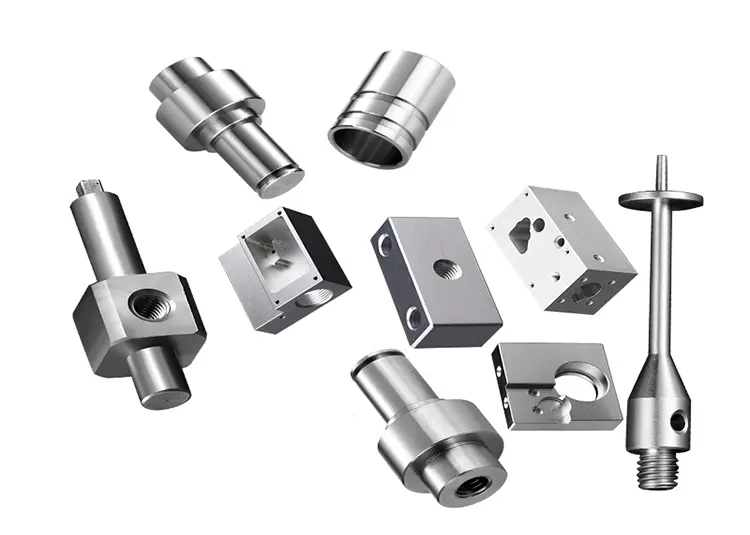
Inconel is a nickel-chrome-based superalloy with excellent corrosion resistance, oxidation resistance, and high-temperature strength. Inconel can tolerate high temperatures and severely corrosive conditions. Inconel also forms a passivation layer when heated, which contributes to its high corrosion resistance. This makes Inconel ideal for use in aerospace, chemical plants, and other tough environments.
Chemical Composition
| Type | Nickel (Ni) | Chromium (Cr) | Iron (Fe) | Molybdenum (Mo) | Carbon (C) | Manganese (Mn) | Niobium (Nb) | Tantalum (Ta) | Titanium (Ti) | Aluminum (Al) |
| Inconel 600 | 72% | 14-17% | 6-10% | – | 0.15% | 1.0% | – | – | – | – |
| Inconel 625 | 58% | 20-23% | 5% | 8-10% | – | – | 3.15-4.15% | 0.15-0.45% | – | – |
| Inconel 718 | 50-55% | 17-21% | Balance | 2.8-3.3% | – | – | – | – | 0.65-1.15% | 0.2-0.8% |
Equivalent Materials
| Type | UNS | Werkstoff | ASTM | AMS | DIN |
| Inconel 600 | N06600 | 2.4816 | B168 | 5540 | 2.4816 |
| Inconel 625 | N06625 | 2.4856 | B443 | 5666 | 2.4856 |
| Inconel 718 | N07718 | 2.4668 | B670 | 5662 | 2.4668 |
Key Properties
| Type | Tensile Strength (MPa) | Yield Strength (MPa) | Elongation (%) | Hardness (Rockwell B) | Density (g/cm³) | Max Operating Temperature (°C/°F) |
| Inconel 600 | 655 | 310 | 30 | 88 | 8.47 | 1093°C / 2000°F |
| Inconel 625 | 827 | 414 | 30 | 95 | 8.44 | 982°C / 1800°F |
| Inconel 718 | 1035 | 725 | 12 | 100 | 8.19 | 704°C / 1300°F |
What Is Stainless Steel?
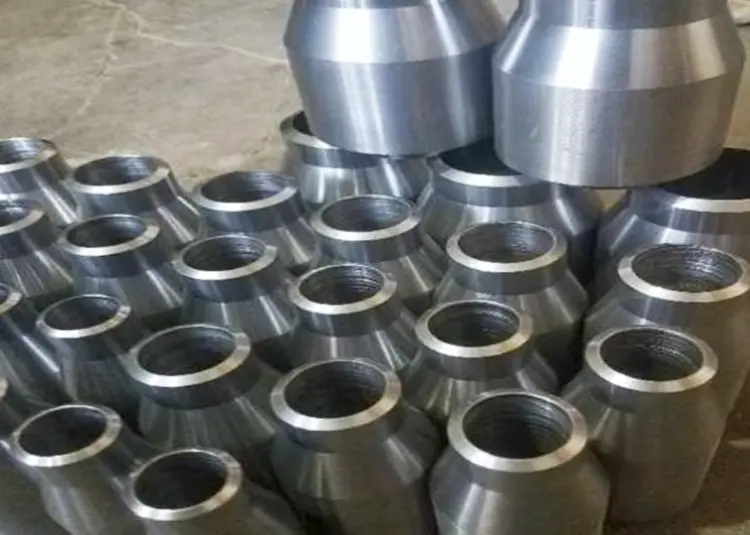
Stainless steel is a broad collection of metals that are divided into five categories: austenitic, ferritic, martensitic, duplex, and precipitation hardening. These microstructures determine the stainless steel’s strength and corrosion resistance. Stainless steel is used in a wide range of applications, including kitchen cutlery, structural building applications, biomedical applications, and food preparation.
Chemical Composition
| Type | Chromium (Cr) | Nickel (Ni) | Carbon (C) | Molybdenum (Mo) | Iron (Fe) | Manganese (Mn) | Phosphorus (P) | Sulfur (S) | Silicon (Si) |
| 304 Stainless Steel | 18-20% | 8-10.5% | 0.08% max | – | Balance | 2.0% max | 0.045% max | 0.03% max | 1.0% max |
| 316 Stainless Steel | 16-18% | 10-14% | 0.08% max | 2-3% | Balance | 2.0% max | 0.045% max | 0.03% max | 1.0% max |
| 430 Stainless Steel | 16-18% | – | 0.12% max | – | Balance | 1.0% max | 0.04% max | 0.03% max | 1.0% max |
Equivalent Materials
| Type | UNS | Werkstoff | ASTM | AMS | DIN |
| 304 Stainless Steel | S30400 | 1.4301 | A240 | 5513 | 1.4301 |
| 316 Stainless Steel | S31600 | 1.4401 | A240 | 5648 | 1.4401 |
| 430 Stainless Steel | S43000 | 1.4016 | A240 | – | 1.4016 |
Key Properties
| Type | Tensile Strength (MPa) | Yield Strength (MPa) | Elongation (%) | Hardness (Rockwell B) | Density (g/cm³) | Max Operating Temperature (°C/°F) |
| 304 Stainless Steel | 505 | 215 | 70 | 92 | 8.00 | 870°C / 1600°F |
| 316 Stainless Steel | 515 | 240 | 60 | 95 | 7.99 | 927°C / 1700°F |
| 430 Stainless Steel | 450 | 280 | 22 | 80 | 7.70 | 815°C / 1500°F |
Key Differences Between Inconel and Stainless Steel
Composition Comparison
Inconel is mostly nickel and chromium. This makes it strong in high-stress, high-temperature conditions. Stainless steel, with its iron and chromium base, is more versatile and works well for general use.
Inconel vs Stainless Steel Tensile Strength
Inconel 718 has a tensile strength of 1035 MPa, which is significantly higher compared to 304 stainless steel at 505 MPa. This makes Inconel the best choice for extreme environments. Stainless steel, with tensile strength values between 450-515 MPa, works well for moderate environments.
Inconel vs Stainless Steel Yield Strength
Inconel 718 has a yield strength of 725 MPa, making it suitable for heavy-stress applications. In comparison, 304 stainless steel has a yield strength of 215 MPa, which is sufficient for most structural and commercial needs.
Inconel & Stainless Steel Corrosion Resistance Comparison
Inconel resists oxidation and corrosion very well, especially in changing temperatures or with corrosive chemicals. Stainless steel resists rust and general corrosion but can degrade in highly corrosive conditions.
Heat Resistance of Inconel vs Stainless Steel
Inconel performs well above 1000°F. It keeps its strength and does not scale. Stainless steel is good up to 800°F but weakens or corrodes at very high temperatures.
Check this out for a visual comparison of high-temperature resistance between Inconel 718 and 316 Stainless Steel.
Industrial Use of Inconel vs Stainless Steel
Inconel is used in aerospace, chemical processing, and gas turbines because it handles high temperatures and corrosion well. Stainless steel is used in food processing, medical devices, construction, and piping because it is versatile and cost-effective.
Cost Comparison Inconel vs Stainless Steel
Inconel is more expensive because of its high nickel content and complex manufacturing. Stainless steel is cost-effective for applications that do not need extreme temperature or corrosion resistance.
Conclusion
Inconel and stainless steel are both good materials. Inconel is better for high temperatures and corrosive environments. Stainless steel is better for general use where cost matters. Understanding these differences will help you choose the right material for your project. If you have further questions about Inconel vs Stainless Steel, reach out to us today for expert guidance.
FAQs
Is Inconel stronger than stainless?
Inconel is generally stronger than stainless steel, especially at high temperatures. It has higher tensile and yield strengths, making it ideal for extreme environments.
What are the disadvantages of Inconel?
One of the main disadvantages of Inconel is its cost. It is more expensive due to the high nickel content and complex manufacturing. It can also be challenging to machine compared to other materials.
Why is Inconel so expensive?
Inconel is expensive because of its high nickel and chromium content, which provide its excellent properties but make the raw materials costly. The manufacturing process is also more complex, adding to the cost.
Read More:
Inconel vs Monel: A Comprehensive Comparison Guide
Monel VS Stainless Steel: Choosing the Right Alloy for Your Project